The screens
All 24 are drawn with our own code (tools/pantallas.py for MSX, tools/pantallas2.py for MSX2) following the steps of the routine that paints them, quoted with each one. None is a capture. Each is compared byte for byte (tools/coteja.py, tools/coteja2.py) with the cartridge running on a Python Z80 or with the openMSX VRAM, and they all match completely. On MSX the BIOS letters are those of the Japanese C-BIOS.
The title sequence

The Konami logo (p09:8135), at the end of its animation: one line per frame, six rows of 21 characters.
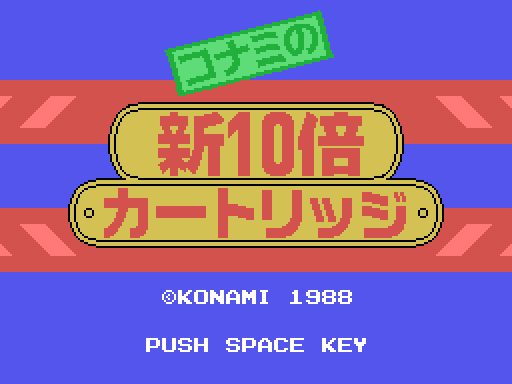
The "Konami no Shin 10-bai Cartridge" title, waiting for space (p09:8846). It only appears with a Japanese BIOS.
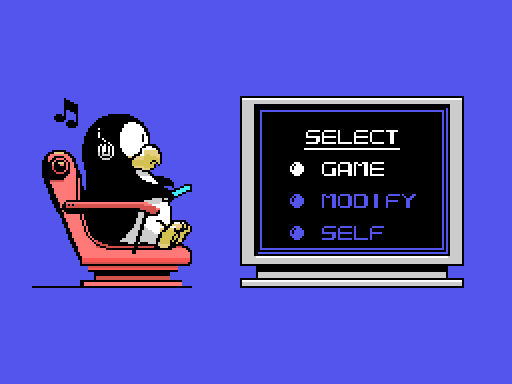
The main menu (p09:82CA): GAME, MODIFY and SELF. GAME and MODIFY need a game next to it.
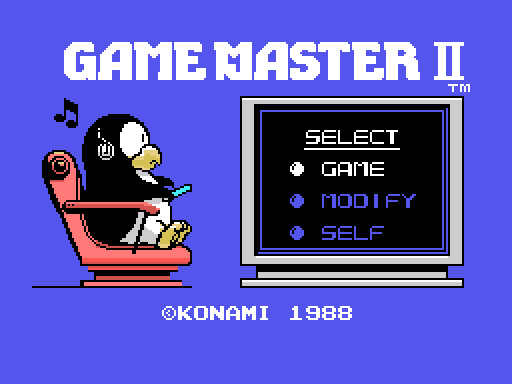
With a non-Japanese BIOS there is no title, and the menu carries "GAME MASTER II" and the date (p09:8D27).
The cartridge on its own
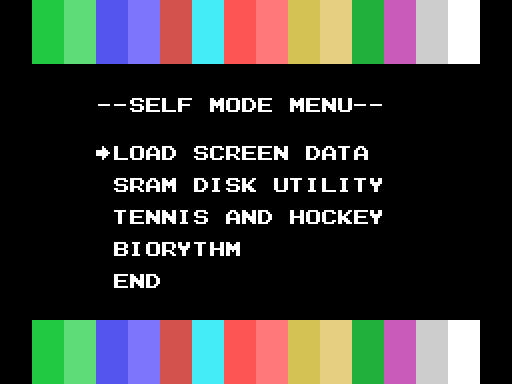
The SELF MODE MENU (p00:5DEE), with the 16 colour squares above and below.
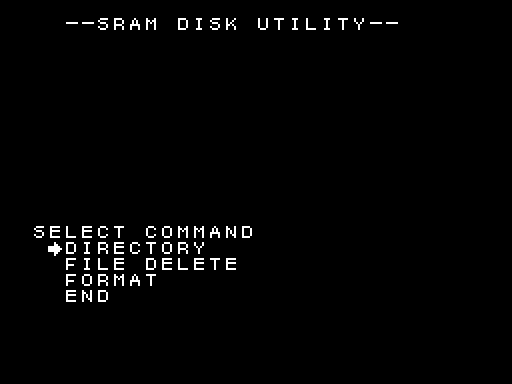
SRAM DISK UTILITY (p01:7973), with the BIOS font.
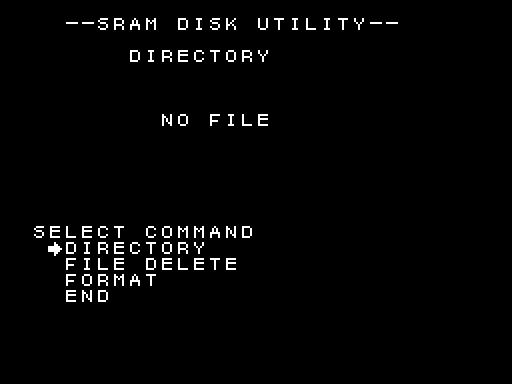
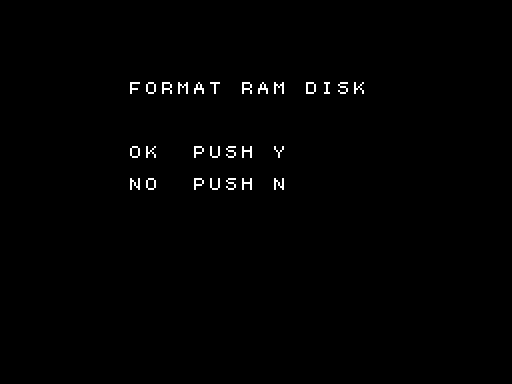
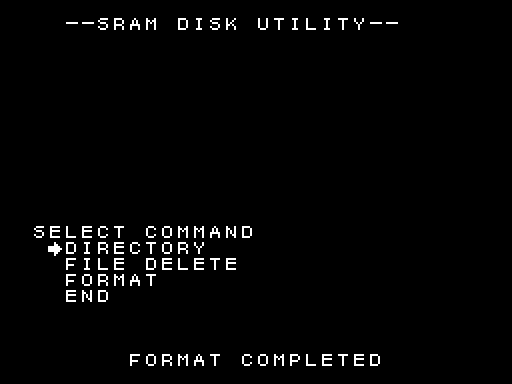
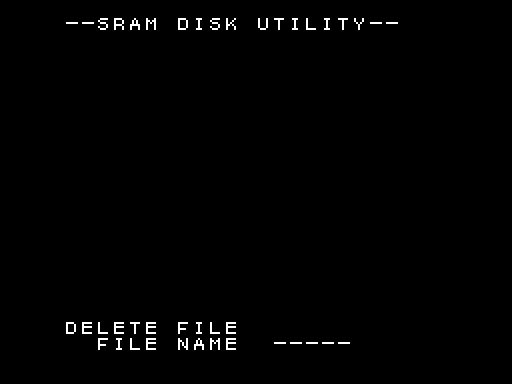
DIRECTORY with the SRAM unformatted (p00:417D), the FORMAT question (p00:4333), its result and FILE DELETE asking for the name (p00:4209).
Tennis and Hockey
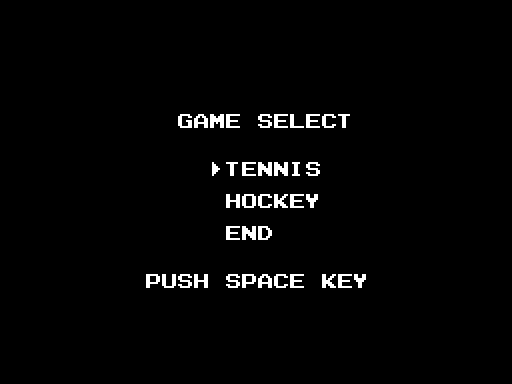
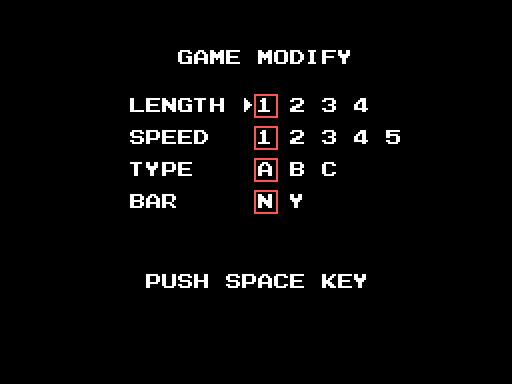
GAME SELECT (p07:909A) and GAME MODIFY (p07:9100); the red boxes are sprites.
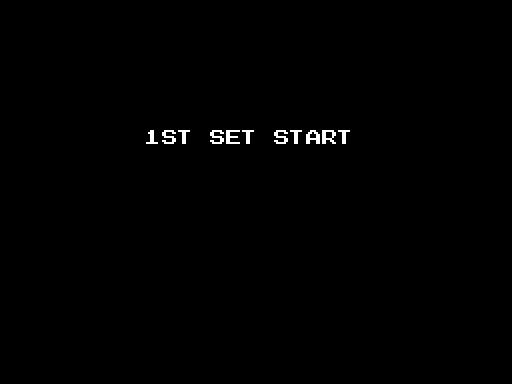
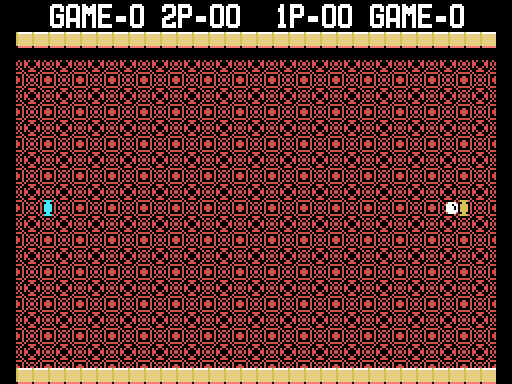
"1ST SET START" (p07:8141) and the tennis court ready to serve (p07:81A2).
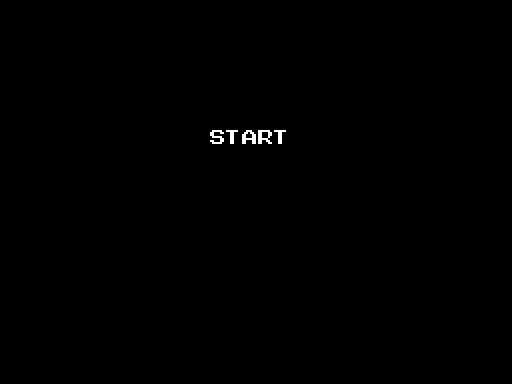
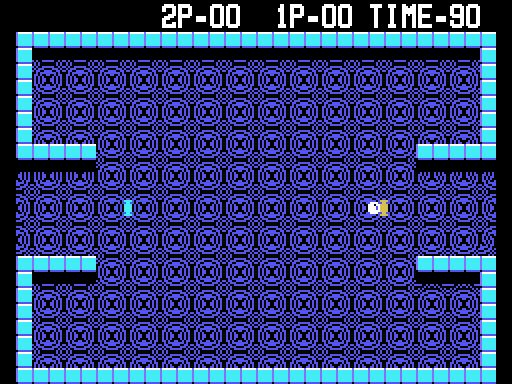
The same for hockey, with the clock at 90.
The biorhythm
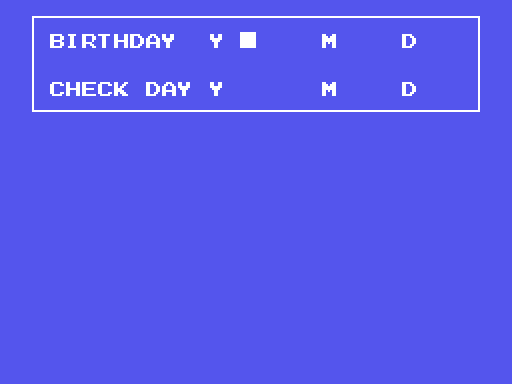
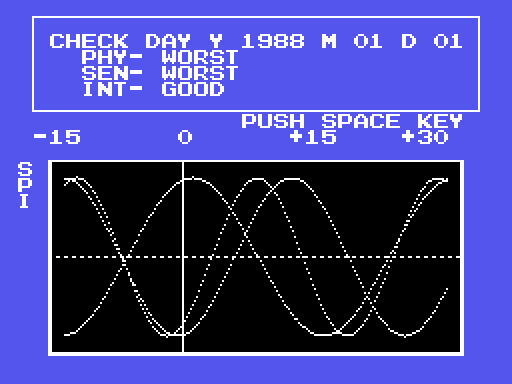
On MSX, asking for the dates (p05:9674) and the chart with the example dates 1970-01-01 and 1988-01-01.
On MSX2

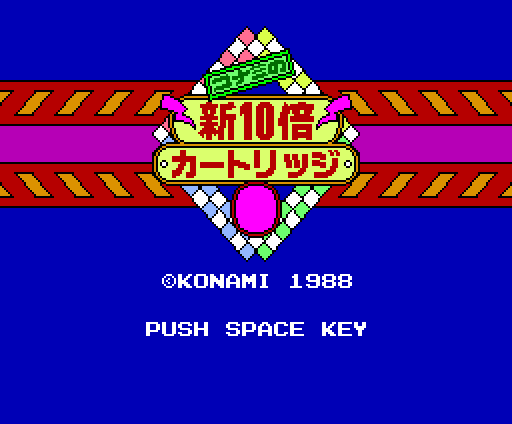
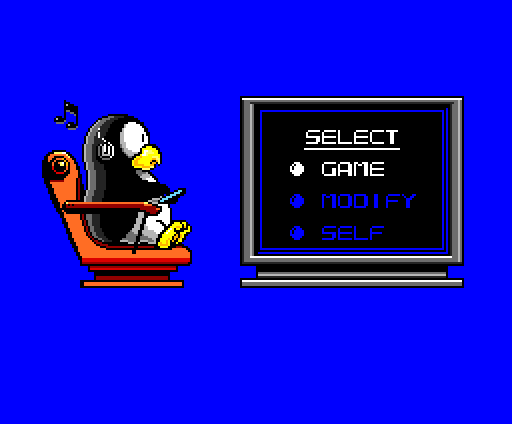
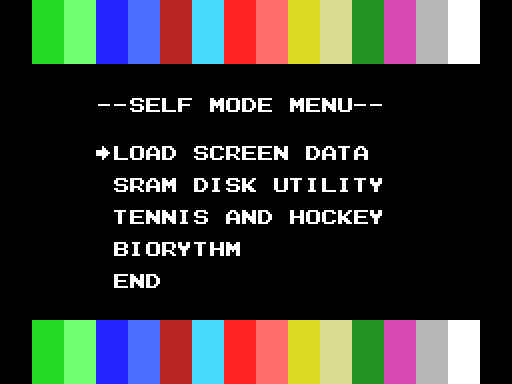
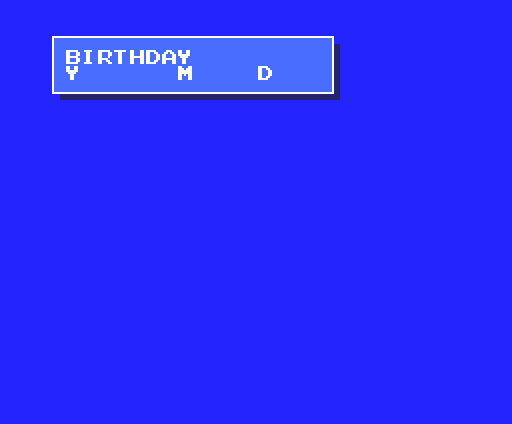
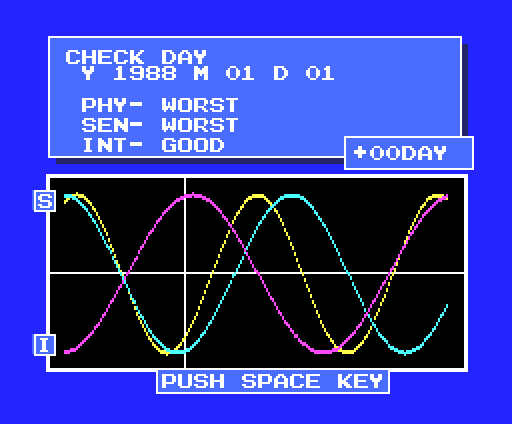
On an MSX2 with a Japanese BIOS the title sequence is different: SCREEN 5, with the pictures put together with VDP commands (p09:80DC, p09:8B20, p09:8692). The SELF menu is the same with the MSX2 palette, and the biorhythm changes completely (p05:8D22, p06:A006).