What the cartridge draws
Each of these pictures is the cartridge replayed outside it: the background strips are decompressed the way the ROM decompresses them, the 192 characters are generated with the same loop and the map is assembled from the same tables. Under each caption is the address of the routine it comes from.

0x569E — the same window of background at the eight offsets. Between one and the next only the character number changes, by 24
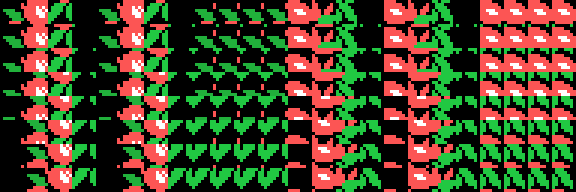
0x56B5 — one stage's 192 characters: each row is one offset, and the last four of each half are the seams that keep the drawing continuous

0x571E — the eight background stages side by side: five sets of strips and an ink swap (0x577D) for the 18 screens
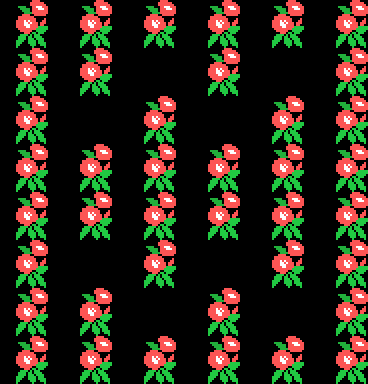
0x5384 — stage 0, the flowers. A whole screen assembled from the map tables: thirteen stretches of six four-column pieces
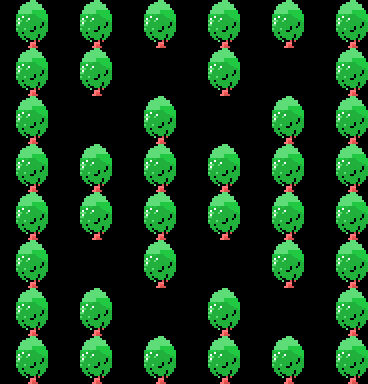
0x5384 — stage 1, the green trees
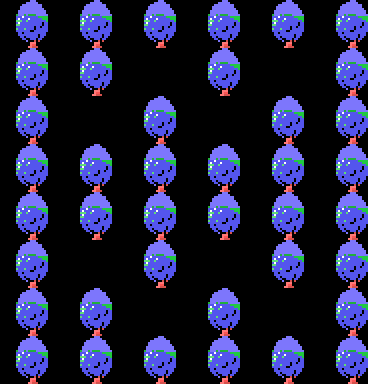
0x5384 — stage 4: the same trees with different inks, without one new byte of drawing
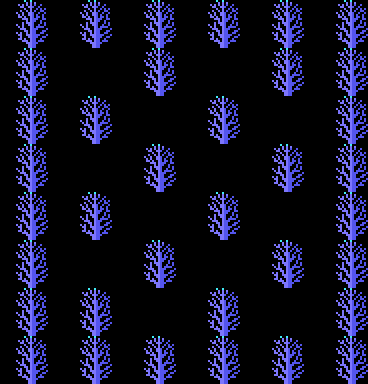
0x5384 — stage 2, the tall trees in blue

0x5384 — stage 5: the same ones, in red
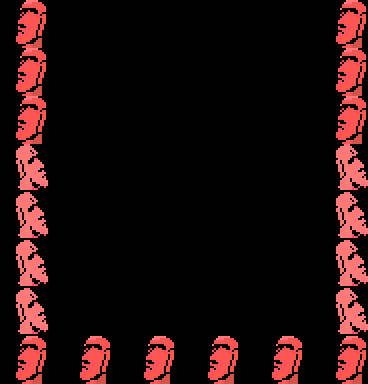
0x5384 — stage 3, the moai, with the road opening up in the middle
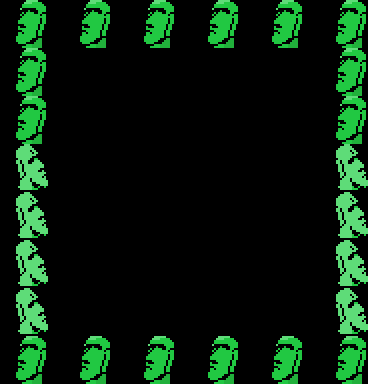
0x5384 — stage 6: the moai in green
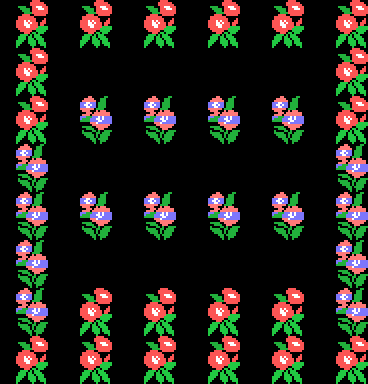
0x5384 — stage 7, the two-colour flowers; the only set of strips with all four different
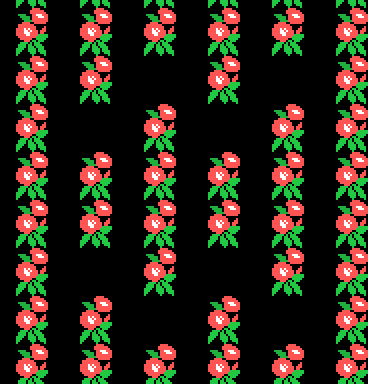
0x5312 — the same stage 0, four pixels lower. That is all it takes to scroll the screen: the character number
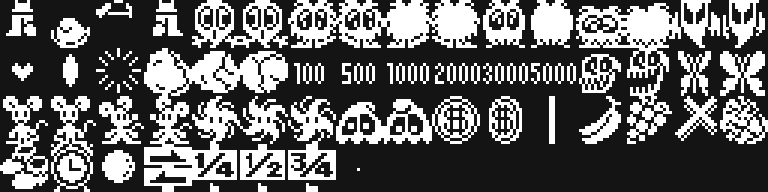
0x5E67 — the 64 16x16 sprites as they end up in VRAM: the little fellow, the twelve creatures, the objects, the points labels and the shots