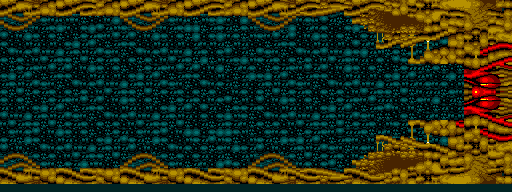
The stages
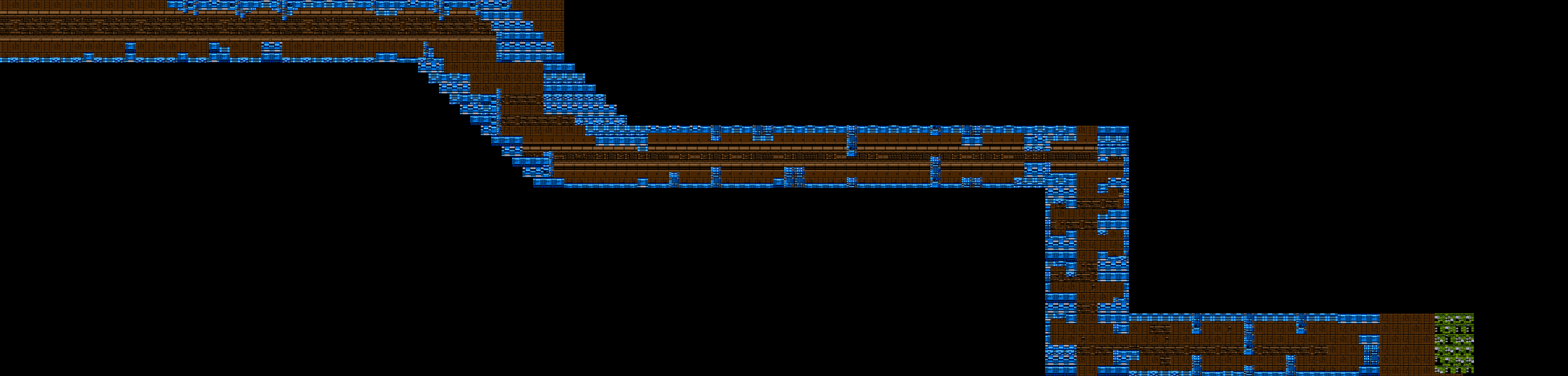
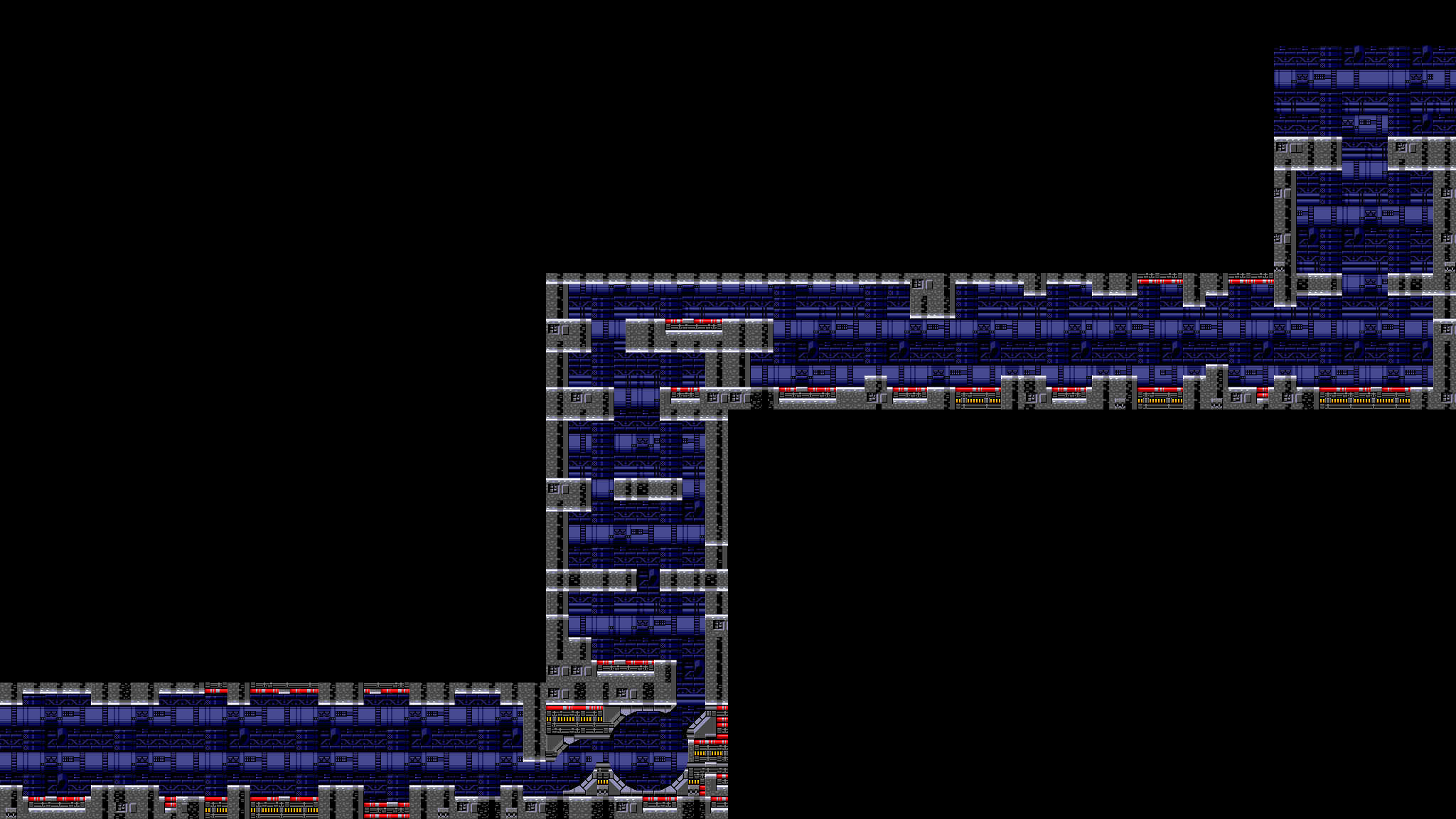
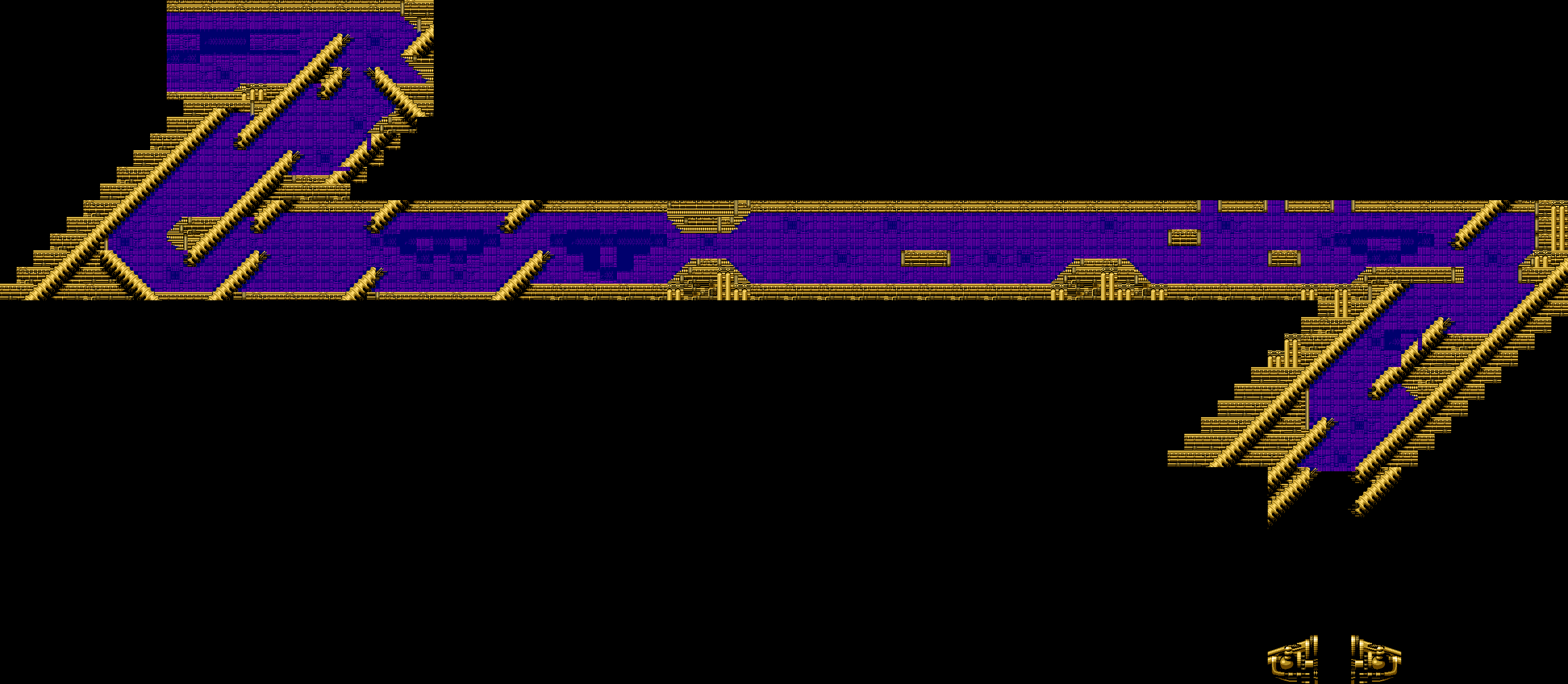
The nine stages, whole and drawn from the ROM by tools/recorrido.py: the
map engine of bank 9 rebuilt in Python, reading the same bytes the cartridge
reads and in the same order, but instead of painting into the 64 x 32
character map at 0xE000 (which wraps around) it paints onto a canvas with no
edges. The characters are the ones the cartridge itself loads when the stage
starts (tools/vram.py, the loader in bank 10), and the colours are those of
its lists and the ones the map changes along the way.
It is not a screenshot: it is checked tile by tile against what the
running cartridge has on screen in every stage (tools/coteja_dibujo.py): in
the map tiles (those not covered by enemy pieces or stars) the 8 x 8 drawing
comes out the same in all of them, 0 different, with the character page the
VDP had set at each moment. The VRAM left by the loader is the cartridge's,
byte for byte.
How a stage moves
The map of the nine stages is in bank 27; the table at p09:7C8C says
where each one starts, with up to six restart points (where play resumes after
losing a life: map order 0x1A counts them in 0xCA1E). Each map byte is a
block of 4 x 4 characters from the stage's table (p09:7D76, 16 bytes per
block, in banks 25 and 26).
The scroll goes in sections (the table at p09:78FF, 12 bytes each): the
Y and X speeds, how often a new column or row comes in and how it is painted
(0xC0CE, table p09:7C5B): a column of 6 blocks on the right, a row of 8 at
the top or bottom, or a row of 15 for the diagonal sections. Every four
columns the map moves on 6, 8 or 15 bytes.
A 0xFF byte brings an order (p09:7858): below 0x10, a new section; from
0x10 to 0x1F, the 16 of p09:7874: jump to another part of the map if a piece
has been broken (0xCE4C), change the character page and the VDP's vertical
offset, the colours, the music, count a restart point, wait for a fade... Each
stage's map ends with the order that stops the scroll for the boss: 0x14
or 0x1E (0xC0D4: the frame stops moving the scroll and loads the boss
graphics, p09:6D95) or 0x16 (0xC0D6, the scroll frozen).
The pages are seven sets of characters in VRAM (p10:80F8): order 0x11
switches from one to another while the stage goes on, and in stage 5 the
frame cycles them by itself (0, 1, 2, 3, 2, 1: the background is animated; in
stage 9, every four frames, p09:6D95). As the page applies to the whole
screen, in the drawing each tile uses the one it was on screen with for the
longest.
The nine
The sections of each, in order (the number is the entry in p09:78FF):
| Stage | Sections | The scroll | Columns |
|---|---|---|---|
| 1 | 0, 0, 4, 0, 11, 0 | right; diagonally up; right; diagonally down, at double speed; right | 556 |
| 2 | 0, 0, 1, 0, 0, 3, 0 | right; diagonally down; right; down; right | 672 |
| 3 | 9, 9, 9, 9 | right, slowly | 344 |
| 4 | 9, 6, 9, 9, 6 | right, slowly; up; right; up | 376 |
| 5 | 8, 8, 8 | right, at twice the speed of stage 1 | 800 |
| 6 | 0, 5, 9, 9, 5, 3 | right; diagonally down and left; right; diagonally again; down | 524 |
| 7 | 9 | right, slowly | 256 |
| 8 | 9 | right, slowly | 176 |
| 9 | 9 | right, slowly, and the boss straight away | 64 |
Stage 8 has no graphics of its own (its list, p10:9156, is empty): it is
seen with the characters stage 7 left behind. Checked playing from 7 into 8: 0
different bytes in VRAM.
Stage 1

Stage 2
Stage 3

The rocks that break (characters 0xA7 to 0xAE, p02:86CB) are not part of
the map: actors put them there, and they are not shown here.
Stage 4
Stage 5

Stage 6
Stage 7

Stage 8

Stage 9