What the cartridge draws
Under each picture is where it comes from and what is on it.
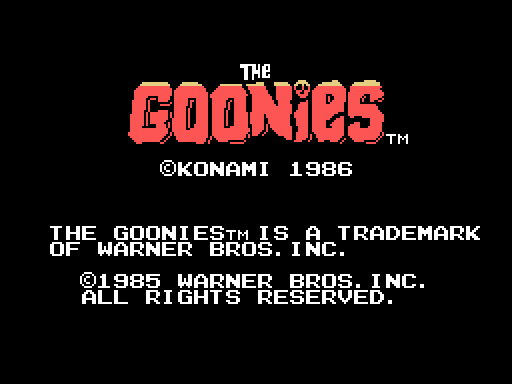
The title screen, built step by step the way the cartridge builds it: the font, the intro sign underneath, the lettering decompressed into all three pattern banks and its tiles written one by one. Checked against openMSX's VRAM: zero bytes different in colour, patterns, sprite patterns and across all 768 tiles of the name table.

The whole of level 1: its four 32x20 tile rooms, decompressed from the eighty bytes of the map, with everything the cartridge puts on top placed exactly where it puts it - the cages, the way in, the skull doors, the stalactites, the skulls, the drips and the hidden item. The rooms are drawn touching, with no caption, and the cages open, showing what they hold, with their padlocks on.

The twenty-three inventory items, each with the level it appears in underneath. The icon is not stored as a picture: the table at 0x6F68 gives ONE tile per item and the game takes that one and the next three to build a 2x2 on the bottom row. Levels 6 and 15 do not show up in the list: they are the two with no item.
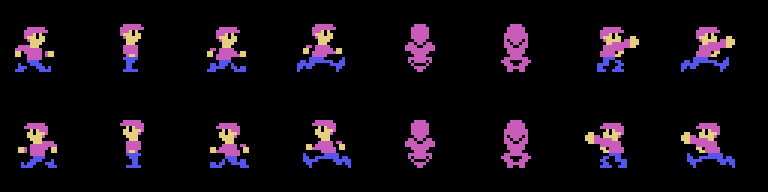
The player's sixteen poses, composed and in colour. An MSX1 sprite carries no colour of its own - that lives in its attribute - so each pose is several overlapping 16x16 sprites, each with its own. The bottom row is the same mirrored, and those twenty-two patterns are not in the ROM at all: the cartridge manufactures them at boot.
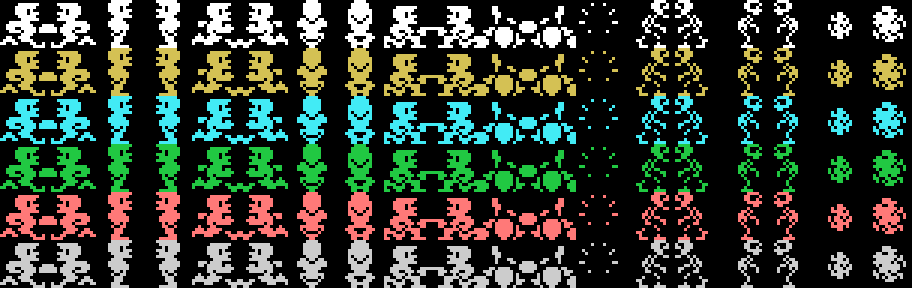
The single-square sprite patterns, in the six colours the game uses. The colour is not in the drawing: it comes from the attribute, which is why the same pattern shows up six times over. The bats, the skulls and the many-legged creature all come from here.
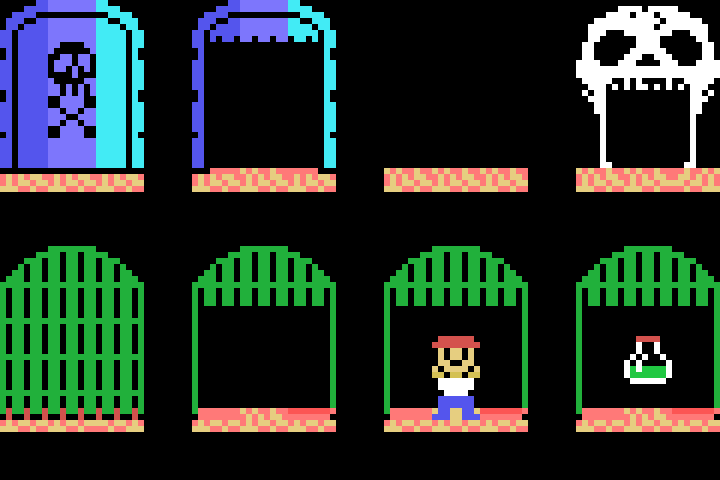
The skull door - which opens only once all seven friends are freed - the door to the next level, and the four cages: shut, open, with the friend inside and with the item inside. Each is a tile block straight out of the cartridge, untouched.
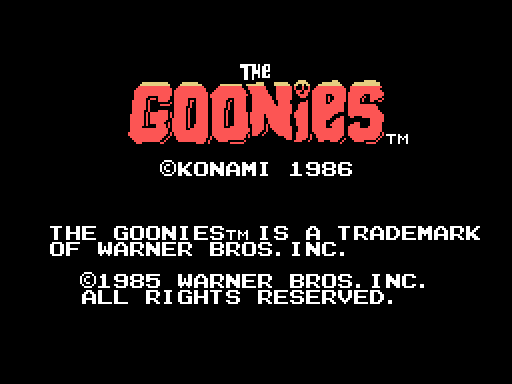
The title screen, built by running in Python the same steps the cartridge runs: the compressed logo, the in-house font and the three lines of the Warner licence.

The raw sprite patterns, as they sit in VRAM. Laid out like this they say almost nothing, which is why the sheets above are not this dump: a creature is SEVERAL patterns, and what changes from one pose to the next is where each one goes.
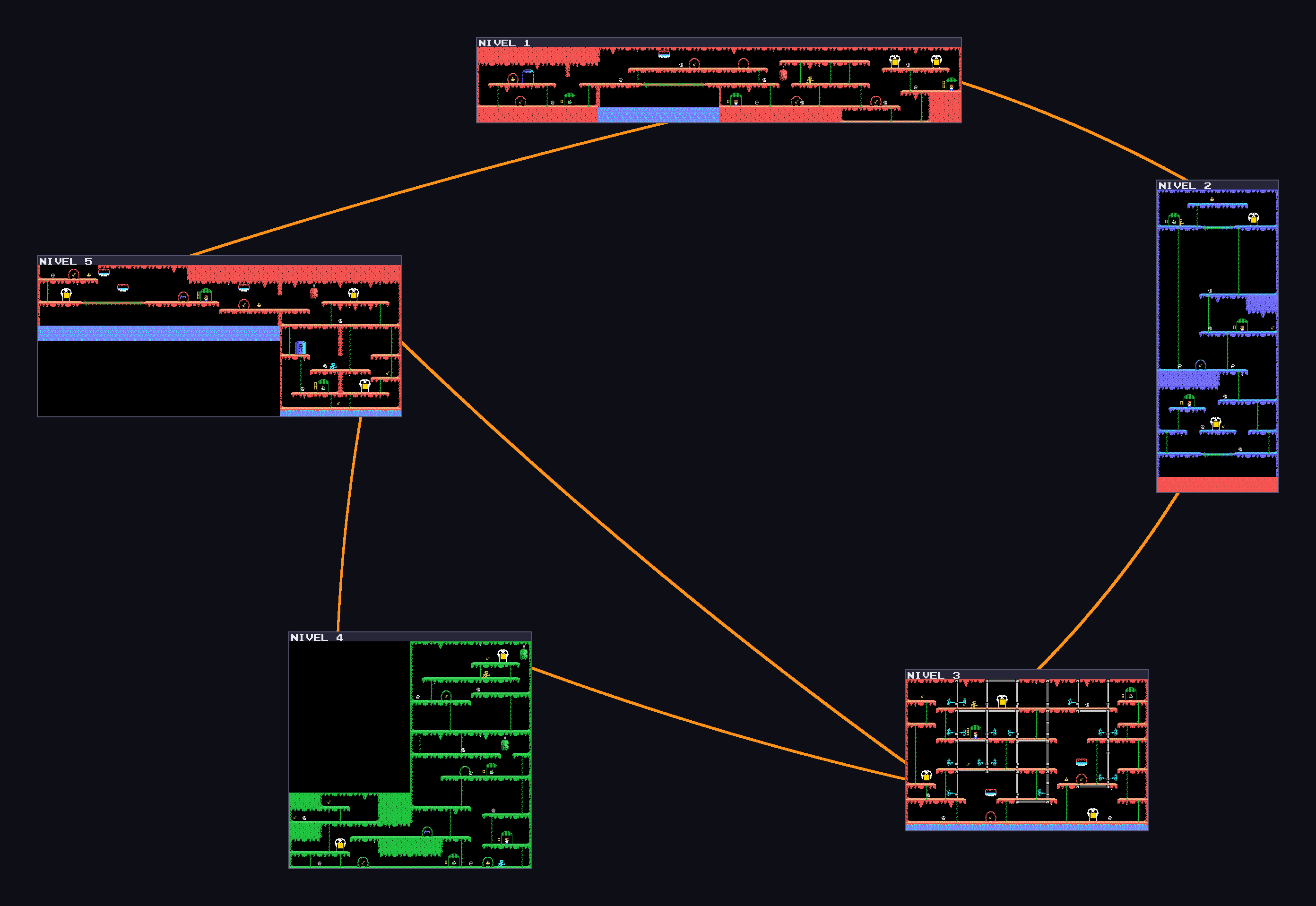
The five levels of round 1 and their skull doors. Each level is laid out with the room arrangement 0x52DB gives it, and every line joins TWO doors that really pair up: door j of level A says (B, k) and door k of level B says (A, j). All 64 in the cartridge pair up like that, and none leaves its round. The plans are at 1:1 and the lines run behind them.
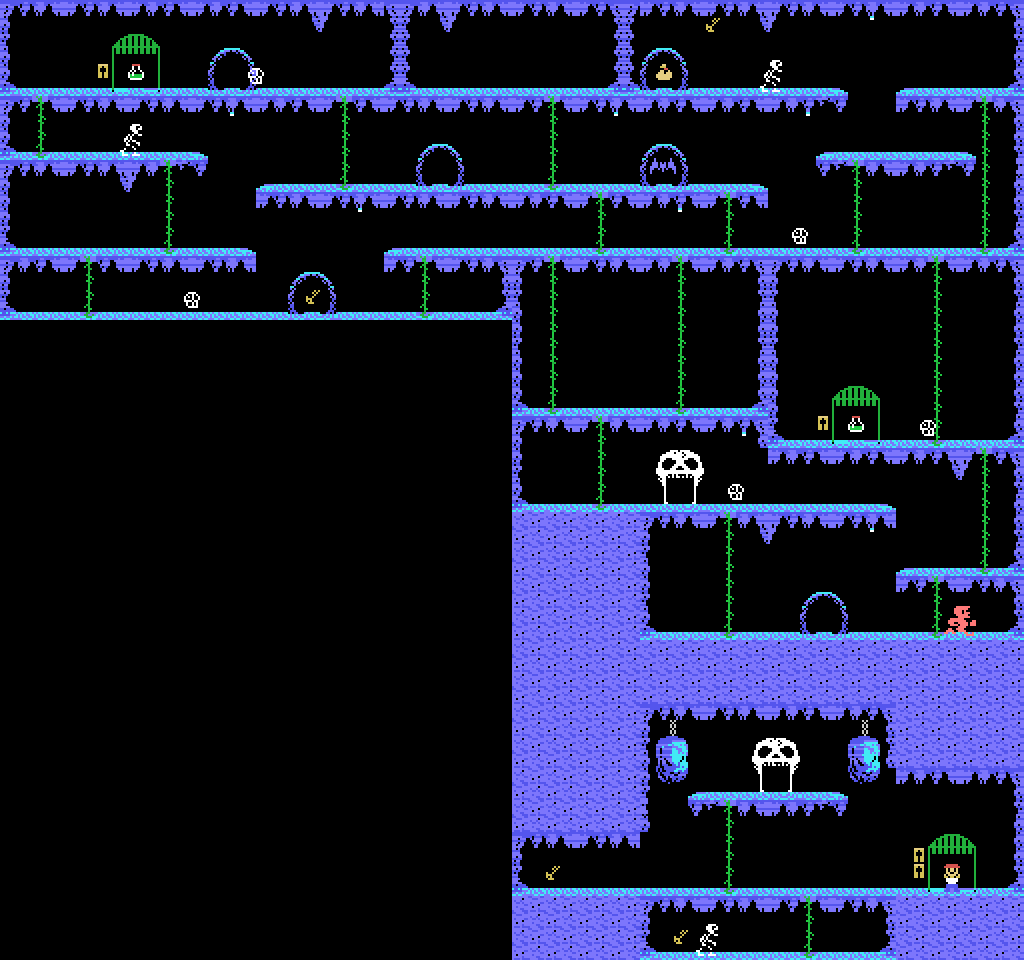
Level 8, one of those that are neither a row nor a 2x2: room 1 at the top left and the other three in a row below. Ladders and platforms carry on from one room into the next, which is the proof that the arrangement at 0x52DB is the right one.
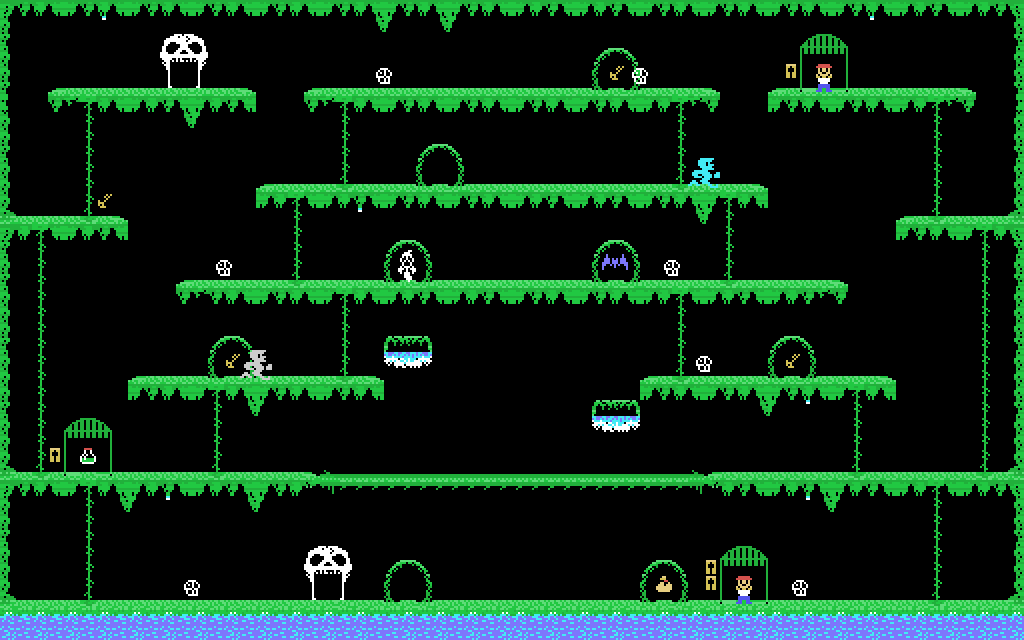
Level 13, one of the three that carry the many-legged creature: the one that lies hidden in an 8x8 box until the player steps on it. You can also see the water, which covers what is beneath it and writes it down so it can put it back when it retracts.
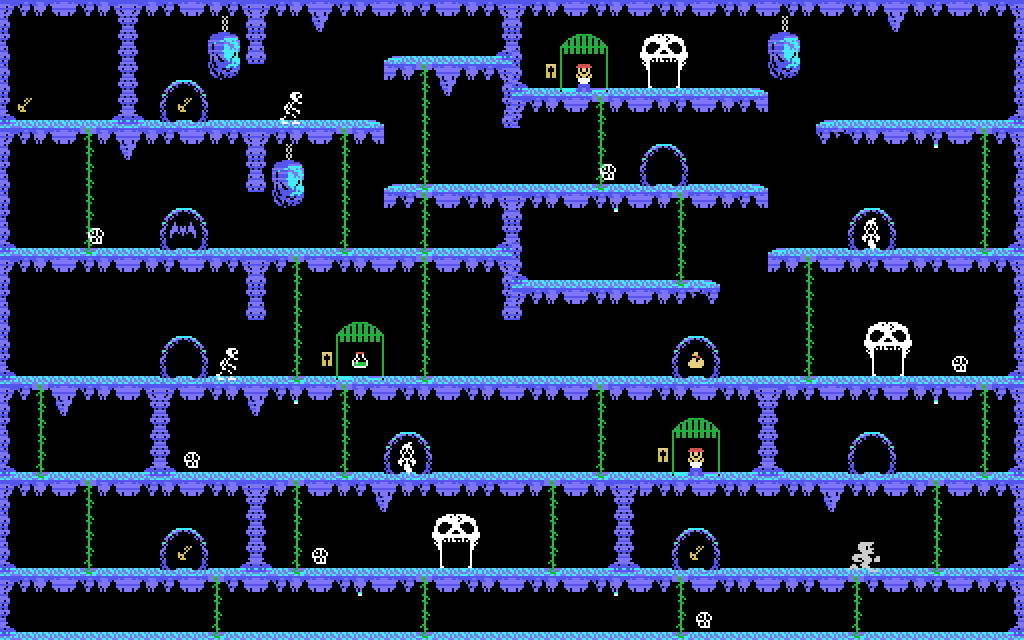
Level 25, the last one: thirty-two rising columns, eight stalactites, three boulders and three chasers spread across the four rooms. It is by some distance the level with the most columns in the cartridge.
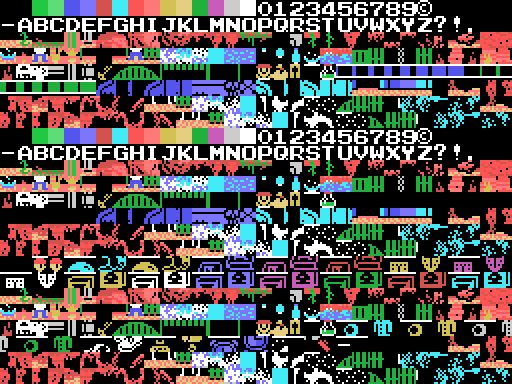
The 256 tiles of level 1 in their three banks, one under the other. SCREEN 2 has three independent colour sets, one per third of the screen, which is why the same drawing comes out in three colours depending on where it lands. Here are all three versions, exactly as they sit in VRAM.