What the cartridge draws
Under each picture is where it comes from and what is on it.
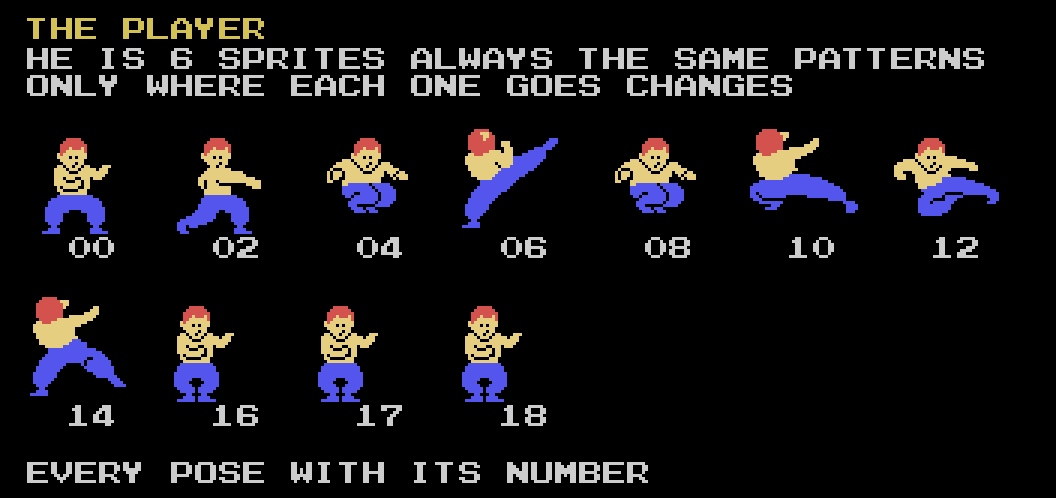
The player, assembled. He is not one sprite: he is SIX, and his six pattern numbers -04 08 0C 10 14 18, the ones at 0x50A6- never change. What changes in each pose is WHERE each goes and WHAT it holds, and the recipe at 0x50AC says both. The offsets and colours here are checked against the sprite attribute table of a running machine: twelve dumps, twelve poses recognised
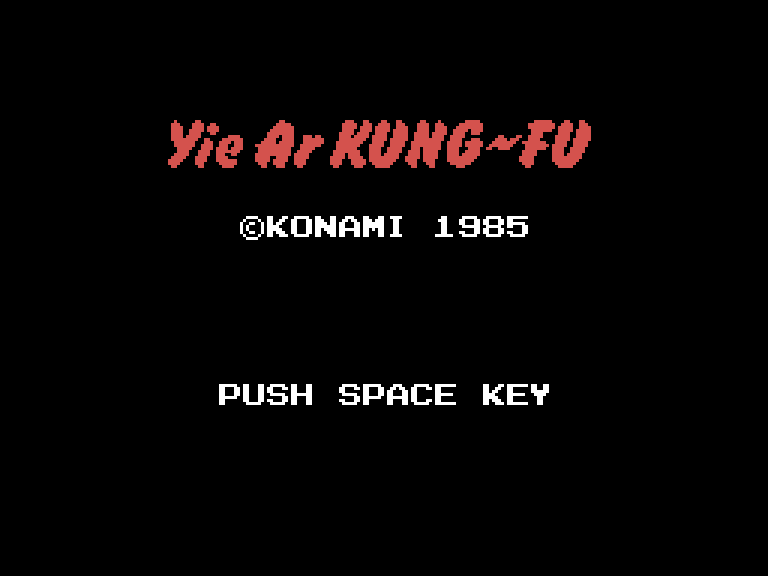
The title screen, built with the cartridge's own steps: the flat colour of the first sixteen tiles (0x560f), the font script into VRAM 0x2080, the 0xF0 fill and the two wordmark scripts, and on top the tile lists at 0x5909 and 0x559b, which bring the logo, the PUSH SPACE KEY and the copyright
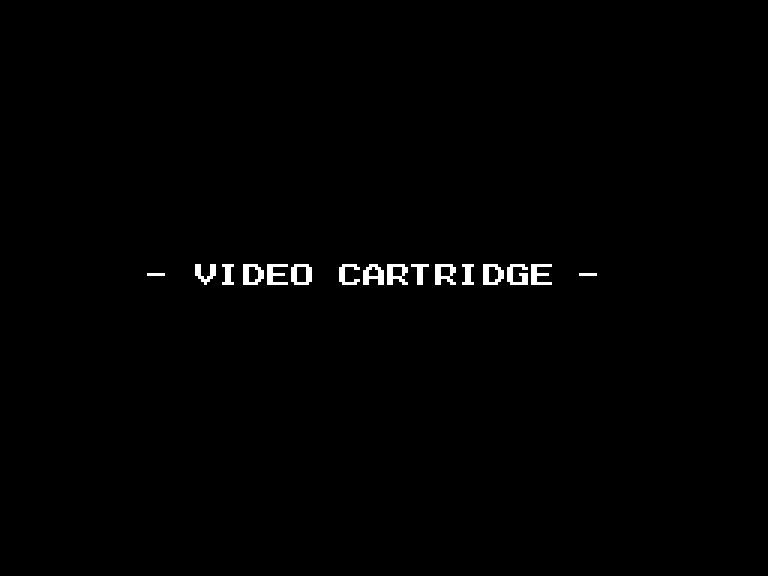
The same backdrop with the other list, the one at 0x55c8: the VIDEO CARTRIDGE that scene 0 draws one frame in two before handing over to the logo
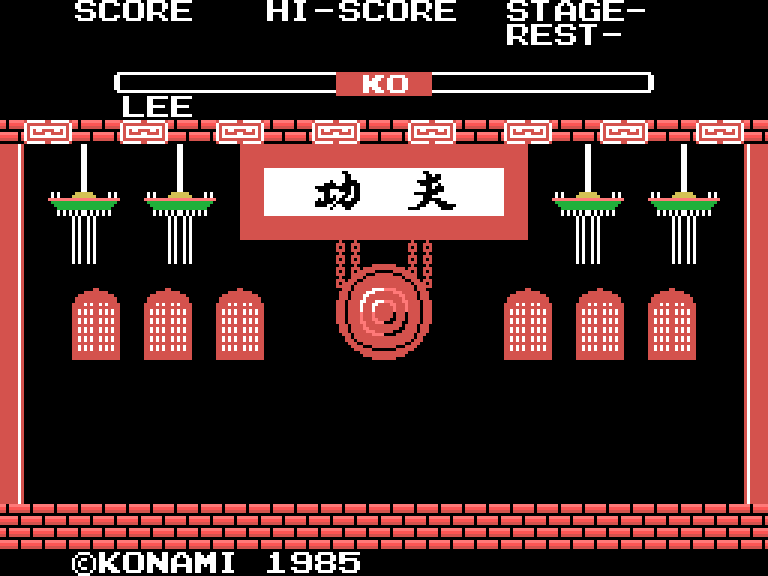
The fighting screen. The temple -the columns, the lanterns, the sign, the gong, the windows and the brickwork- is written as tiles by the script at 0x5da4 into the NAME table; the patterns and colours come from 0x605b and 0x6207. Compared against the emulator's VRAM 120 seconds into a game: zero differences in colour and pattern

WANG, the first opponent, in his seven poses. The opponents are NOT sprites like the player: they are tiles written into the name table, and each pose is a RECTANGLE of height by width with its tiles compressed inside the pose block itself. WANG’s idle is 00 10 E3 FF 11: a gap, the head, three gaps and fifteen consecutive tiles. Twenty, which is 5 x 4

TAO, the second. Each opponent has his own pose width -TAO 4 tiles, WANG 5, CHEN and LANG 5, WU 4- which is why laying them all four to a row, as this site did until 2026-09-04, cut the figures to pieces

CHEN, the third, the one with the chain. He is the only one whose constants the hard build changes -five of them- all belonging to his long weapon

LANG, the fourth, with eight poses

WU, the fifth and last, also with eight. His pose table has TWENTY entries, two more than the other four