The game
Shalom: Knightmare III (Konami, 1987, RC-754) is an MSX adventure in Japanese: you explore a world of rooms, talk to people with a command menu and fight in action scenes. Everything on this page comes from the cartridge's tables; no picture is a capture.
The title
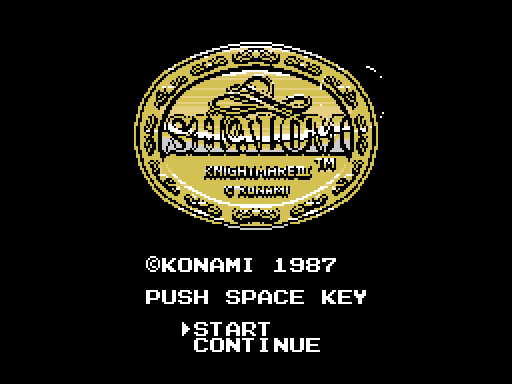
The Konami logo (p04:6527, picture) and the title
screen (p04:622B): five graphics in two thirds, the flipped ones from
p06:B255, the font and the name rectangle from p06:B5CA.

The story
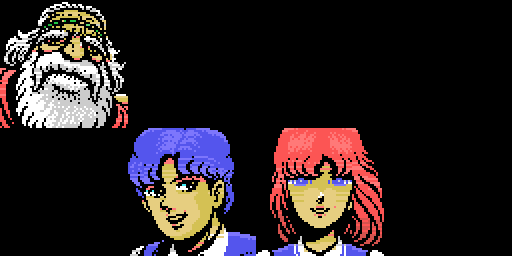
Eight panels that appear one per page (p04:6E03). historia_0 loads their
drawings with four RLE (p04:7CB6, p04:7FFA, p05:81C0, p05:833E) and
sets the colours to zero; each page uncovers one panel by copying its colours
with a wipe (list p04:7C71, p00:4CD4) and writes its text (p04:6EDC). The
panels stay: at the end all eight are shown.
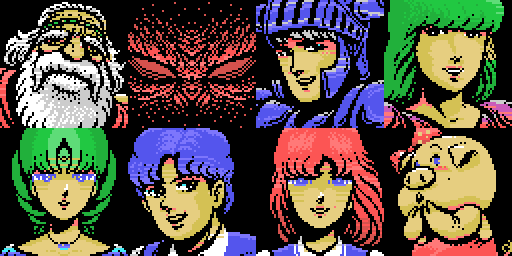
The texts introduce the characters: the hero, the heroine, King Pampas,
Princess Chelsea, Popolon, Aphrodite, Butako and the great demon Gog. The story
sets "あなた" ("you") as the first name (p04:6E5D). Page by page:
1, 2,
3, 4,
5, 6,
7, 8.

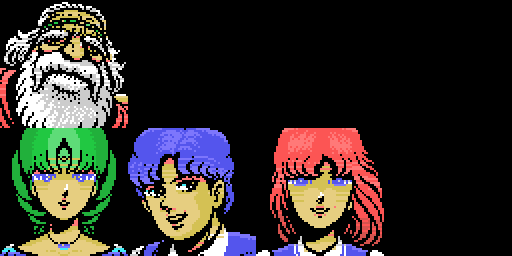
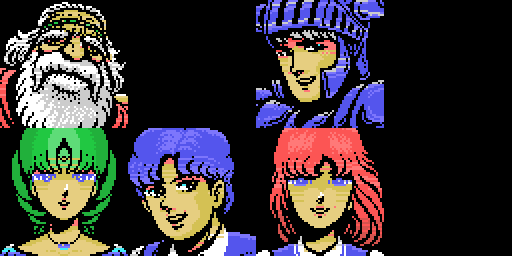
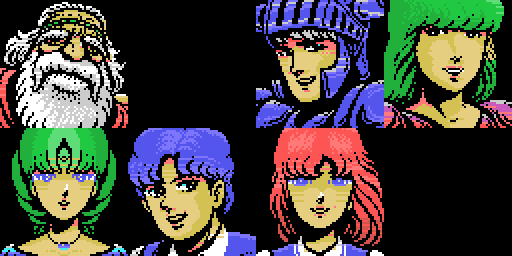
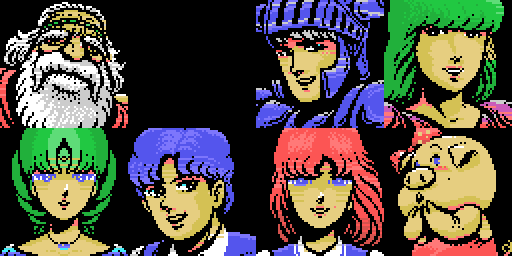
The opening scene
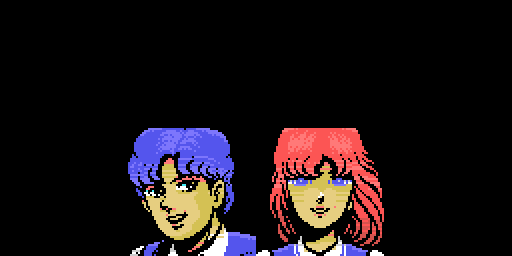
A conversation with options (p04:6693, 53 steps). Step 5 (p04:671A) builds
the heroine's face (the same colours as her panel in the story), a 12 x 8 tile
drawing and the frame with the emblem; the body only gets its colours if option
1 is chosen (p04:678E, wipe p00:4D28).
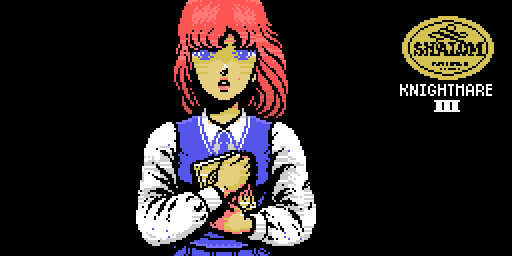
What is said are messages 0x02-0x2A of the table of room 0x200, with answer
tables per option (p04:6873, p04:687B, p04:6883).
The world
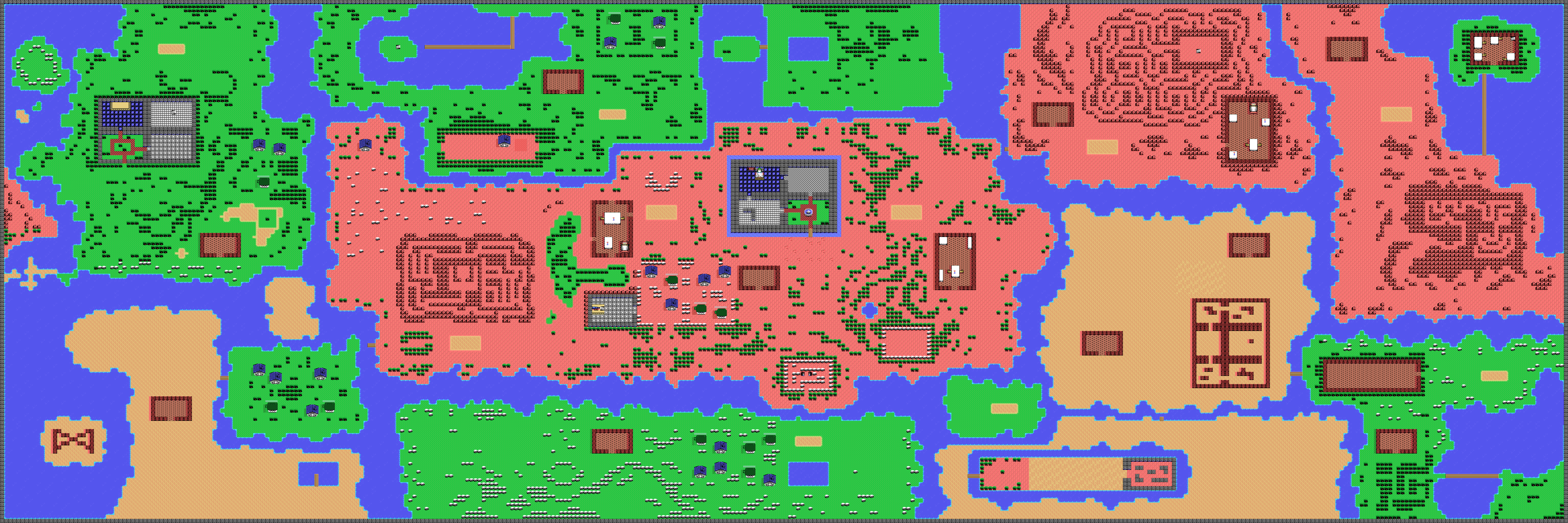
The outside is a 32 x 16 grid of rooms (room = row x 32 + column): the table
p02:858C adds -0x20, +0x20, -1 or +1 when leaving by each side. Each room is
12 x 8 blocks of 16 x 16 in nibbles (p00:514B), with its tile set
(p00:47C6), its graphics (p00:482F) and the drawings that depend on the
story flags (p09:60CC).
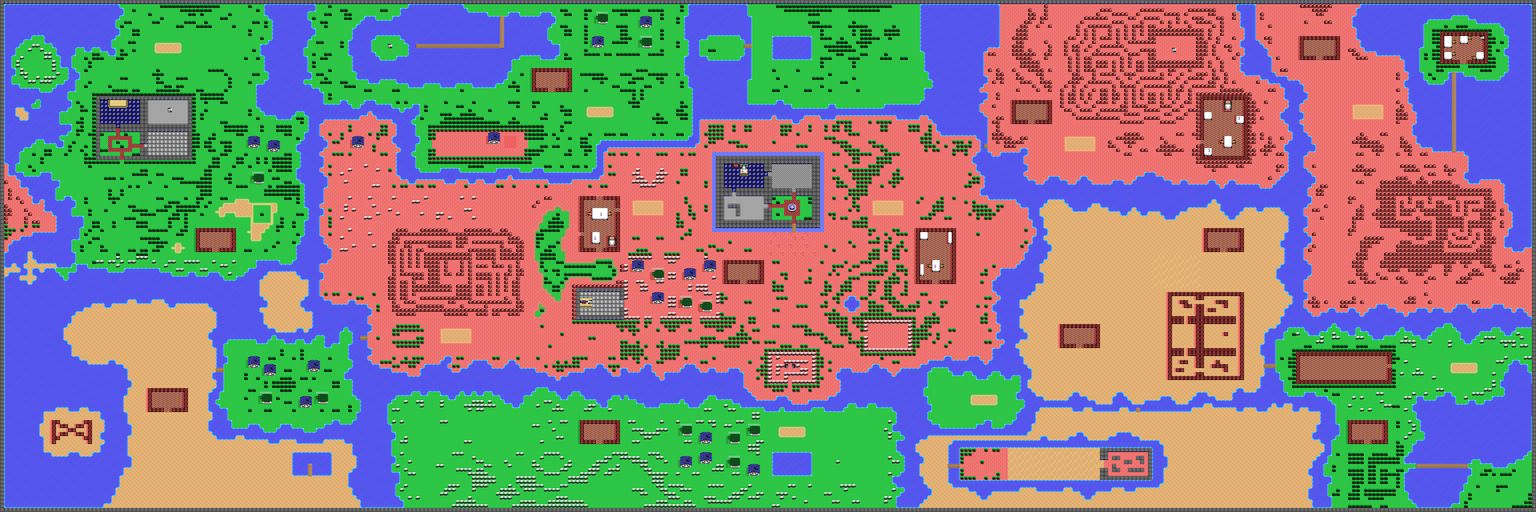
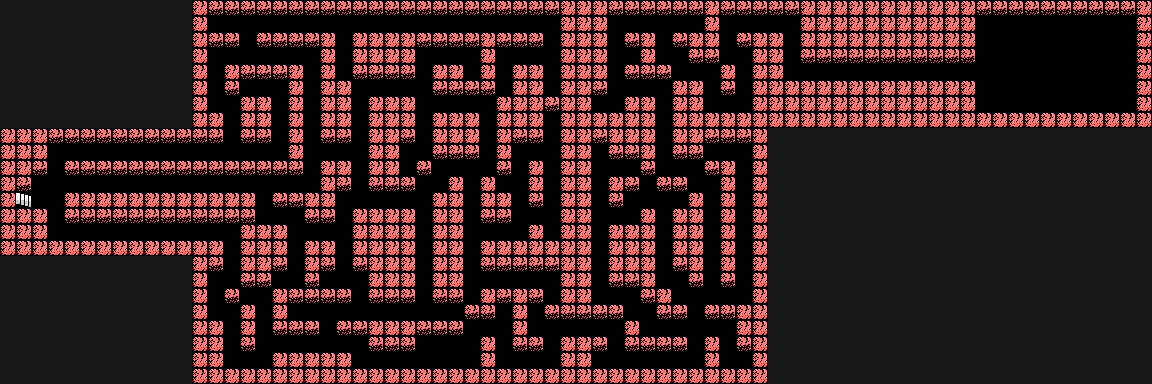
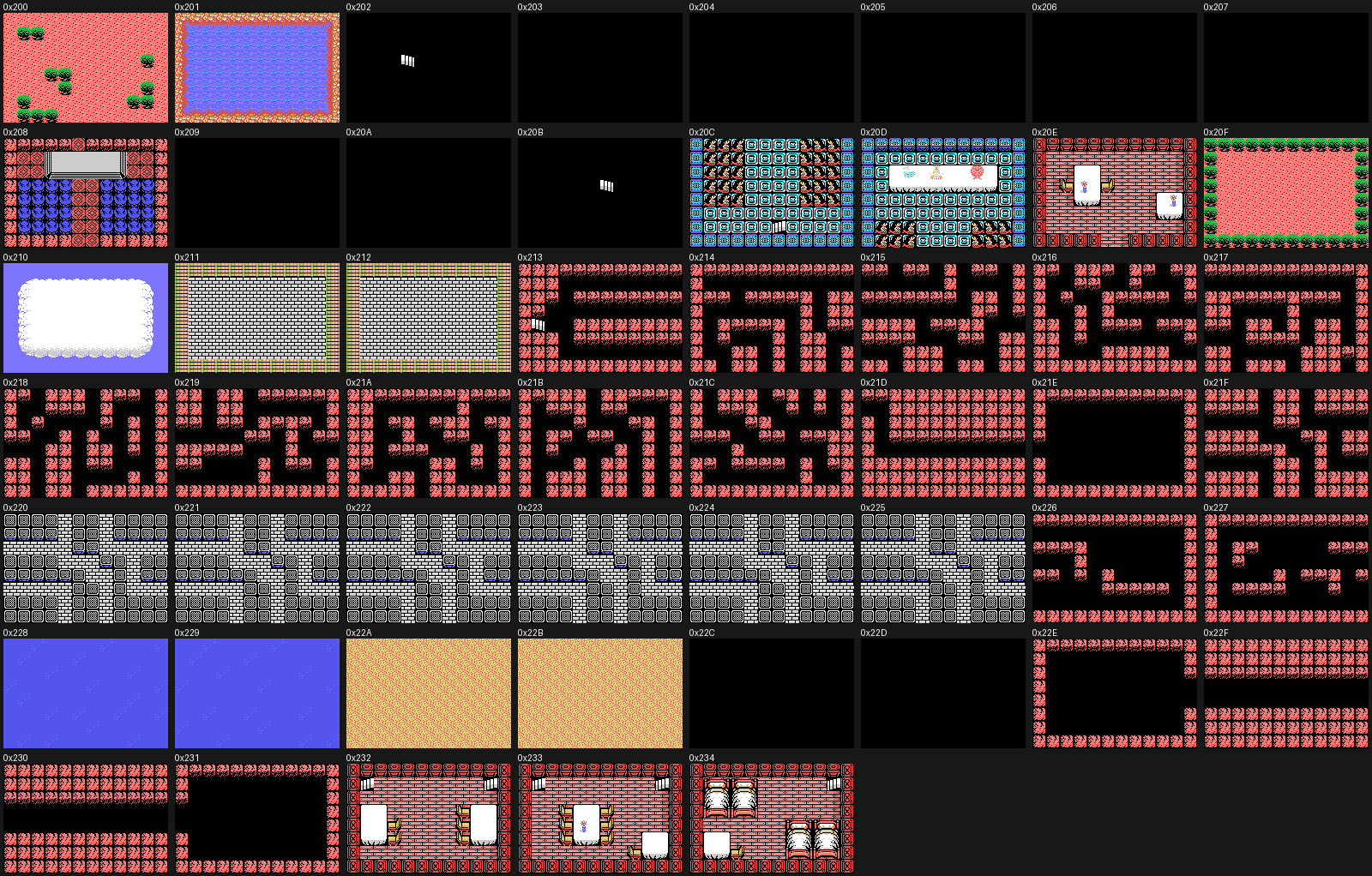
The outside at full size. The rooms from 0x200 are linked
by hand in the code (p02:859C, p02:8714, p02:88D4; 0x228-0x22D at random
with p02:8C83): the first dungeon,
the second and all the rooms from 0x200 on their
own.
Shalom
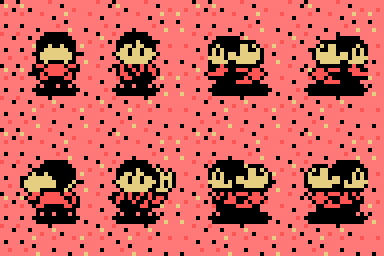
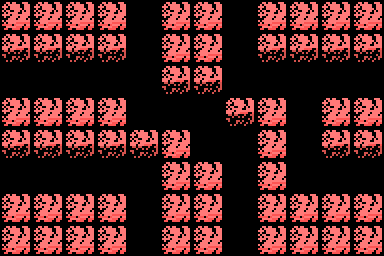
Three 16 x 16 sprites per frame (p01:772A); the frame is the direction plus
bit 4 of his frame count (p01:7709): the drawing changes every 16 frames.
The characters in the rooms
Each room has its list (p07:8BC2): type, position and voice. Their two colours
and their name come from p07:83B4; the name is 4 letters from p08:A063.
They are drawn with two sprites using the drawings of p07:97E8 and the
room's patterns (p18:6A28). The frame is set by each type's routine
(p07:882D), read one by one and checked by running its creation
(tools/coteja_actores.py): of 302 types checked, 300 match and the other 2
have not started walking yet.
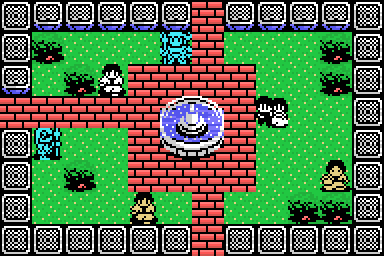
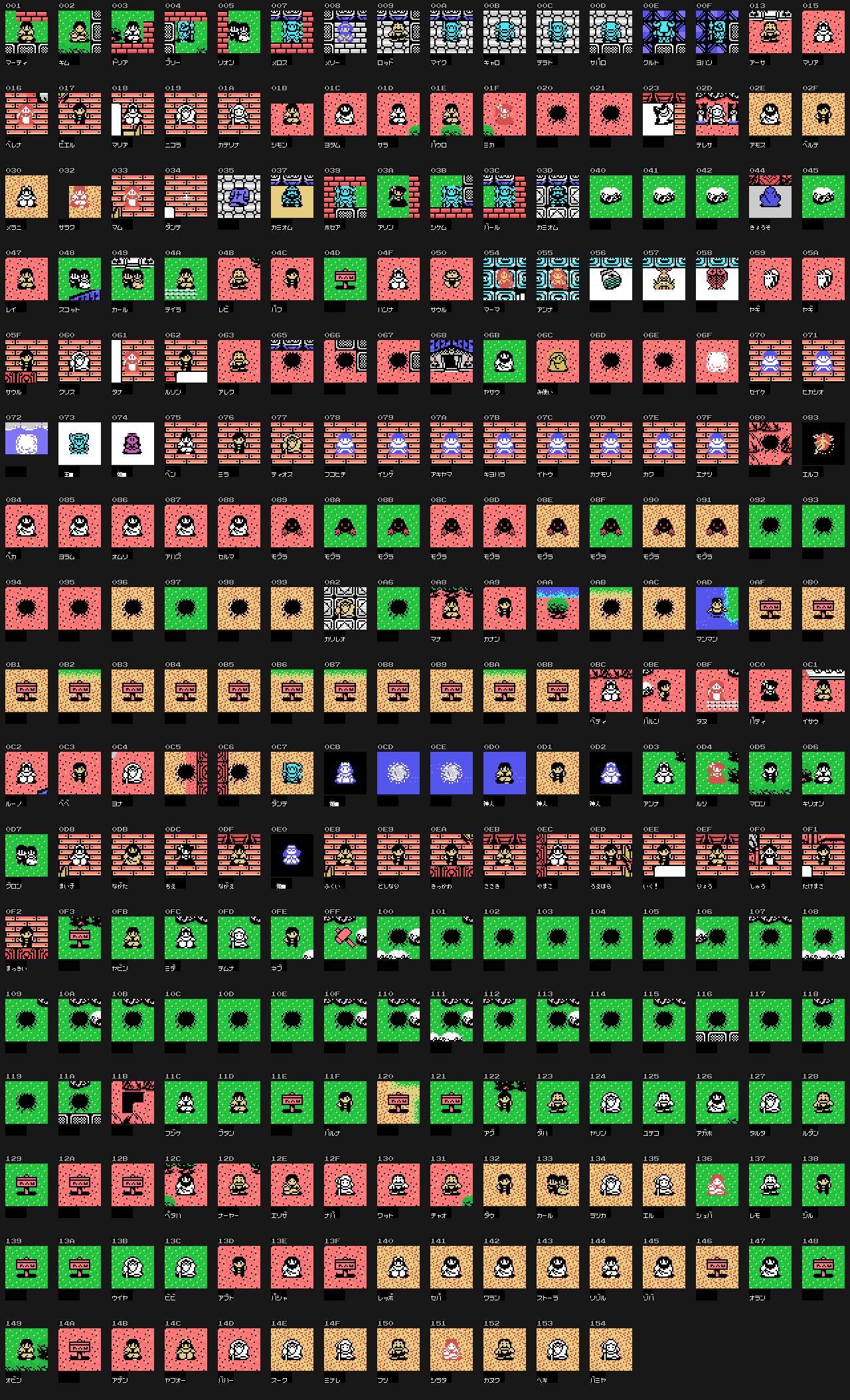
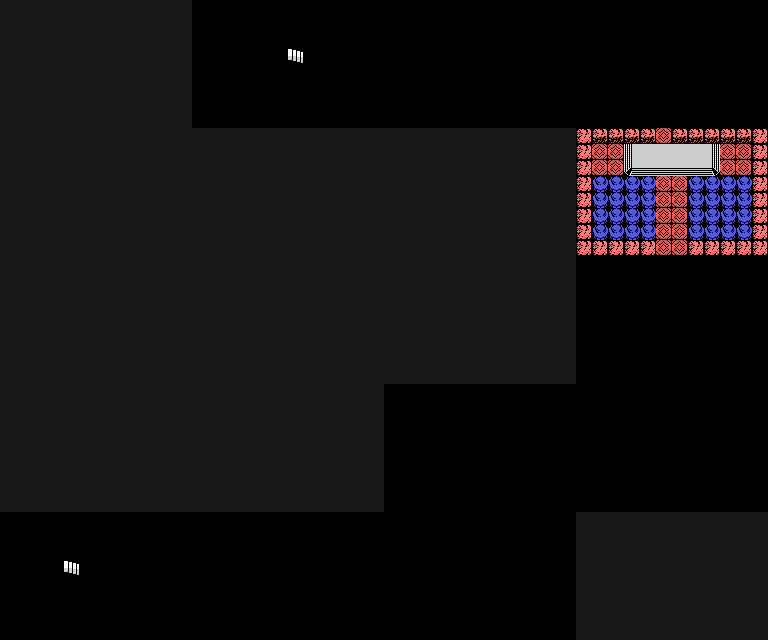
A room with its characters walking.
There are 325 types; those with colours 0/0 or no drawing are not shown. Three
(0x68, 0xAA and 0x11B) are not sprites: they put the 4 tiles of their frame in
their block (p07:8705).
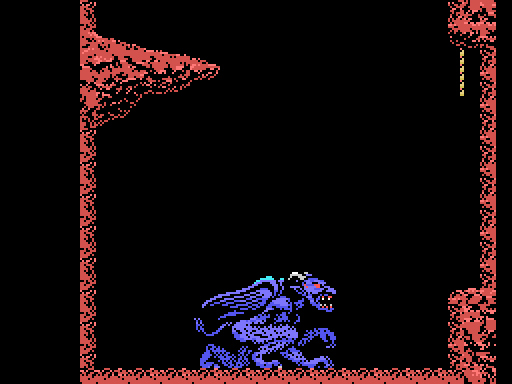
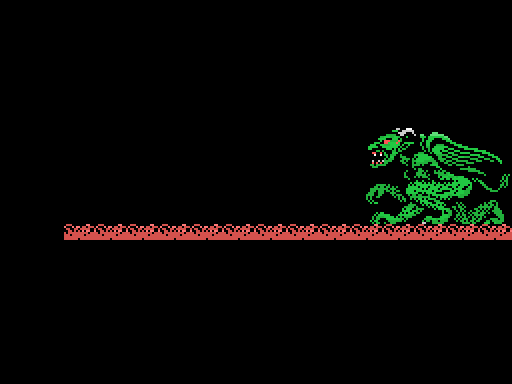
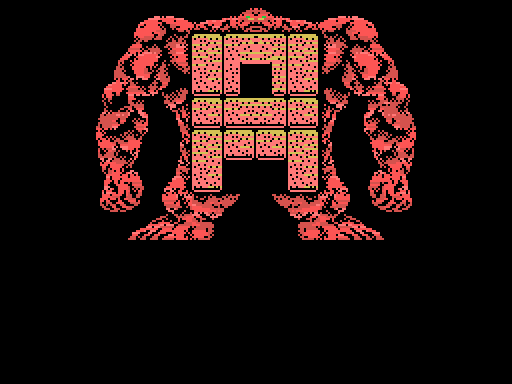
The action scenes and their bosses
Nine scenes (p02:906E). p10:8C60 prepares them and p00:4893 loads their
graphics; the rival is the object whose class equals the scene number and it
is painted with tiles as it appears: on its first step or, for 2 and 4, bit by
bit in step 2 (p10:9120, p10:9710).
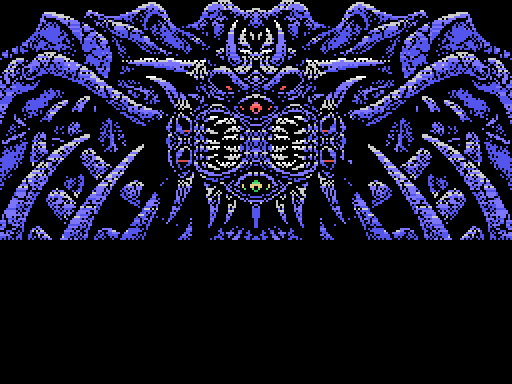
All nine: 1, 2, 3, 4, 5, 6, 7, 8, 9.
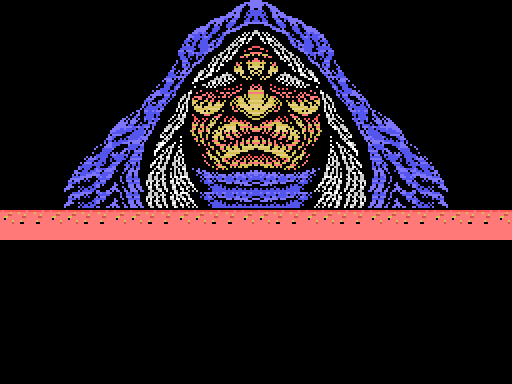
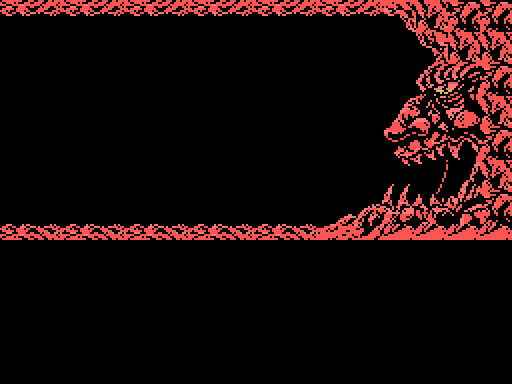
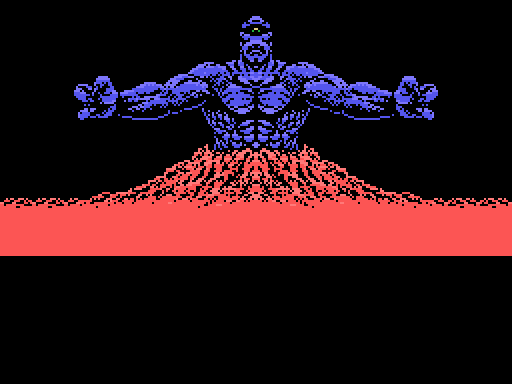
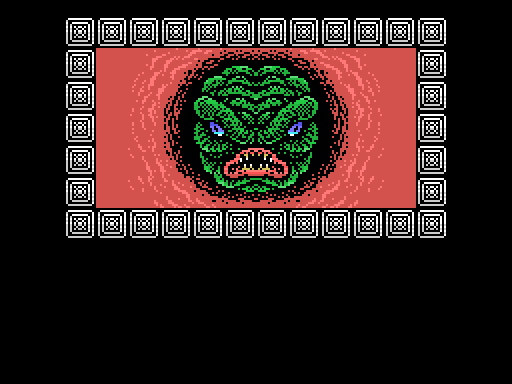
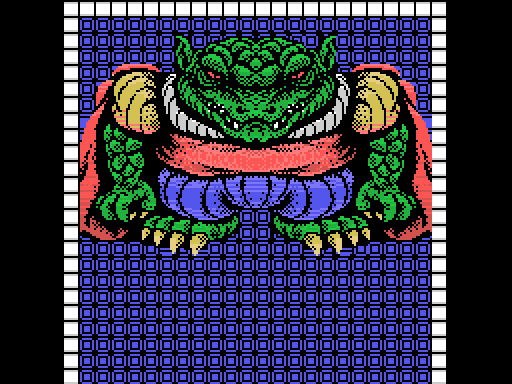
Life (0xE3F6) starts at 0x14 (8 in scene 7 of the script); each hit takes 1
and gives 0x40 or 0x20 frames without damage. With item 11, the cloak, only one
hit in two counts (p11:A7B8). The bar is 10 cells, 13 in scene 4
(p09:6B51).
The status panel
The box on the right shows one of 17 pictures (0xE368): the RLE of
p12:733E placed by p09:6713.

The commands and the items
The table p04:7A15 holds 94 names: 1 to 24 are the items you carry
(0xE9D0, bit 0); the rest are the menu commands.
- Items 1-12: たんけん, ローソク, みず, ゆびわ, はたけのき, てがみ, オノ, ダイヤ, フリーパス, ネックレス, マント, ハンマー. From 13 to 24 the table says あける.
- Some commands: 耳をすます, 目を開ける, 話しかける, 見る, 調べる, 取る, 使う, 見せる, わたす, たたかう, にげる, パスワード.
Items are saved as bits of the game (0xEB53-0xEB55, p03:BE63).
The texts
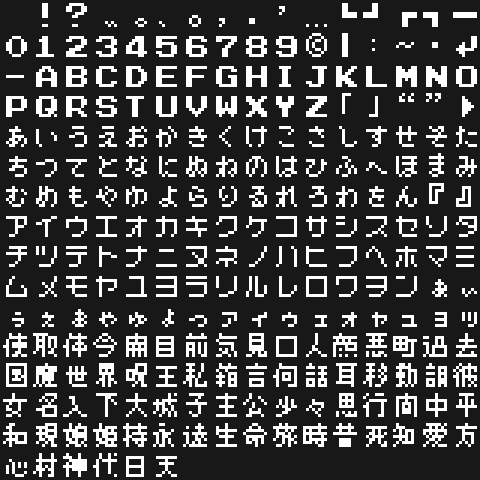
The 902 messages of each room's tables (p21:639E, p21:64BA) and the 94
options, taken out with the font table: 246 characters of 8 x 8 (p04:6F39)
with kana, digits, letters and 70 kanji. The voicing marks (dakuten) go on the
row above (p00:4F1B).
Saving
- Password (bank 14): the 62 bytes of the game, a CRC-16 (polynomial
0xA001) and a key; 130 letters. - Tape (BIOS
00E1-00F0), disk (BDOS) and another cartridge with "YZ" at0x4010(p01:60CB).
The music
In The music: 42 pieces taken by running the bank 29 engine and checked against openMSX.