What the cartridge draws
Under each picture is where it comes from and what is on it.
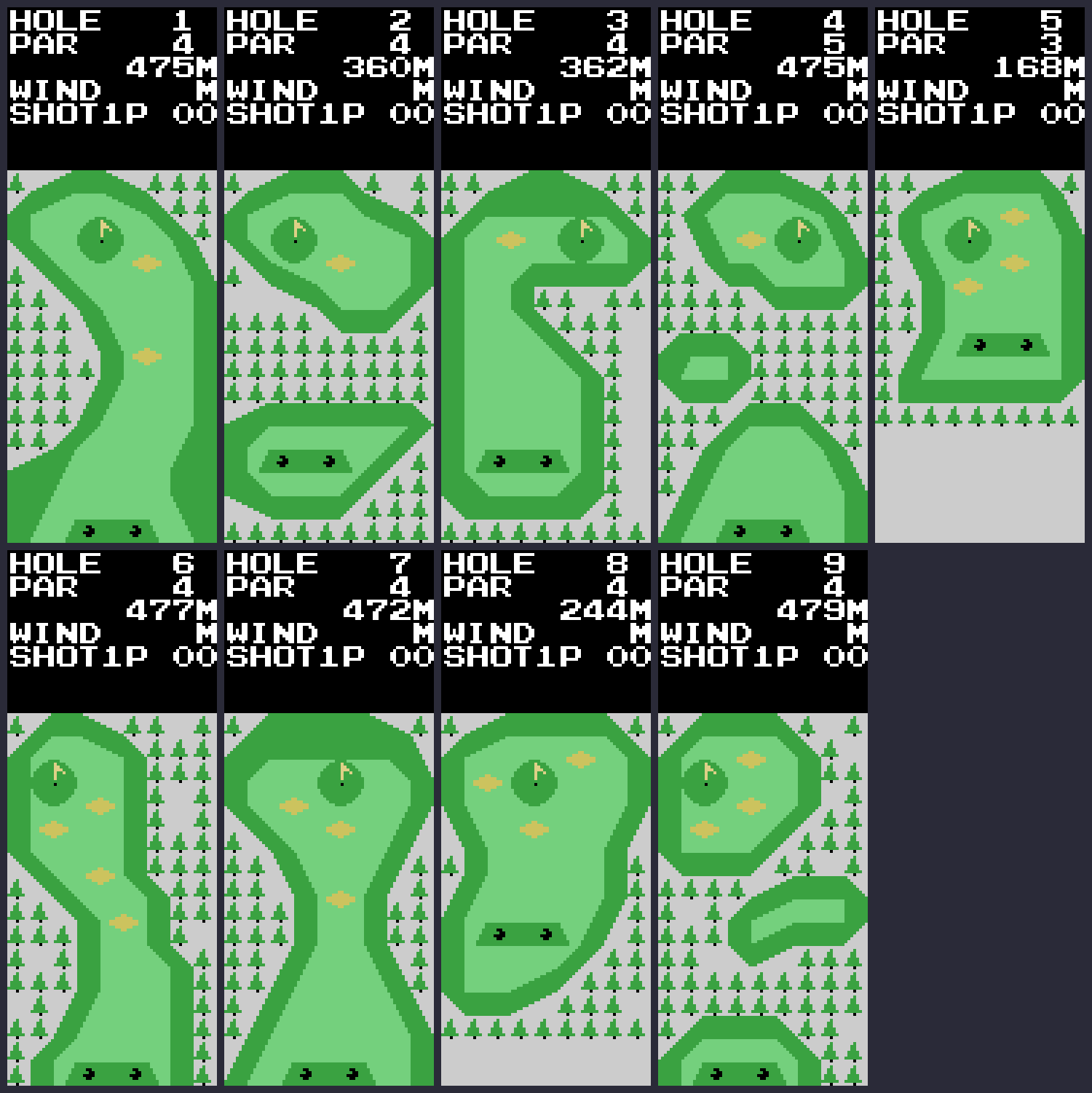
The course's nine holes, each with its panel: number, par, length in metres and the flag placed where the cartridge says. These are not captures: Python paints them with the Z80's own script interpreter, following the pointers at 0x79BC. That they are right is not an impression — the plan was compared cell by cell against thirty openMSX dumps, with zero differences
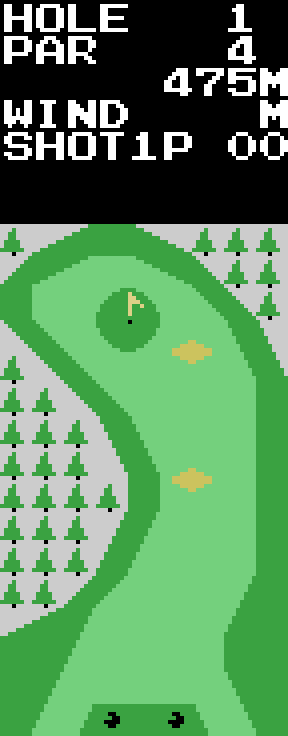
Hole 1 up close, par 4 and 475 metres. The left column is the whole panel as the cartridge builds it; the wind cell is blank because that figure is not in the ROM — the R register draws it
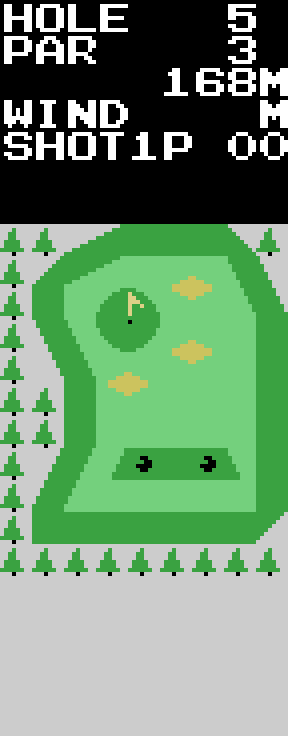
Hole 5, the course's only par 3: 168 metres, with the green almost on top of the tee and bunkers in between
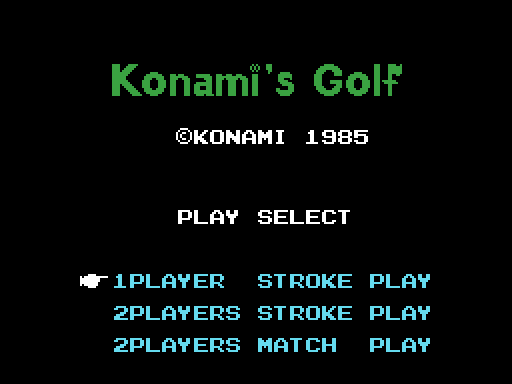
The title screen, built with the cartridge's own steps: the script at 0x44E9 decompresses the wordmark's 38 tiles and 0x4354 lays them out in two rows of 19 from VRAM 0x3887
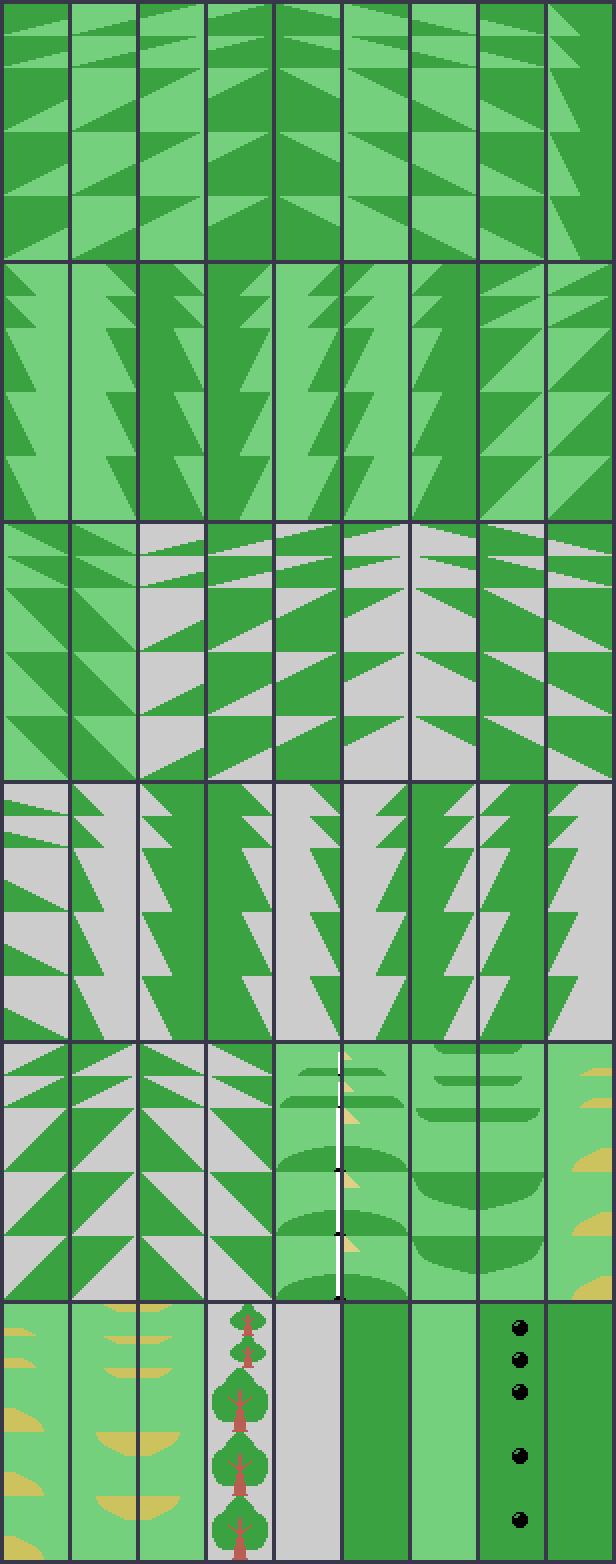
The 54 cell codes the perspective view is built from, each drawn at the five distances the cartridge stacks them at: the same code is four tiles tall up close and two at the back
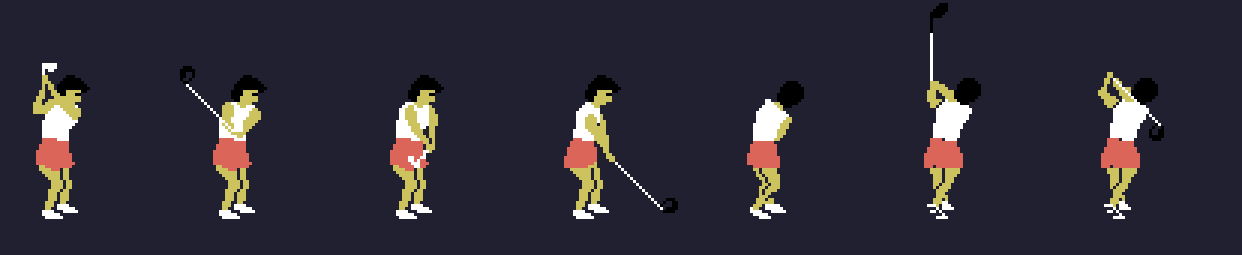
The swing's seven frames, decompressed from 0x78FF and assembled sprite by sprite the way 0x5862 does it, in their priority order
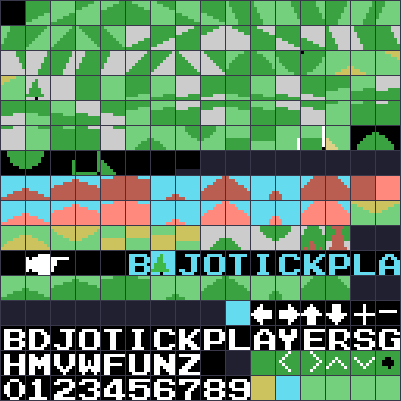
The course's 256 tiles with their colour, as they sit in VRAM once 0x482E has loaded the artwork
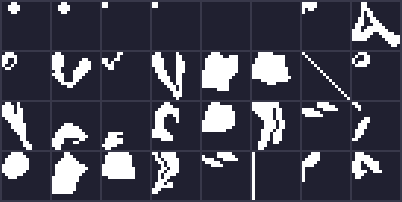
The 32 sprite patterns of 16×16 loaded during play: the golfer, the ball, its shadow and the flag
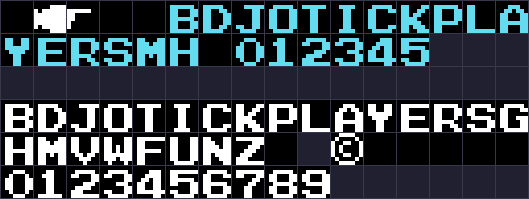
The font everything is written with. It is not ASCII: E0 is H, D3 is O, D9 is L and DC is E, and the digits are 0xF0 plus the digit