What the cartridge draws
Under each picture is where it comes from and what is on it.
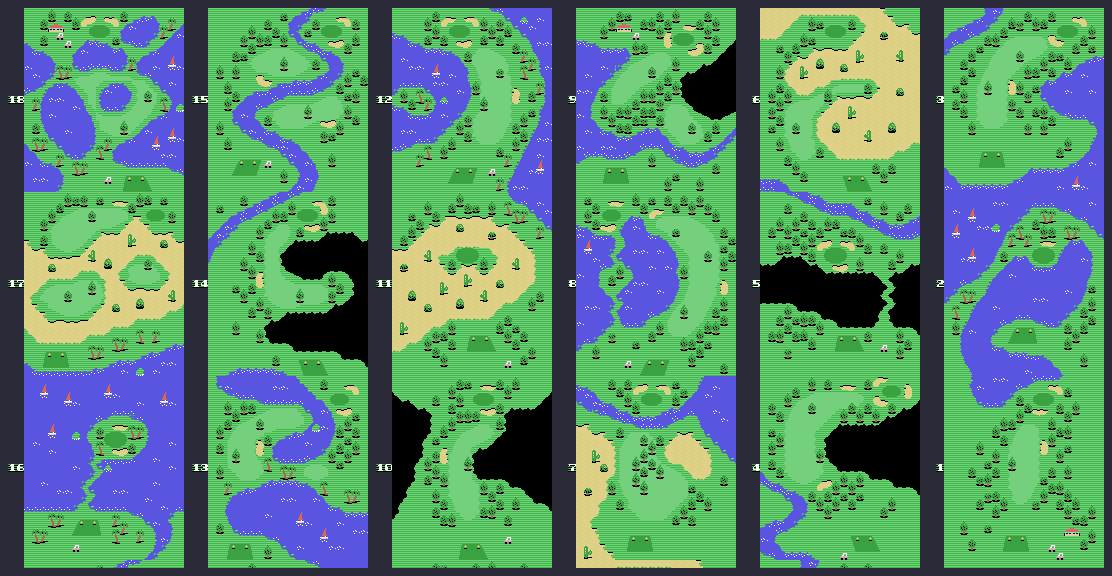
The whole course: the eighteen holes stacked into the 20 × 415 cell strip they really form, hole 1 at the very bottom and hole 18 at the top. It is cut into six columns of three holes because in one piece it is one cell wide for every twenty tall; each column continues above the one to its right, and the row each starts on is the row the previous one ended on. The numbers are the hole numbers, written in the cartridge's own font. River, sea and desert cross the joins uncut: the course is an island

Four joins up close — holes 1/2, 6/7, 11/12 and 17/18 — five rows either side of the row they share. Lake, sand and shoreline carry from one hole to the next without a jump. The join between holes 6 and 7 is the weakest of the seventeen and the desert still crosses it whole
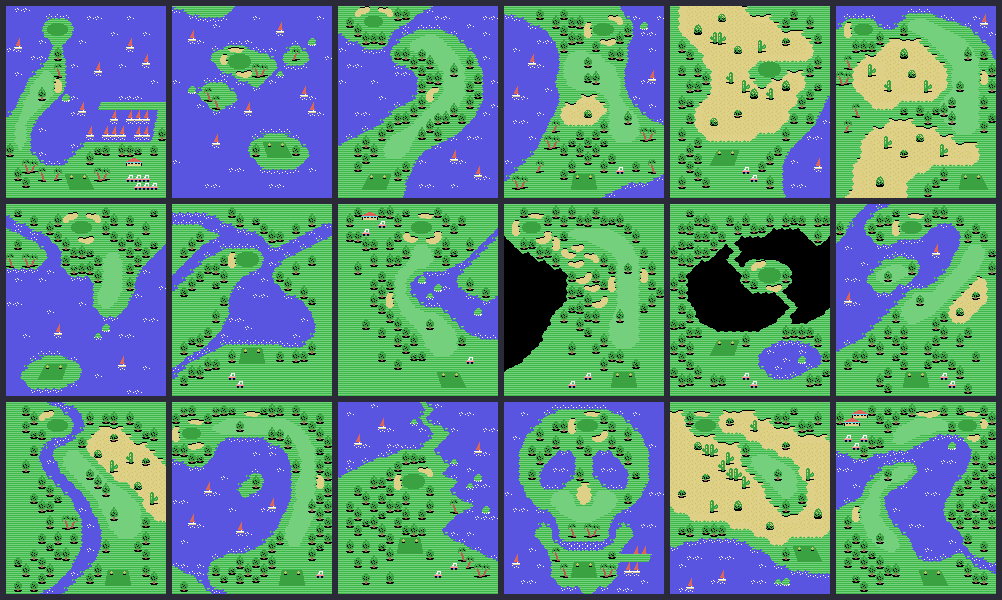
SOUTH, the first of the three courses on the Hole In One Extension Course tape (HAL, 1985). Par 72 and 6,147 metres, eighteen holes that are not in the cartridge: they load into RAM from tape and are played with CALL GOLF. Drawn with the same interpreter and the same tiles as the cartridge's, because it is the same format
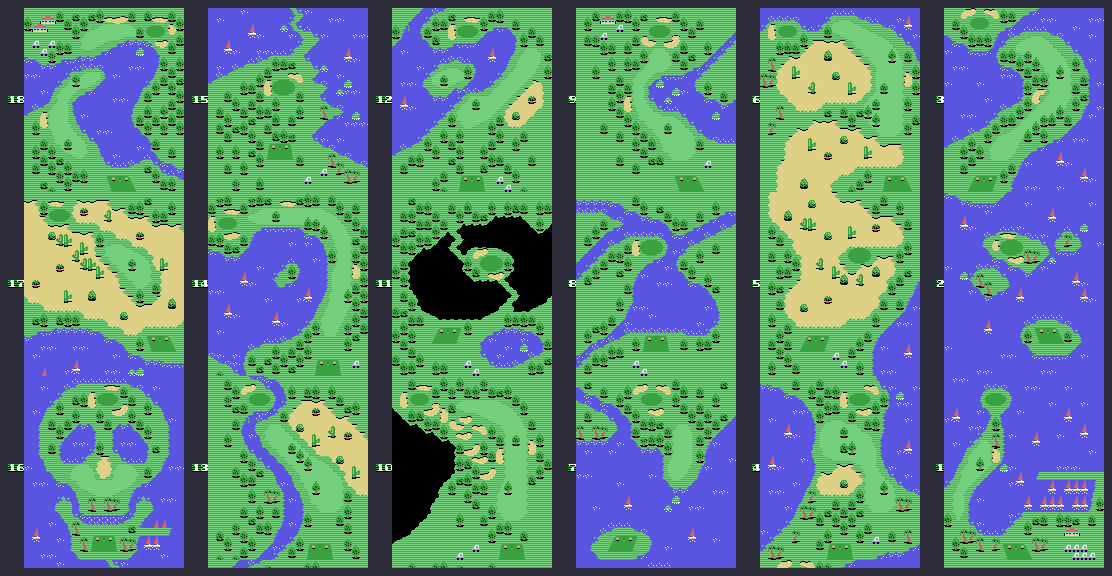
And SOUTH is one single strip too, stacked south to north just like the cartridge's: the coastline and the desert cross the joins uncut. Its shared row matches on 72.6 % against 38.9 % for two adjacent rows within one hole, and all seventeen joins beat that baseline. It is an archipelago
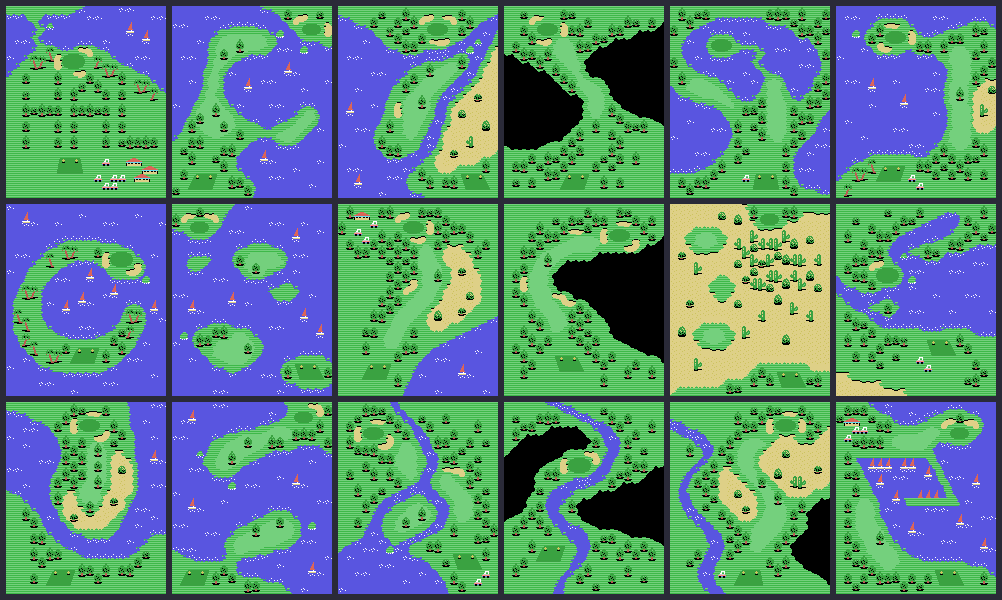
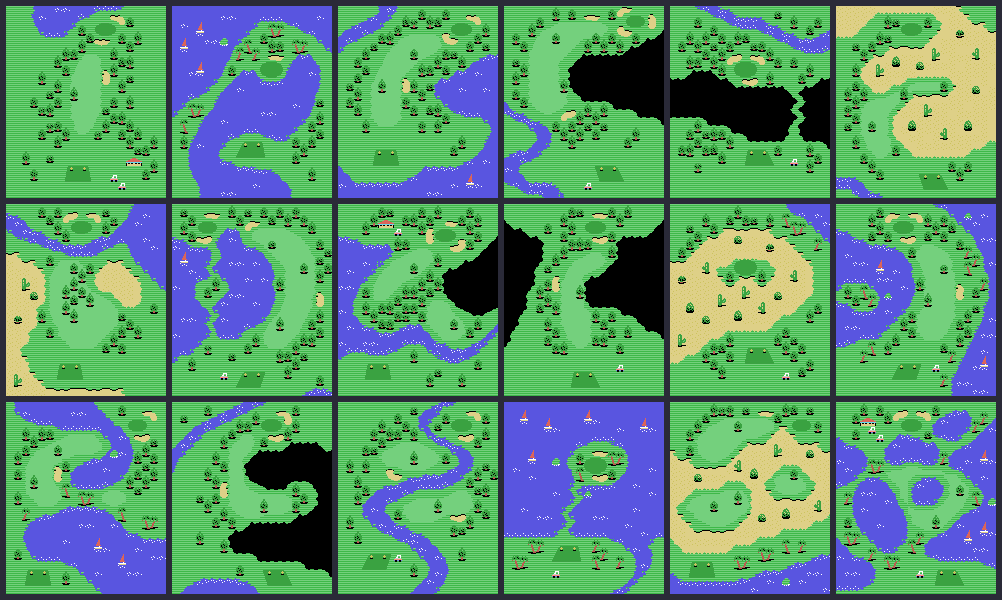
WEST, the second on the tape and the only par 73 of the four courses: 6,540 metres, the longest. Cactus deserts, black cliffs and a closing hole with a grandstand
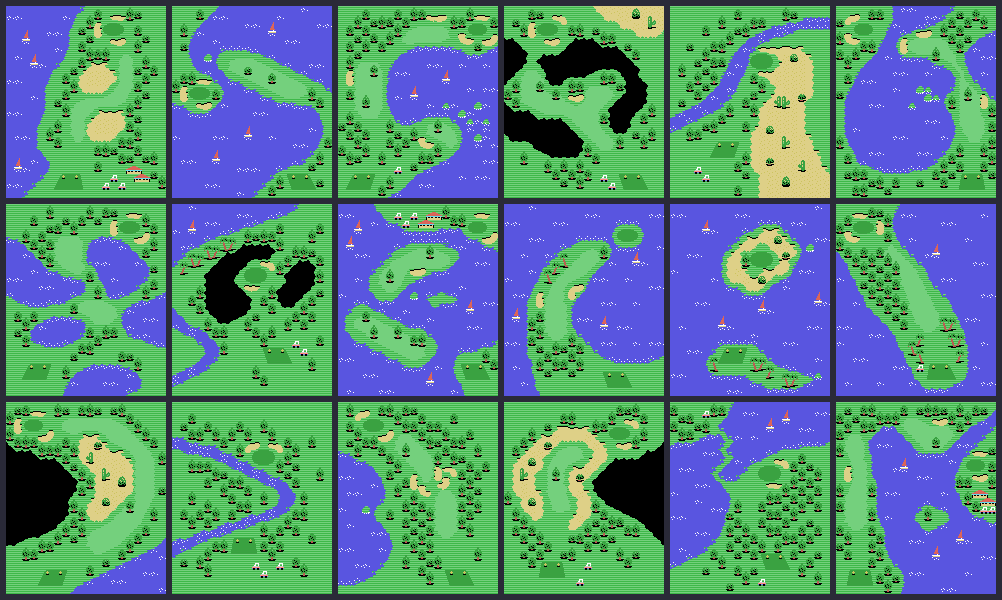
NORTH, the third: par 72 and 6,428 metres, almost exactly the cartridge course's 6,430 and yet eighteen different holes. Its joins fit the best of the four, at 73.5 %
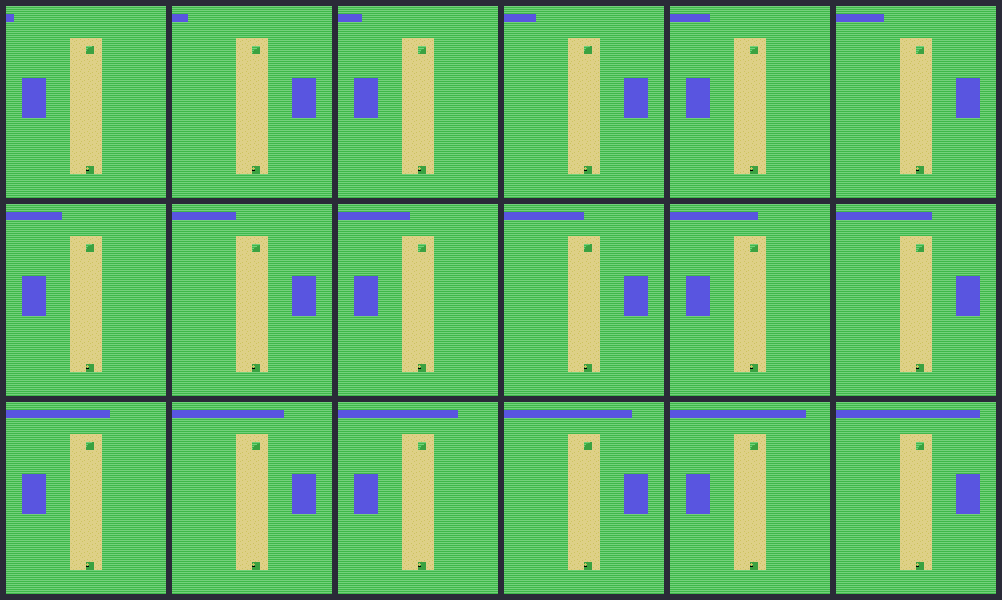
A course that is not in the ROM. Eighteen holes written by tools/campo.py in the cartridge's own format: a sand fairway, a lake that swaps sides, and a bar of water at the top as many cells long as the hole number. They are drawn with the same interpreter that draws the ROM's — if the format were misunderstood, this would come out as noise
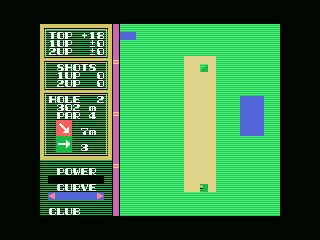
And the cartridge plays it. Booted with the key held, the course dropped at 0xC000 and CALL GOLF typed at the BASIC prompt: the attract mode draws the generated hole 2 — 480 of 480 cells — and the scoreboard reads its PAR 4 and 302 m, which are not the ROM's 168 m par 3. Captured from openMSX by tools/omsx_call_golf.tcl
The course's eighteen holes, drawn one by one with the same script interpreter the Z80 runs, following the pointers at 0x9C33. That they are right is not an impression: all 480 cells of each were compared against openMSX dumps taken with the game running, with zero differences
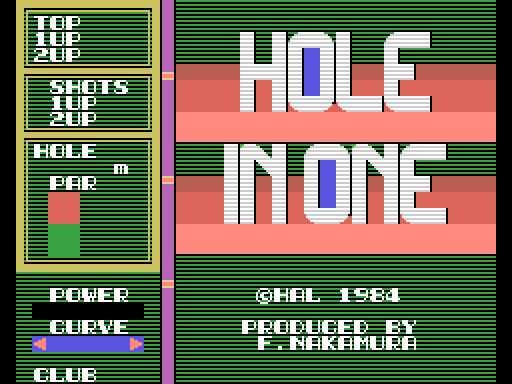
The title screen, built with the cartridge's own steps: the grid from 0x8864 with its striped background, the wordmark's two halves and the credits handed to it by 0x8954
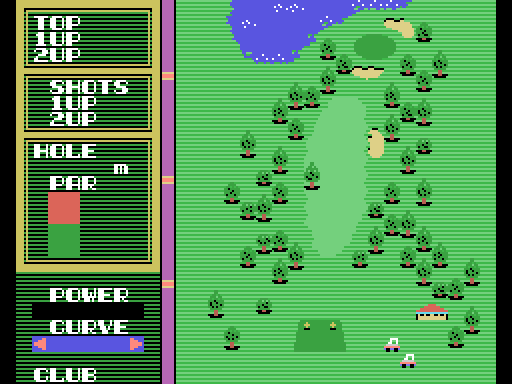
Hole 1 in full, with the scoreboard panel on the left exactly as 0x9571 writes it. Par 4 and 331 metres: the fairway climbs between trees to a green with the lake behind it
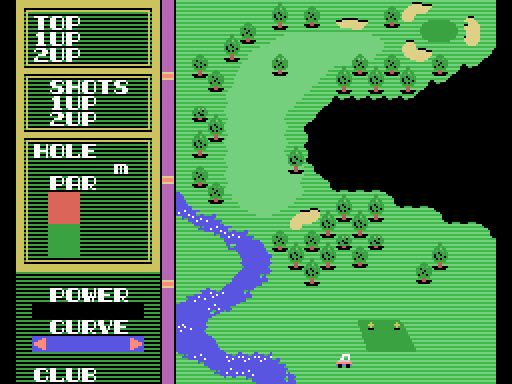
Hole 4, the course's longest par 5 at 556 metres. The black patch is not a drawing error: it is tile 0x00, which this hole declares as one of its three materials, and the game paints it just the same
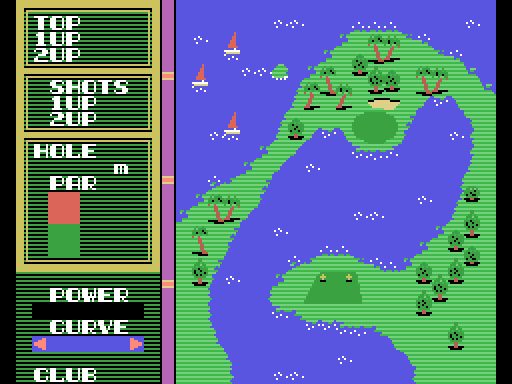
Hole 2, the shortest par 3: 168 metres from tee to green, with water across nearly all of it
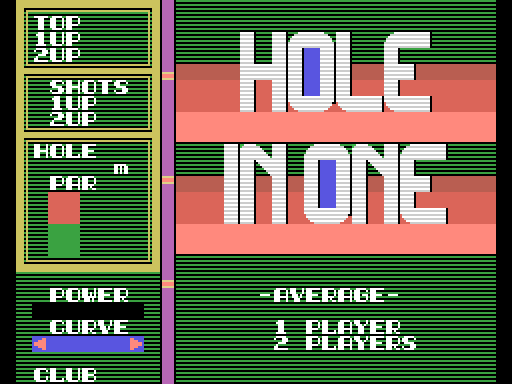
The same screen with the other text. The builder at 0x8864 takes an address and pulls the three bottom lines from it: 0x8954 gives the credits, 0x8975 the number of players
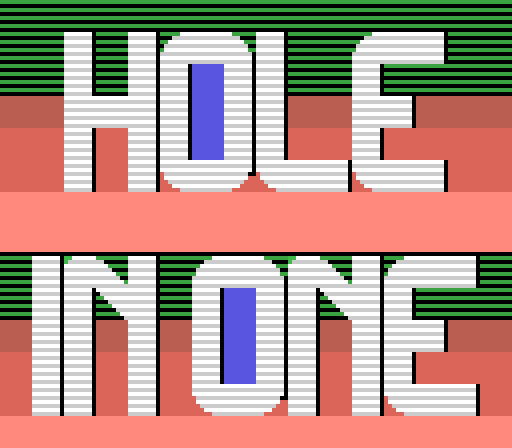
The wordmark up close. These are the fourteen tiles loaded by the two short tables at 0xBDAB and 0xBDDB, laid out in two blocks of five rows by fourteen columns
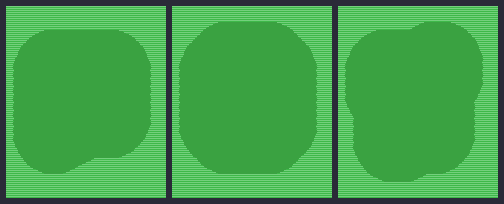
The three greens. They are the alternative mode at 0xB1CB, and carry the same script format as the holes — 480 cells and a 0x21 at the end — but without the three length digits behind, because in that mode the interpreter never reads them. At 109, 112 and 115 bytes each they are the tightest thing in the cartridge
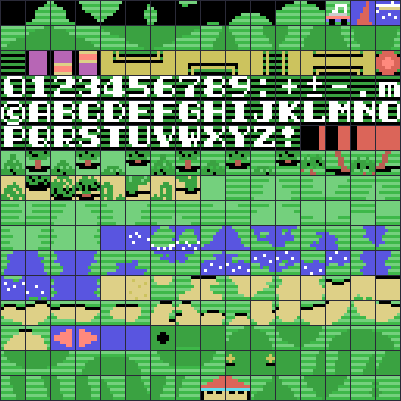
The 256 tiles with their colour, as they sit in VRAM once 0xB324 and 0xB971 have been decompressed. The whole course is in there: grass, water, sand, trees, the tee, the flag and the clubhouse

The nineteen 16×16 sprites that 0xBE0D decompresses into the sprite pattern table: the golfer, the ball and the meter's arrows
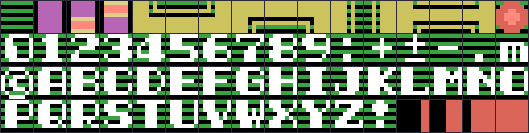
The font everything is written with, from 0x20 to 0x5F. Plain ASCII, with the 'm' for metres and the © slotted in where they fit