The game
Goemon (or Ebisumaru, player 2) crosses 7 stages of 7 areas: 49 areas and 124 different screens. In each stage, areas 0 to 4 are streets and countryside, area 5 is walls and area 6 is the inside of a castle, the biggest one (66 to 80 cells).
Every picture on this page is drawn from the bytes of the ROM by the tools in tools/, which follow the cartridge's own steps, and checked against openMSX dumps (C-BIOS_MSX2_JP). Under each one it says which table it comes from.
The title screen

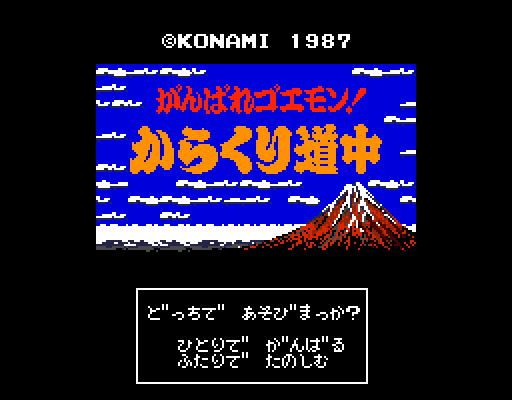
The menu has two options, one or two players, and the two take turns. The second button leads to the password screen (state 0x0E). The logo and the title match openMSX with not a single pixel different (titulo.py coteja). With Q\*bert or the Game Master in the other slot, the title screen shows another menu: see Findings.
The 49 areas
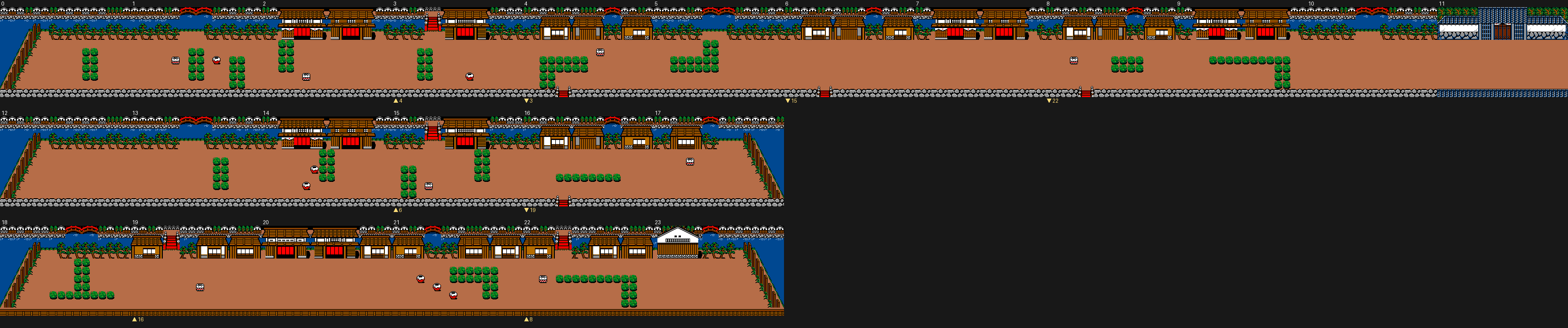
Area 0 of stage 1. Each row is a street: cells following each other from left to right (p00:4188). Under each cell, the arrows say which cell its up and down exits lead to (0xB7D0). The blue arrow on the right marks a street that starts over.
The up and down exits are not geometric: in this area, going up from cell 3 leads to cell 4, which is also to its right. That is why the maps are laid out by streets and not as a grid. Moving figures are not drawn, since they depend on the game; the fixed objects (0xA08E) are. All 49 area entrances are checked against openMSX (screen, characters and palette).
| Stage | Area 0 | 1 | 2 | 3 | 4 | 5 | 6 |
|---|---|---|---|---|---|---|---|
| 1 | 24 | 14 | 16 | 20 | 26 | 38 | 66 |
| 2 | 16 | 20 | 24 | 18 | 20 | 38 | 70 |
| 3 | 34 | 18 | 18 | 18 | 24 | 44 | 80 |
| 4 | 28 | 18 | 22 | 30 | 30 | 38 | 66 |
| 5 | 30 | 24 | 22 | 16 | 18 | 38 | 70 |
| 6 | 22 | 34 | 30 | 20 | 30 | 44 | 66 |
| 7 | 24 | 16 | 22 | 34 | 32 | 58 | 80 |


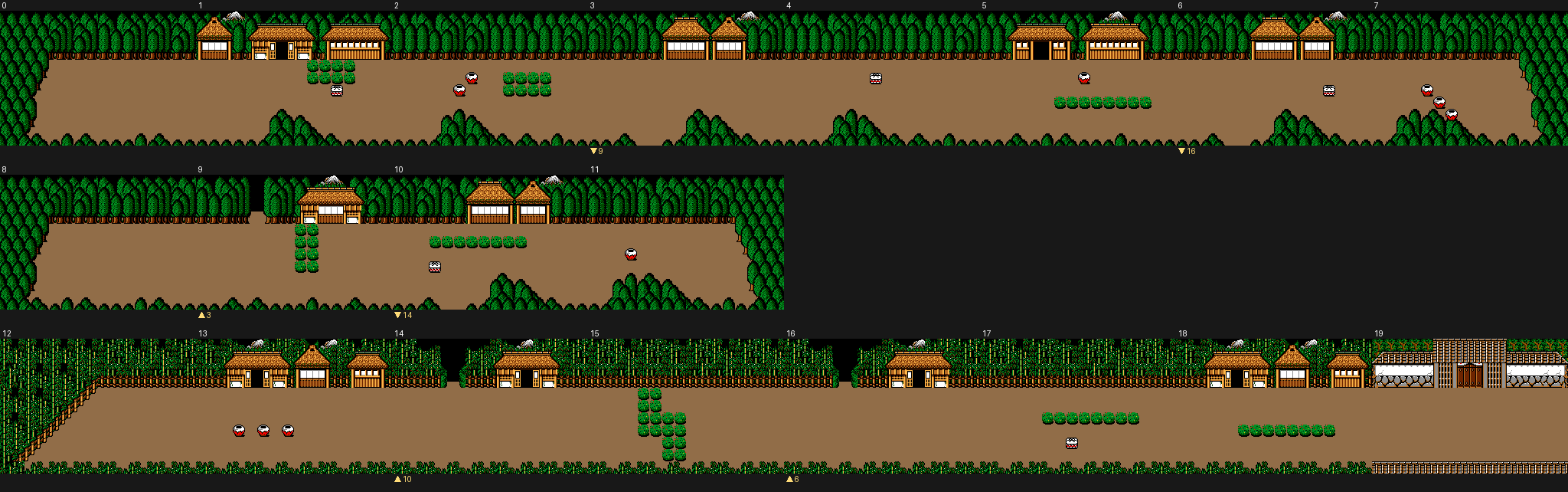
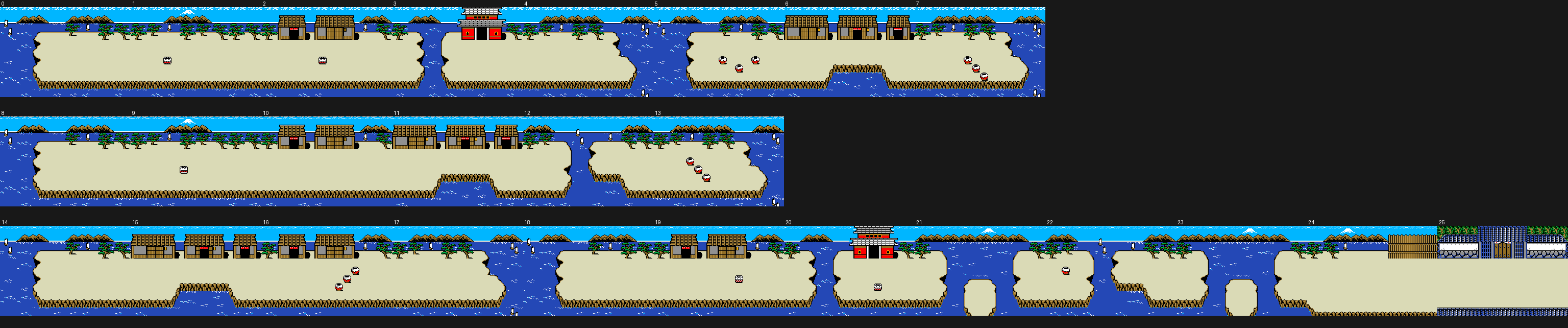
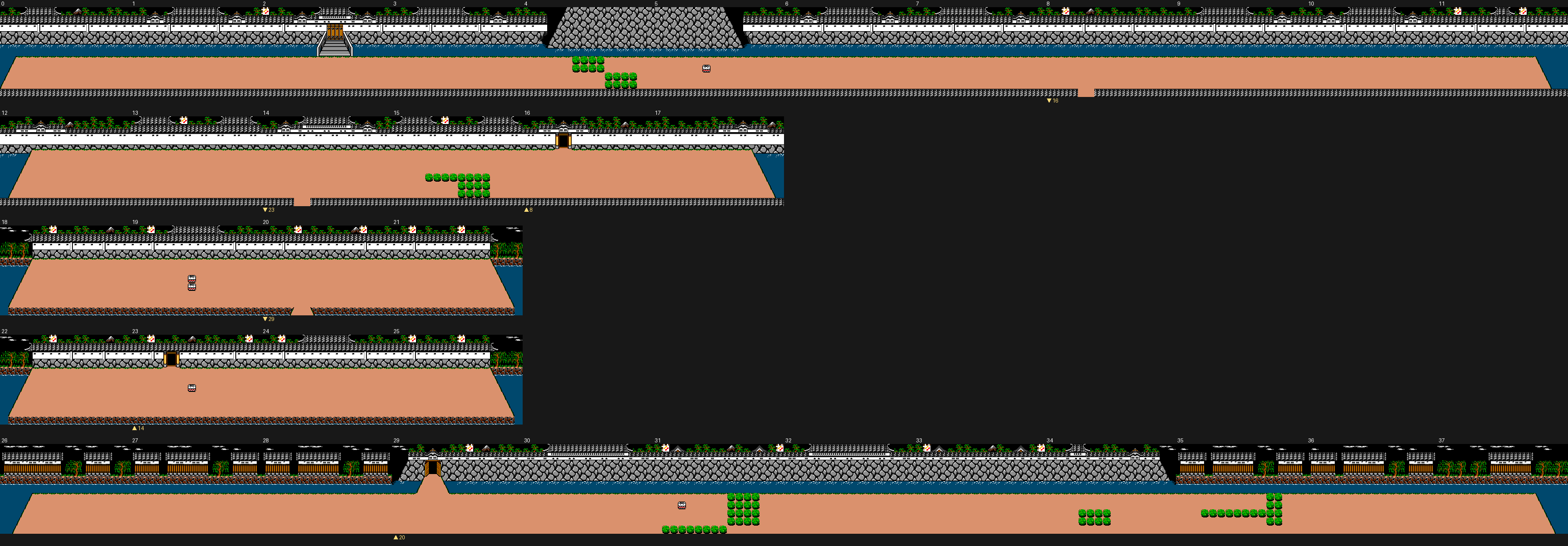
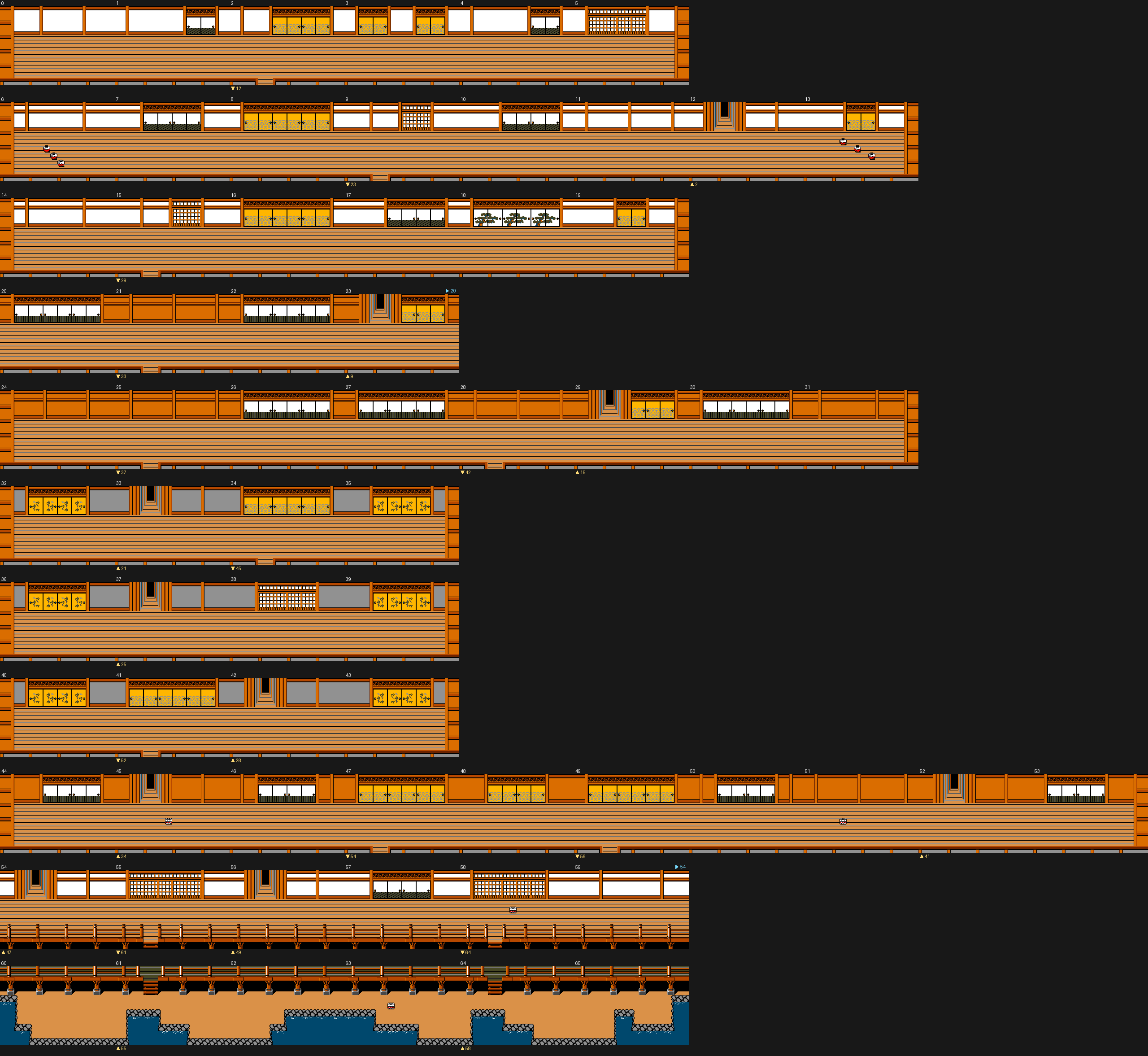
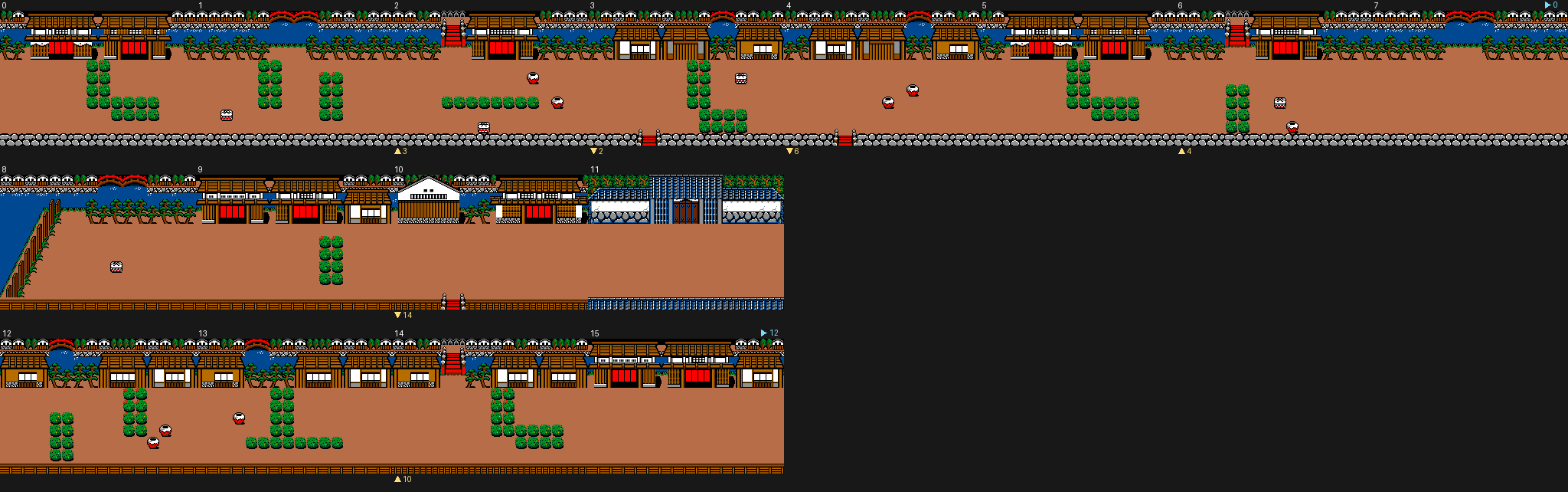
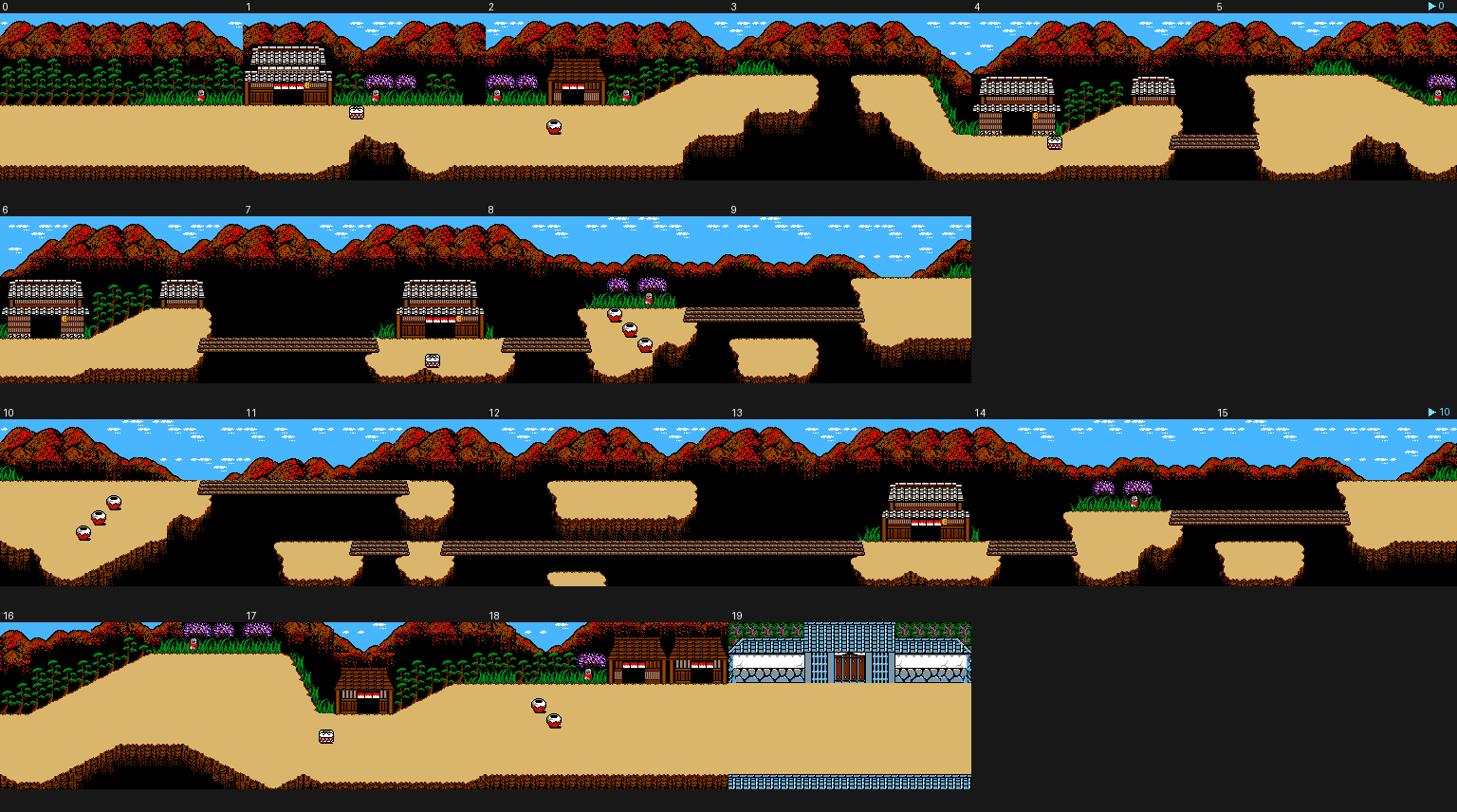
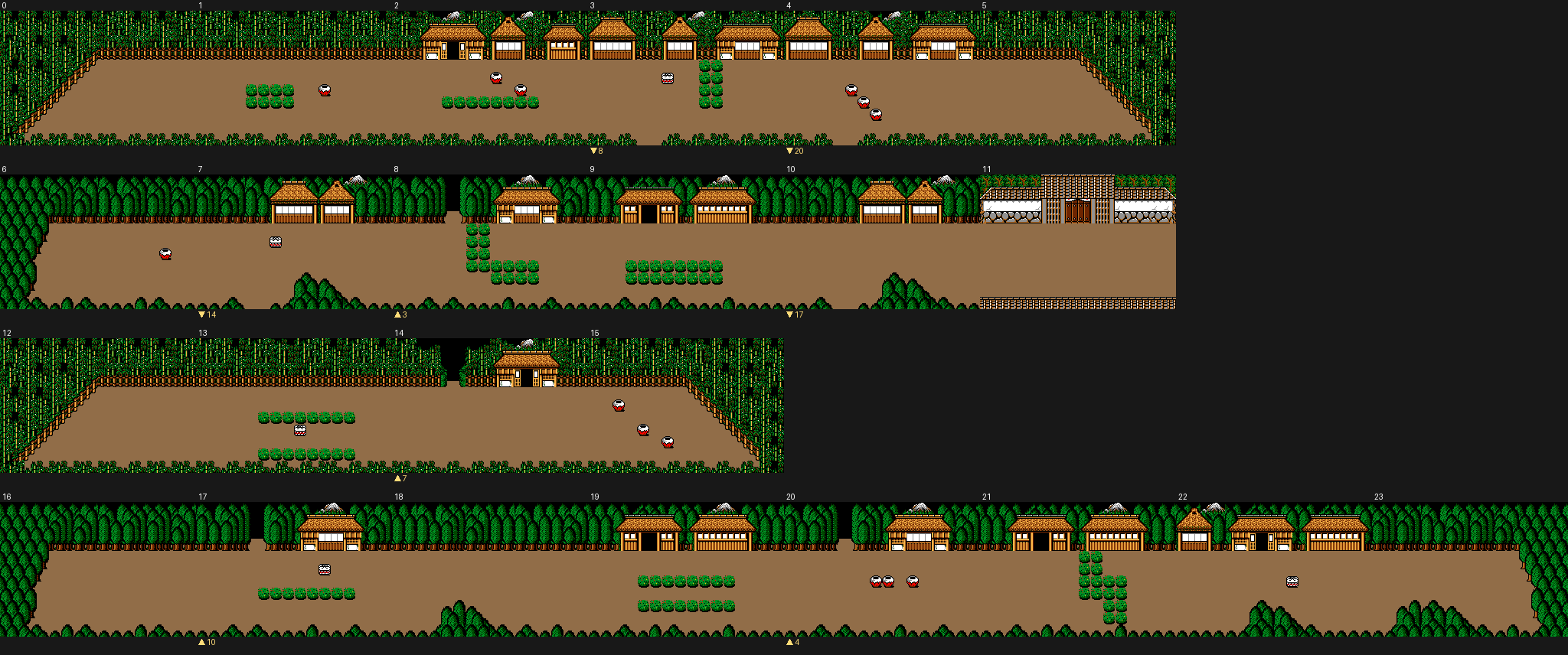


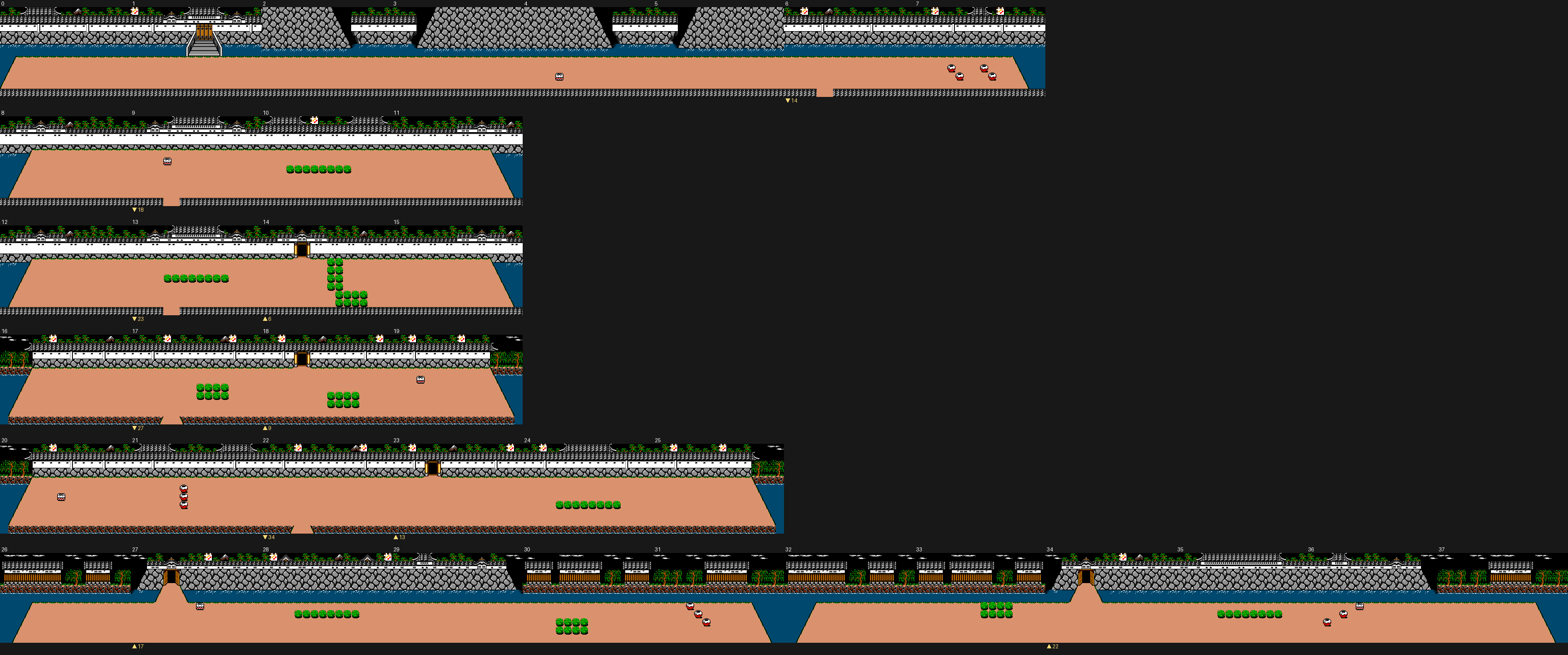
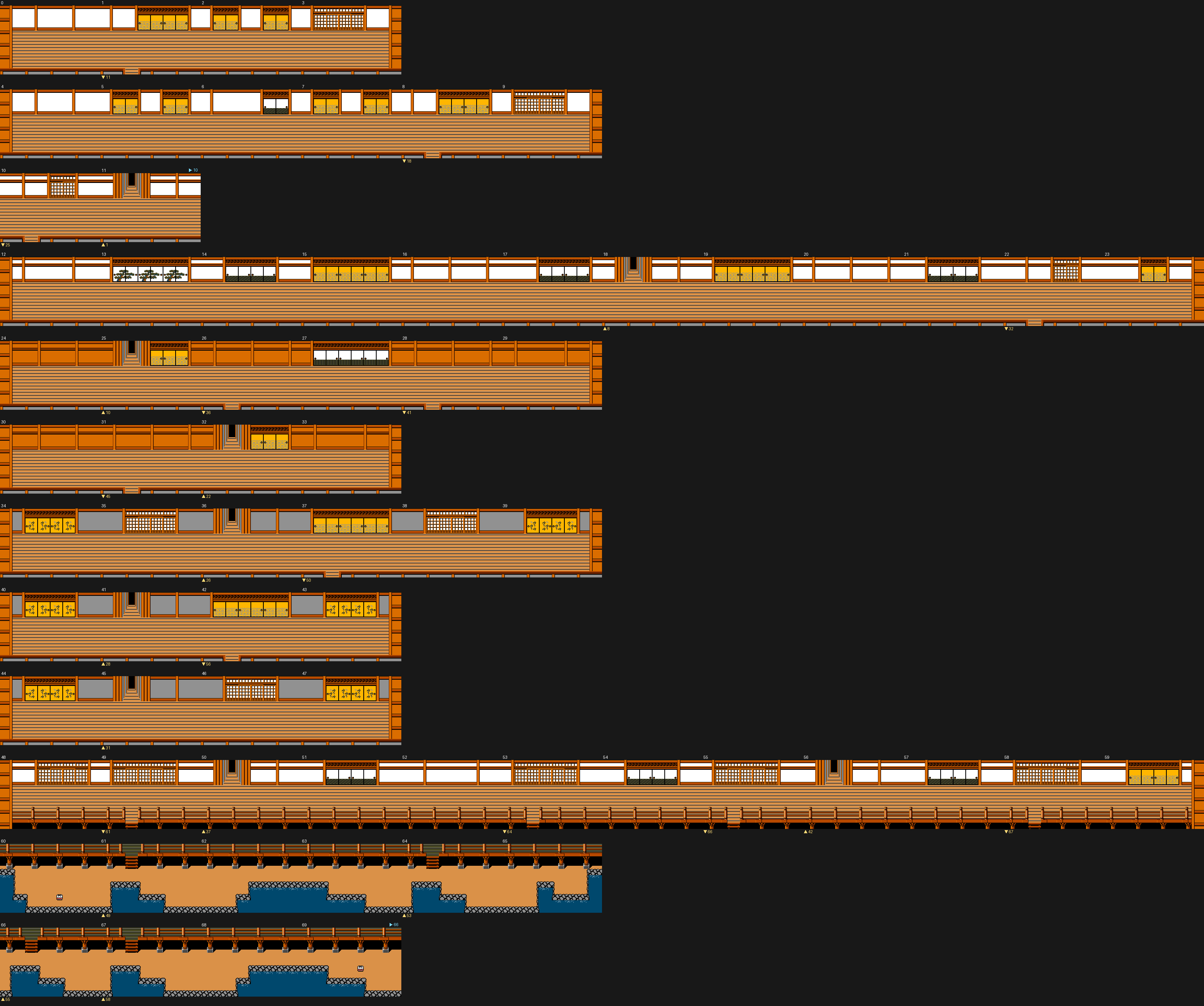
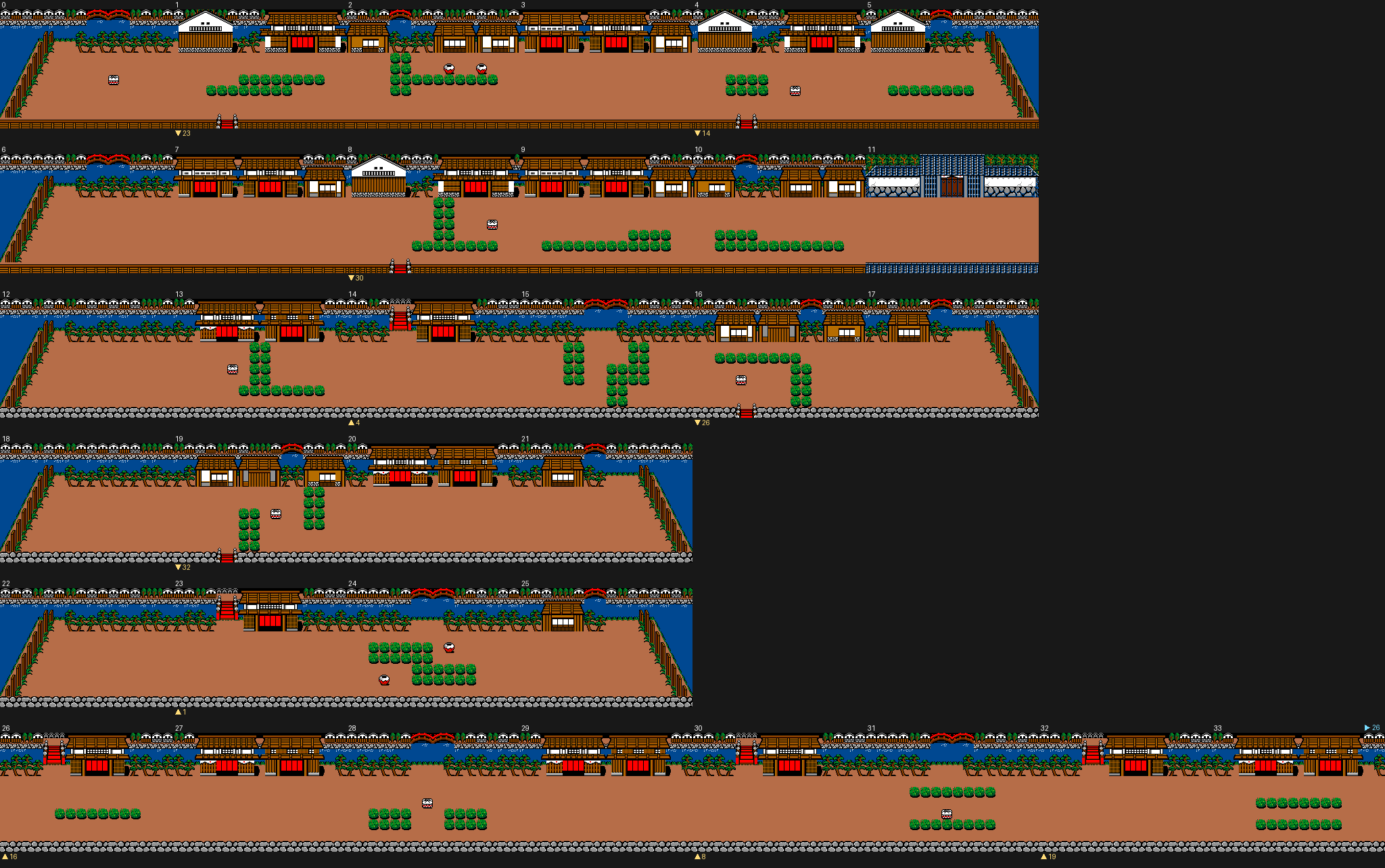

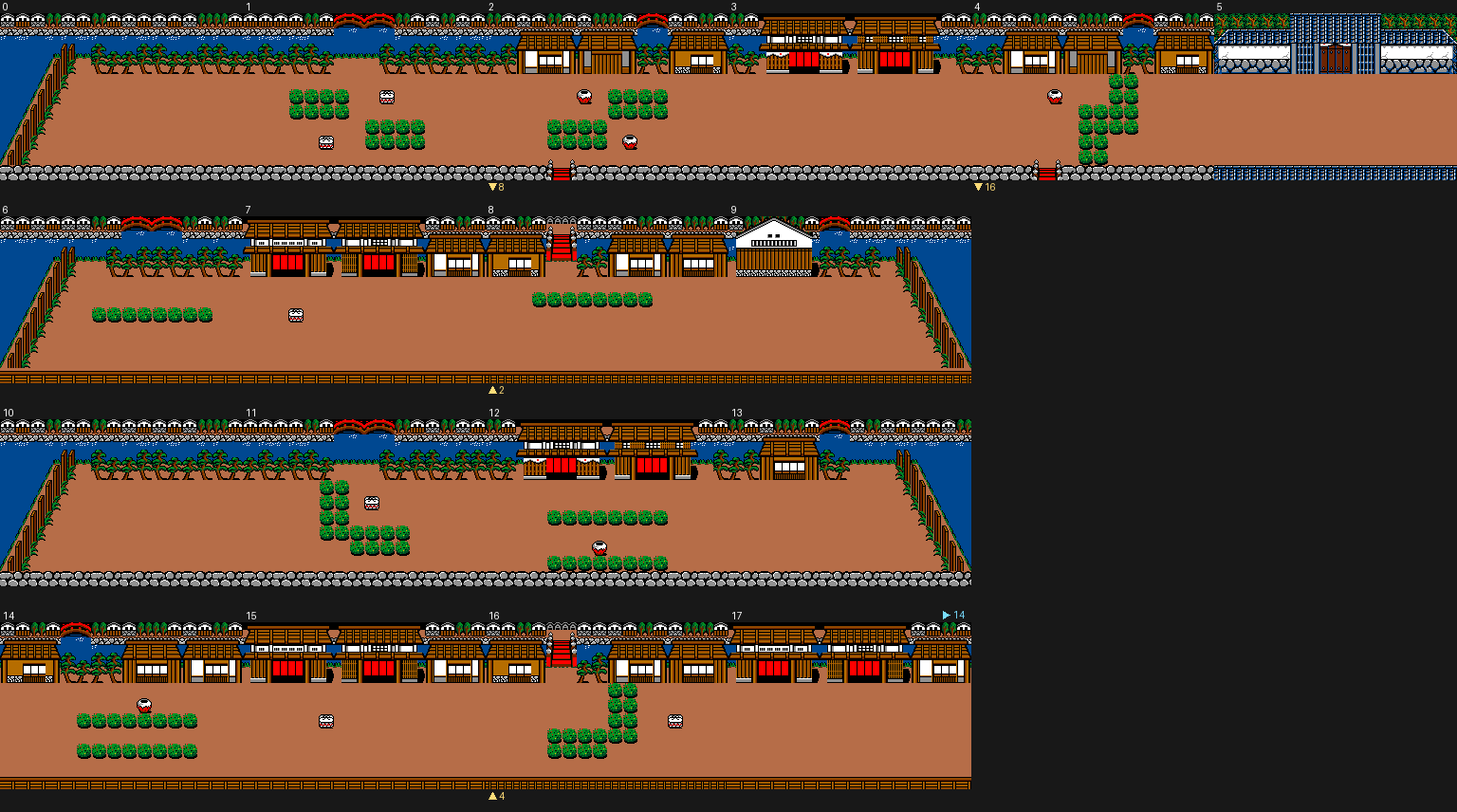
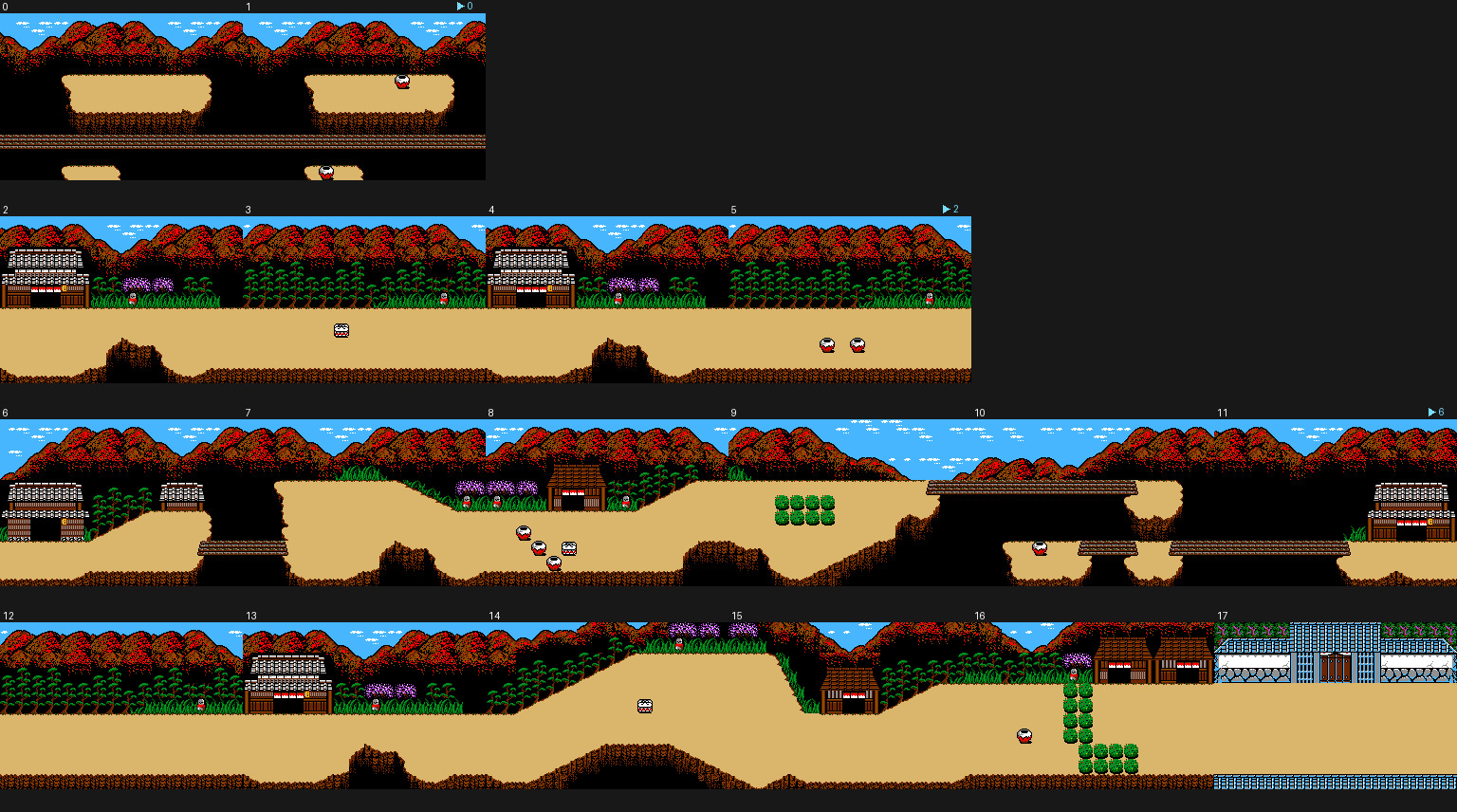

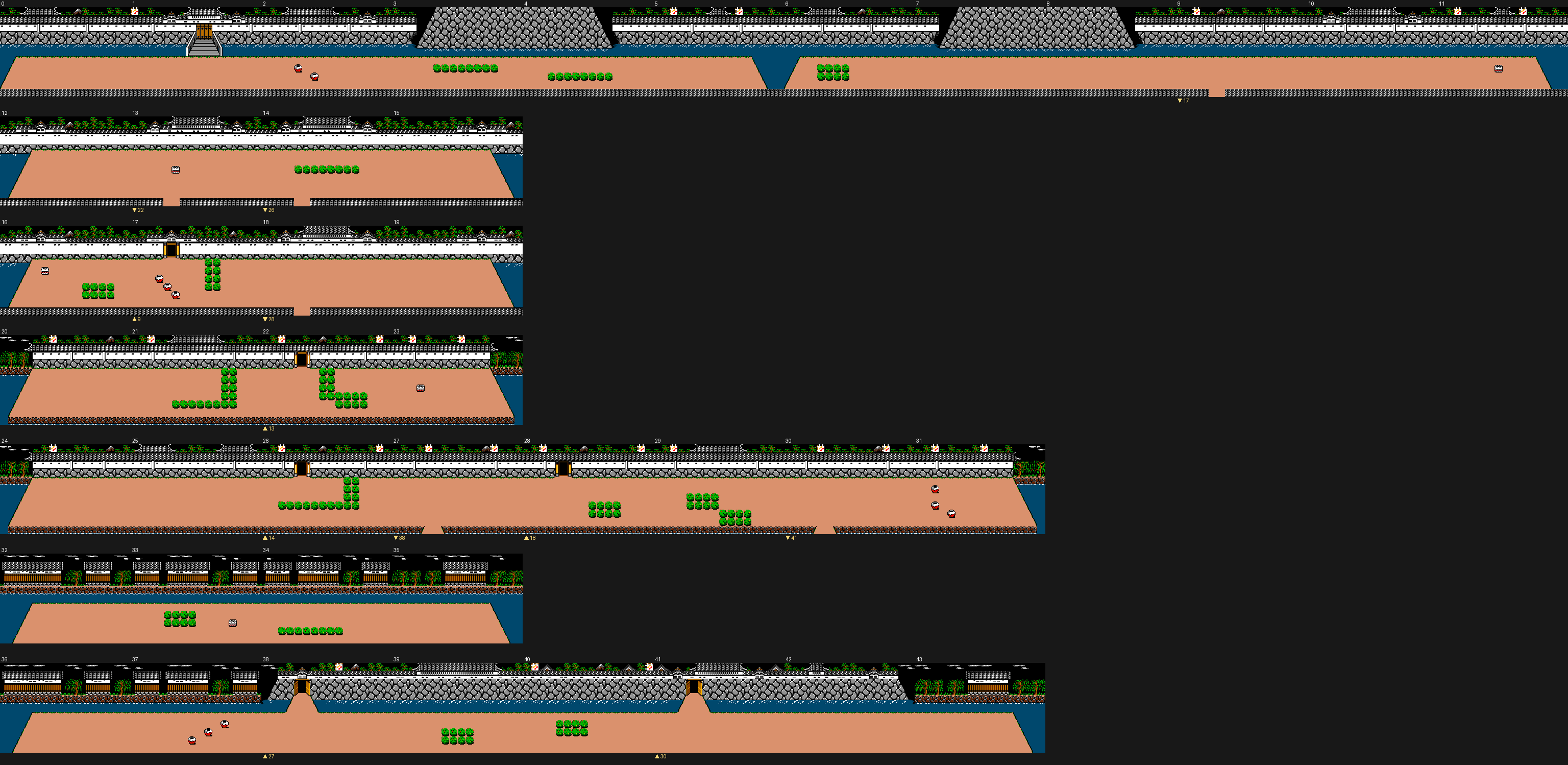
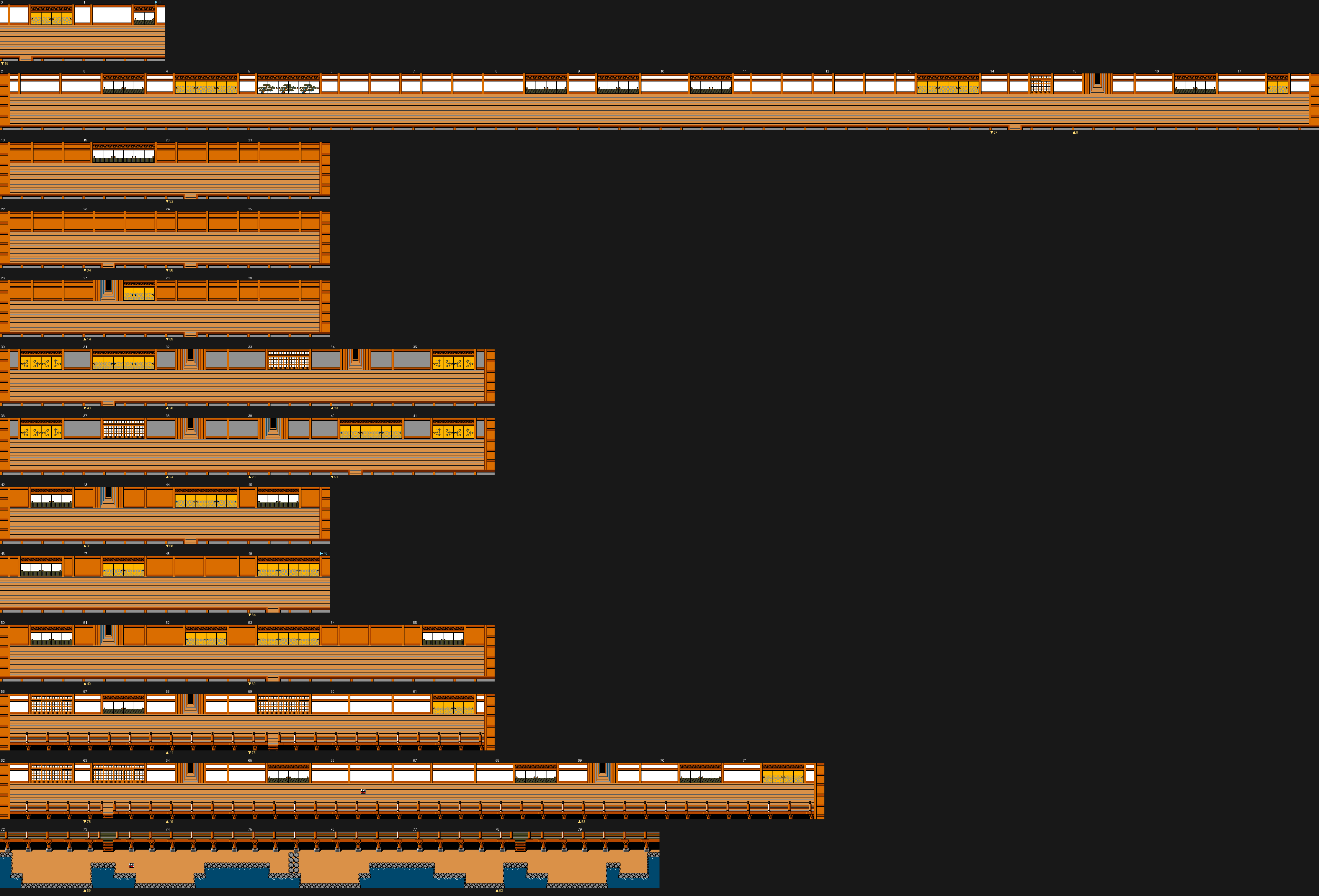
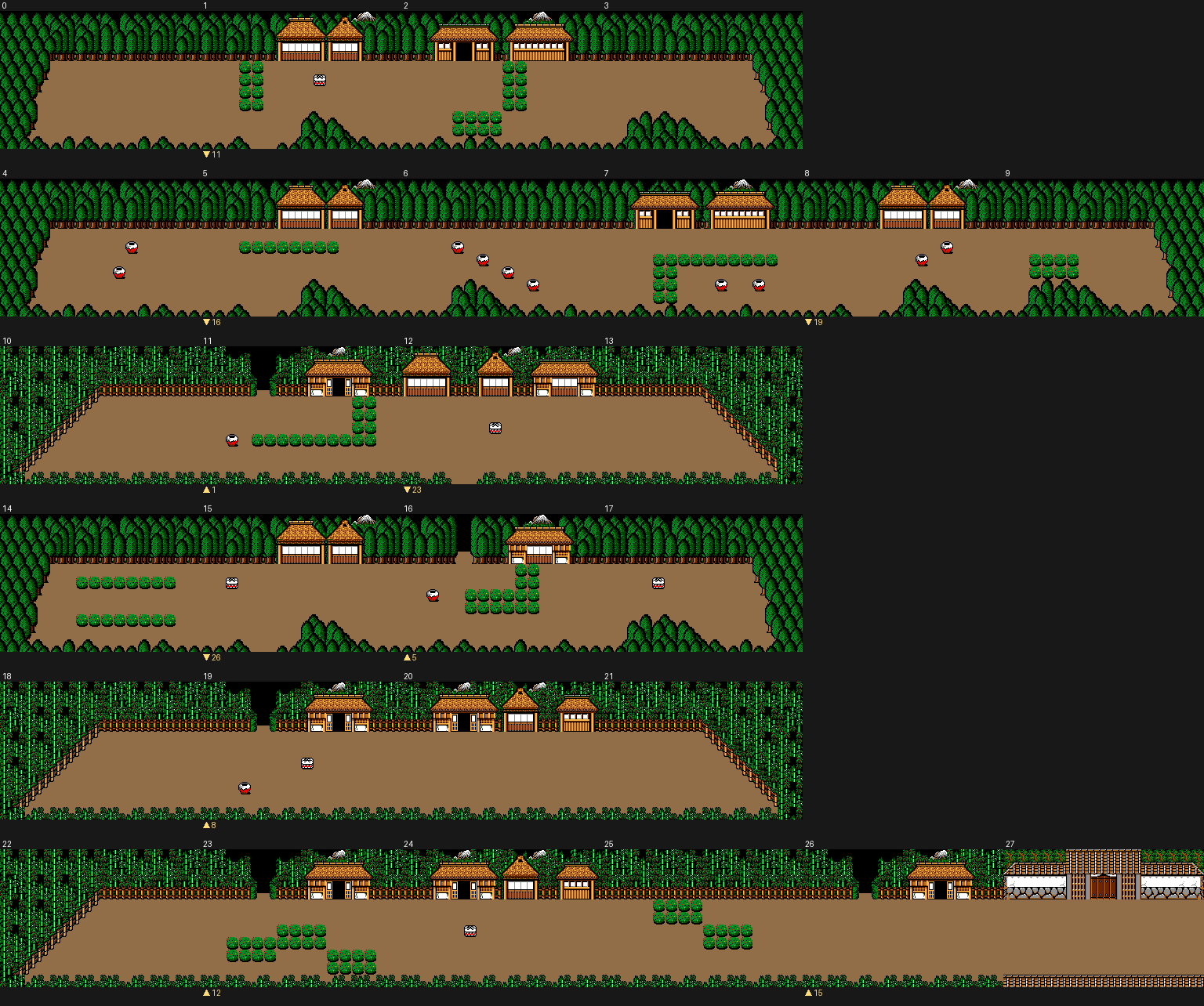
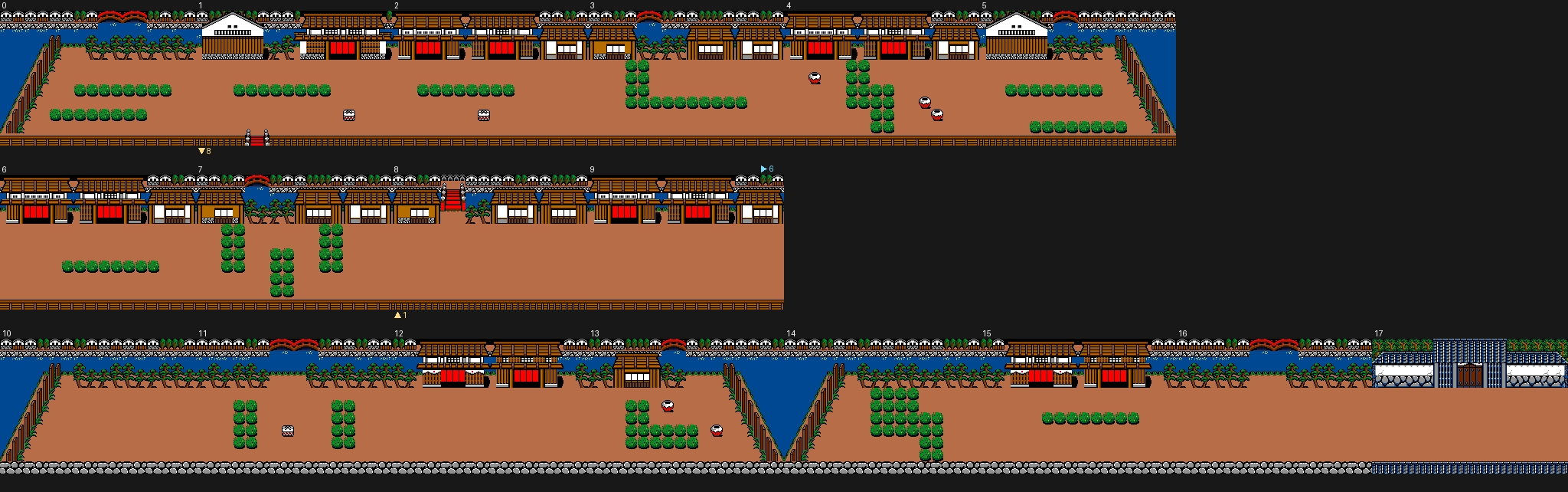
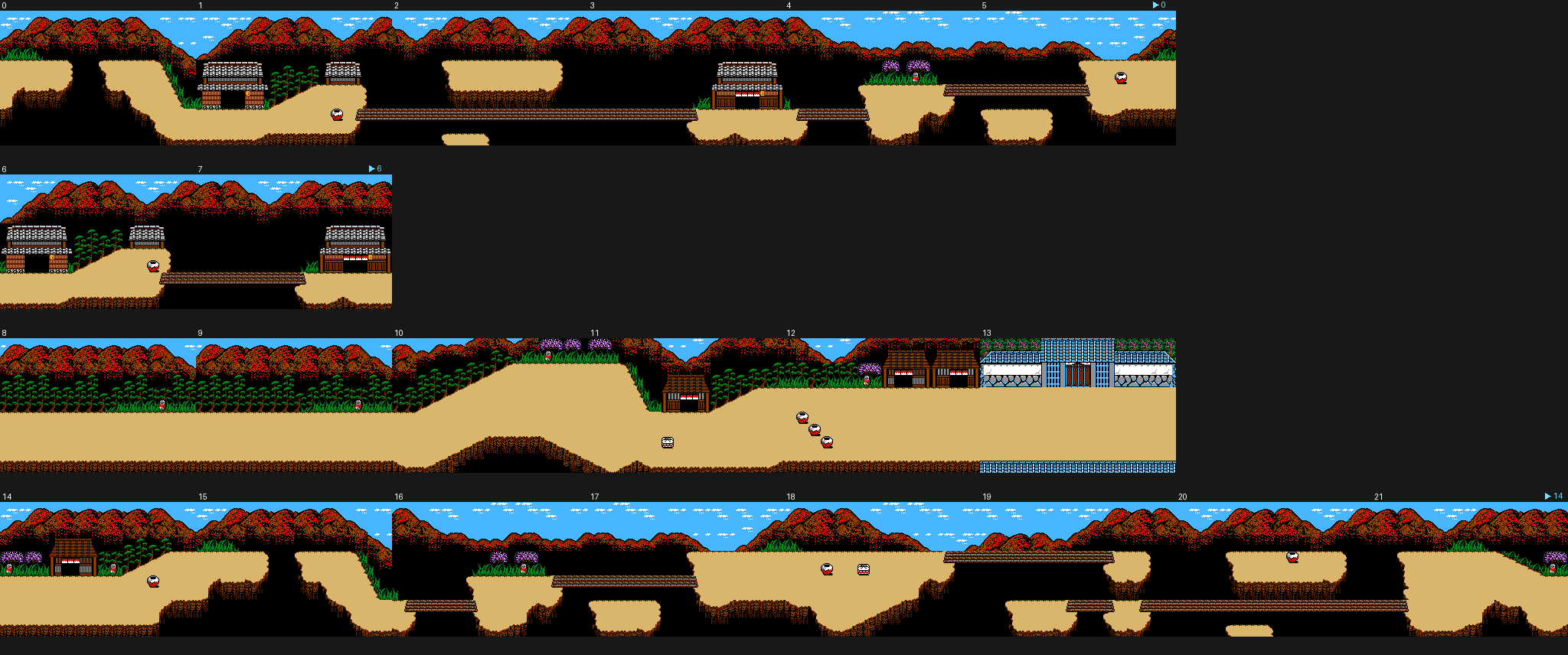
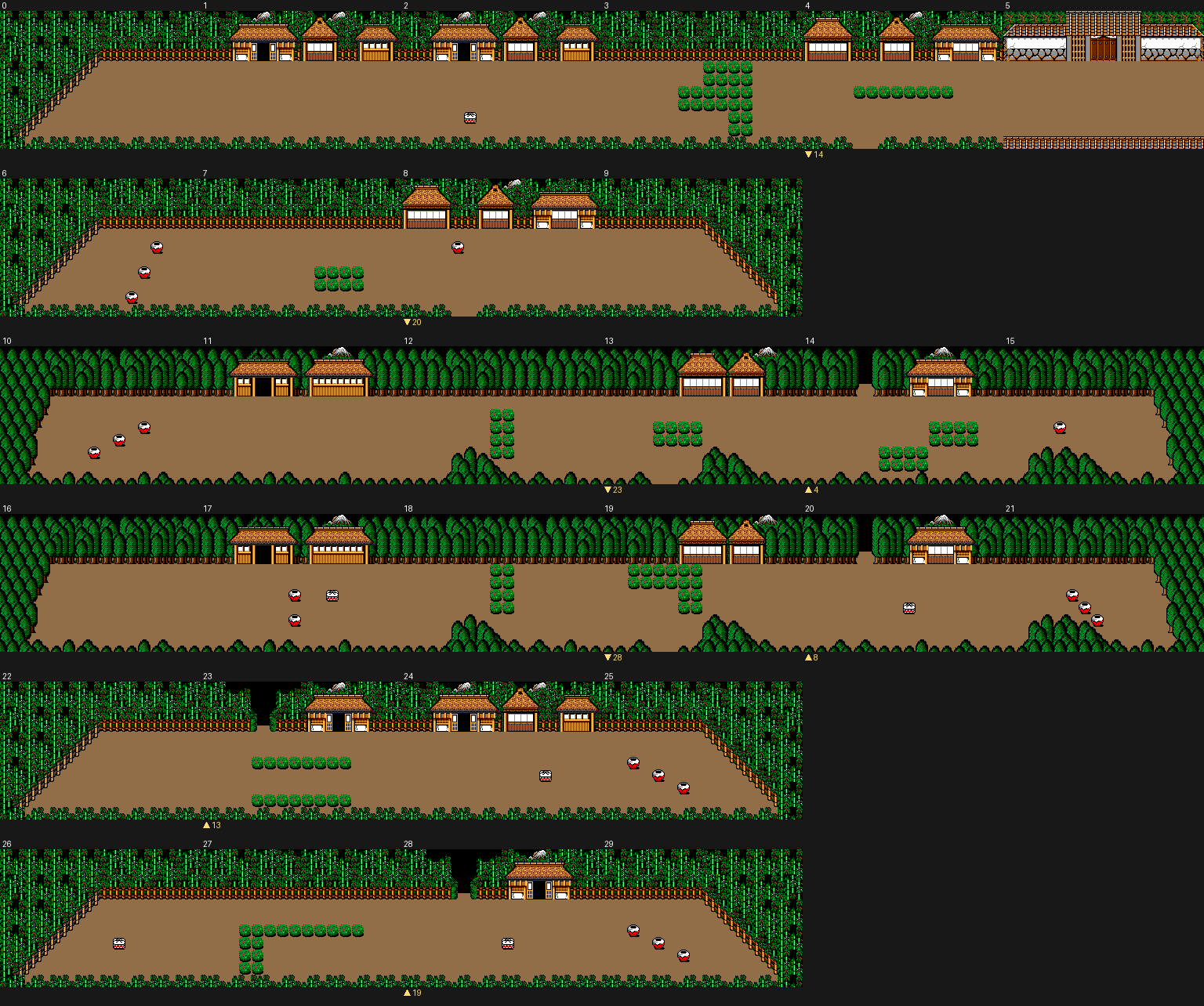
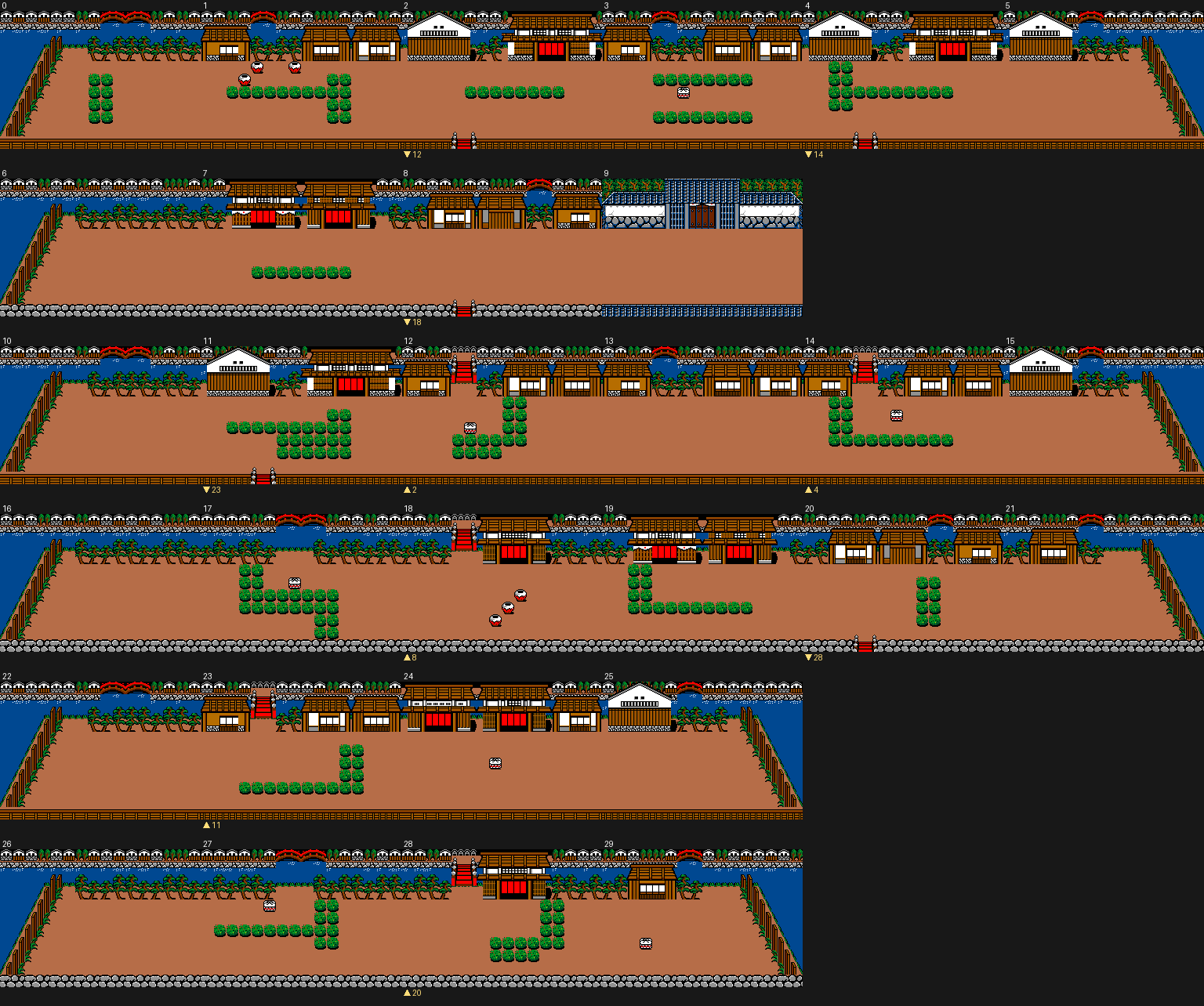
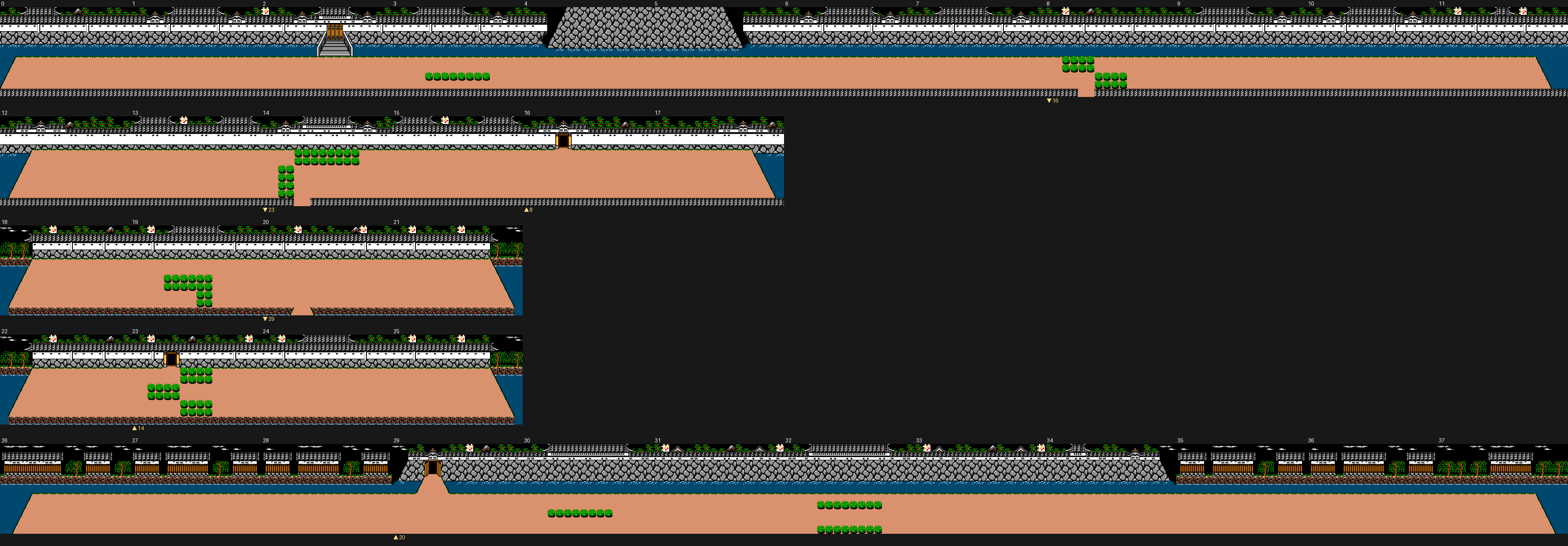
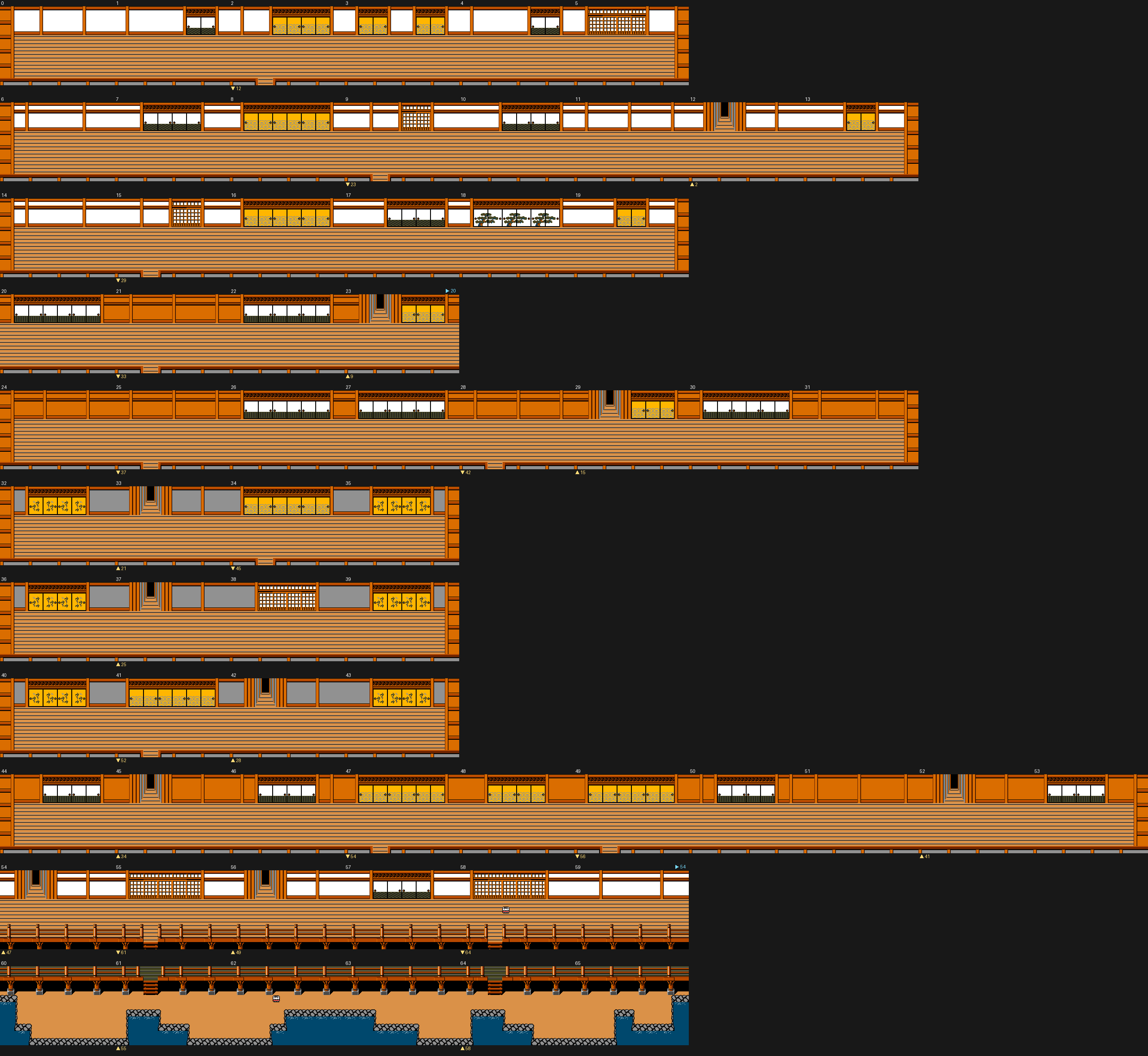
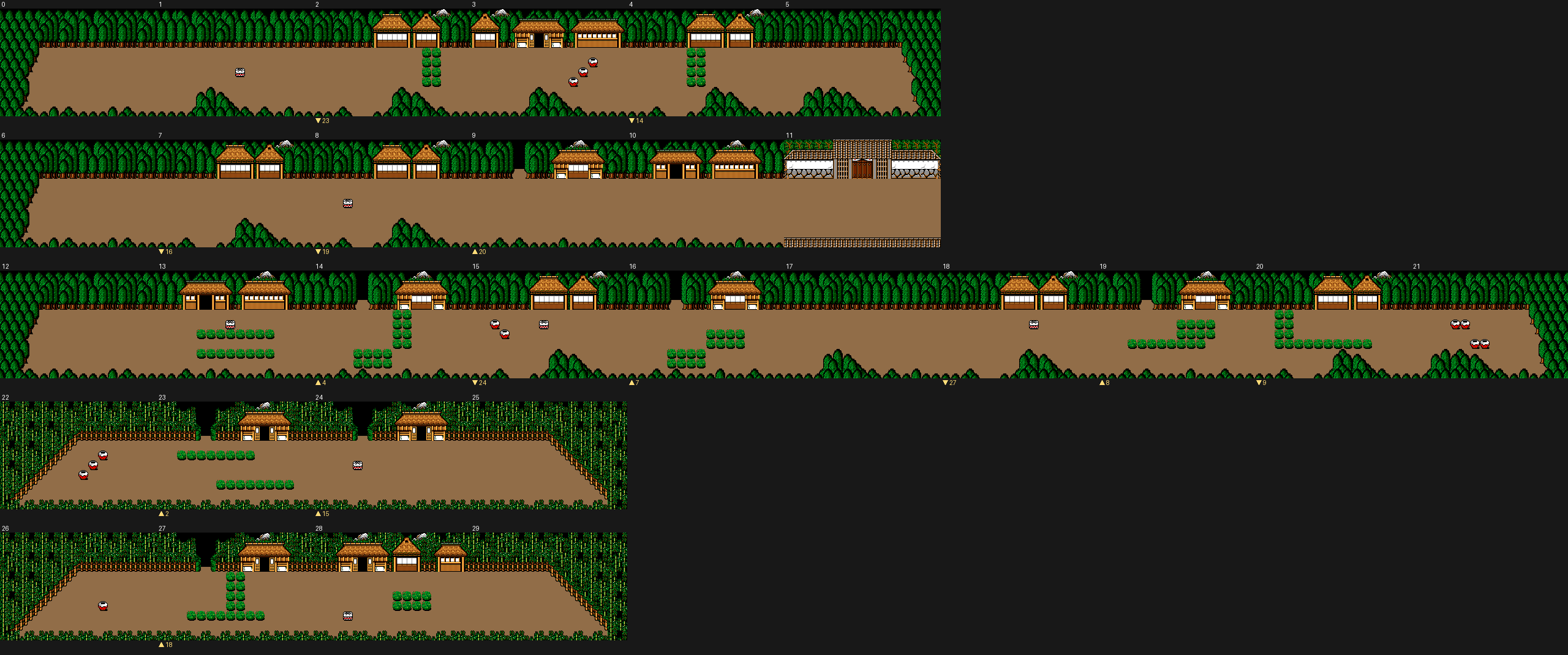
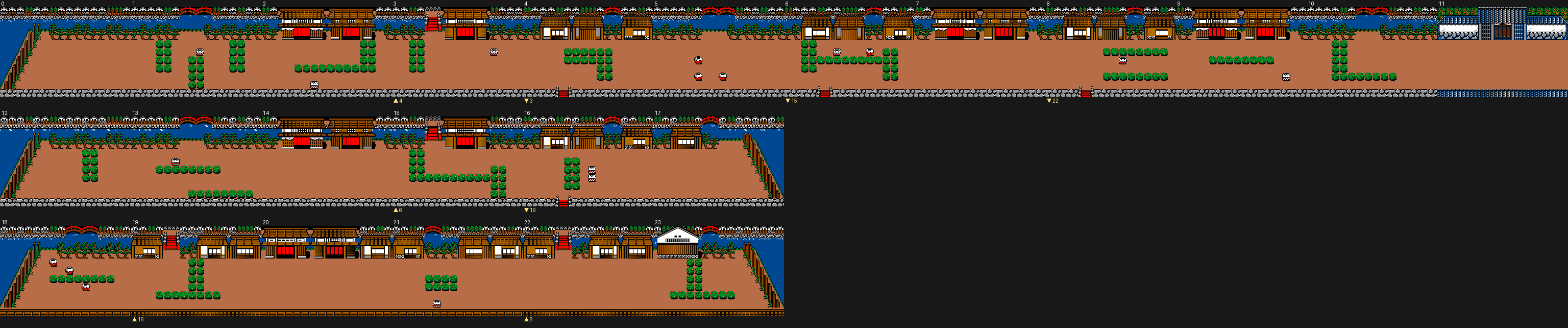
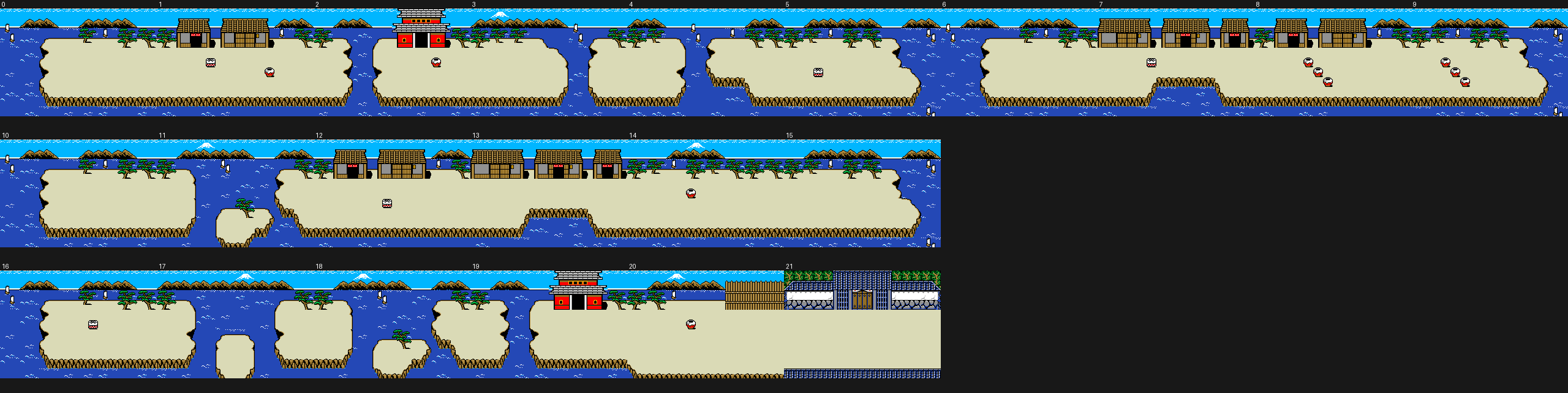

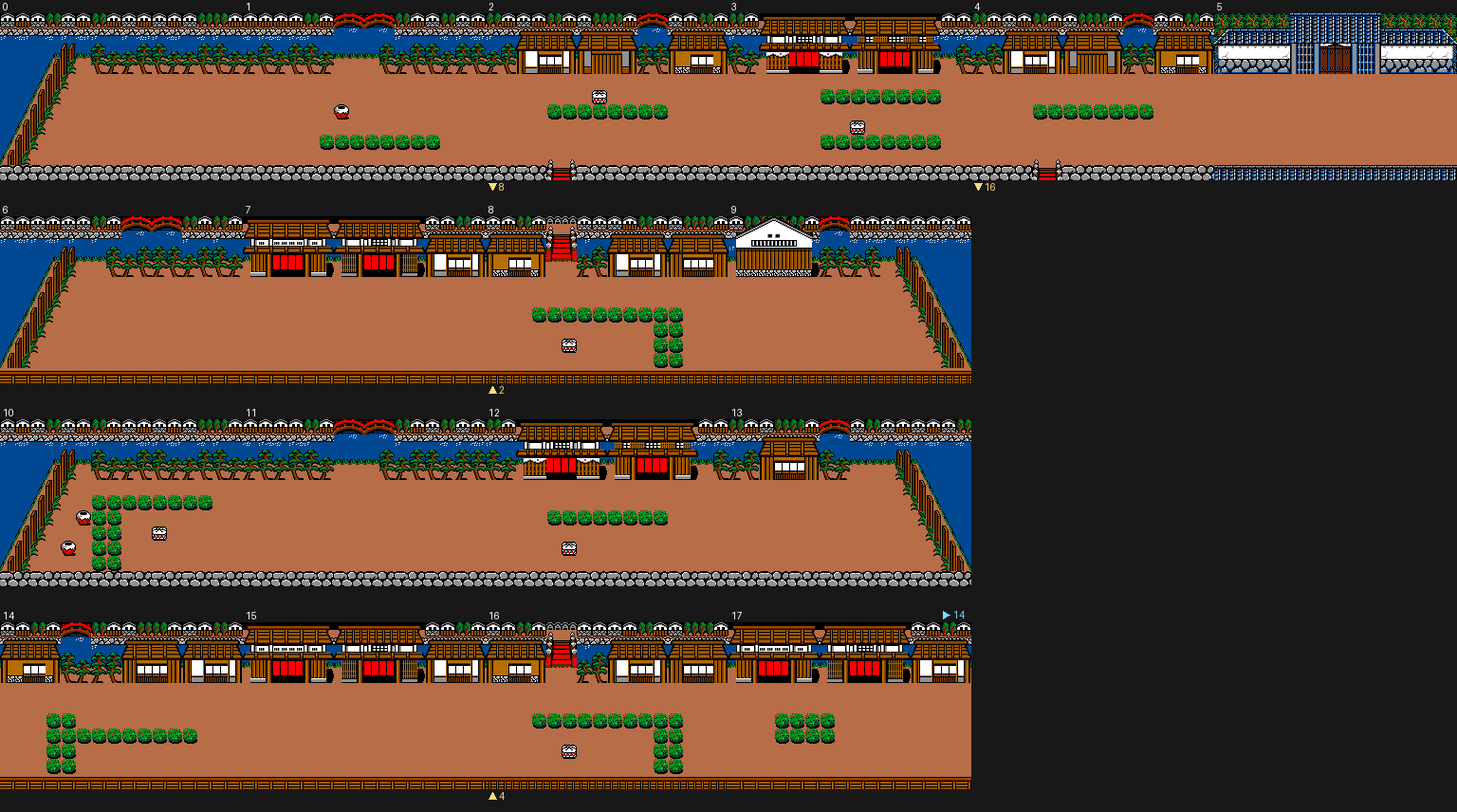
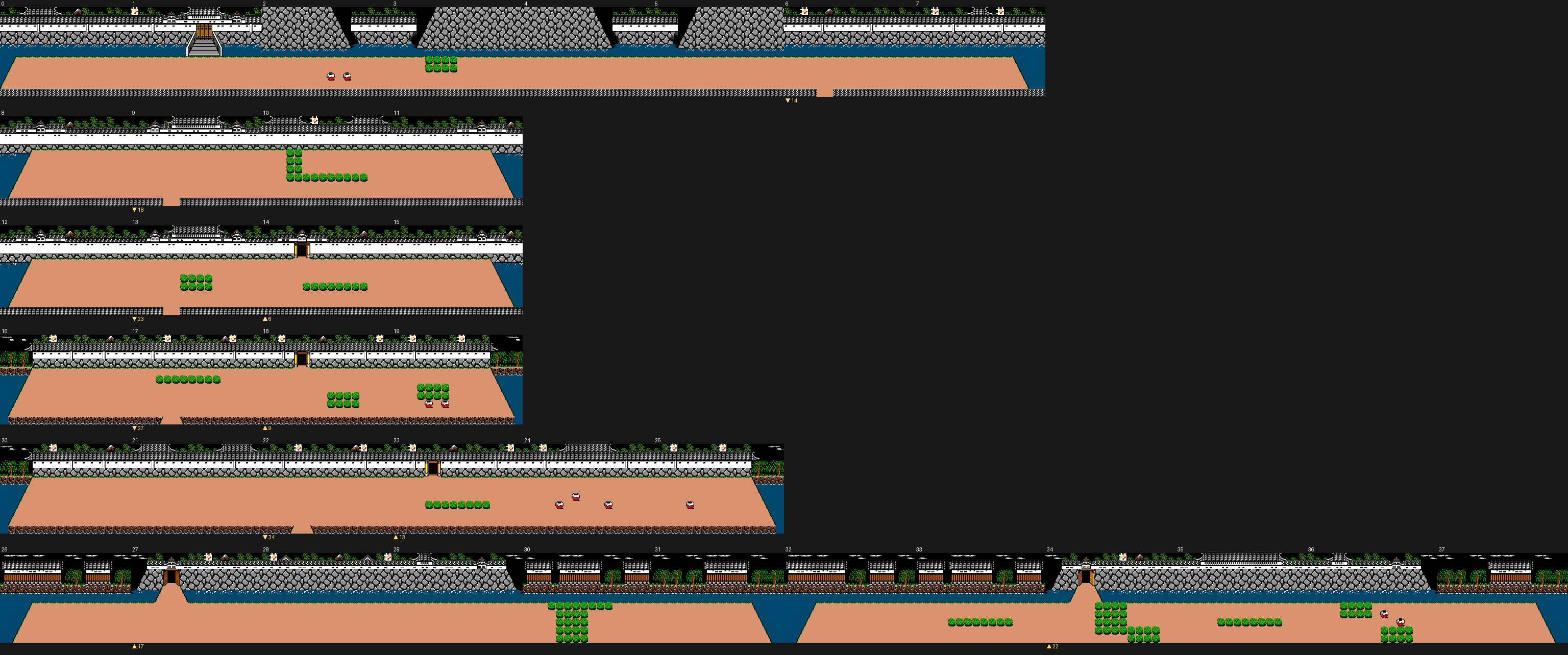
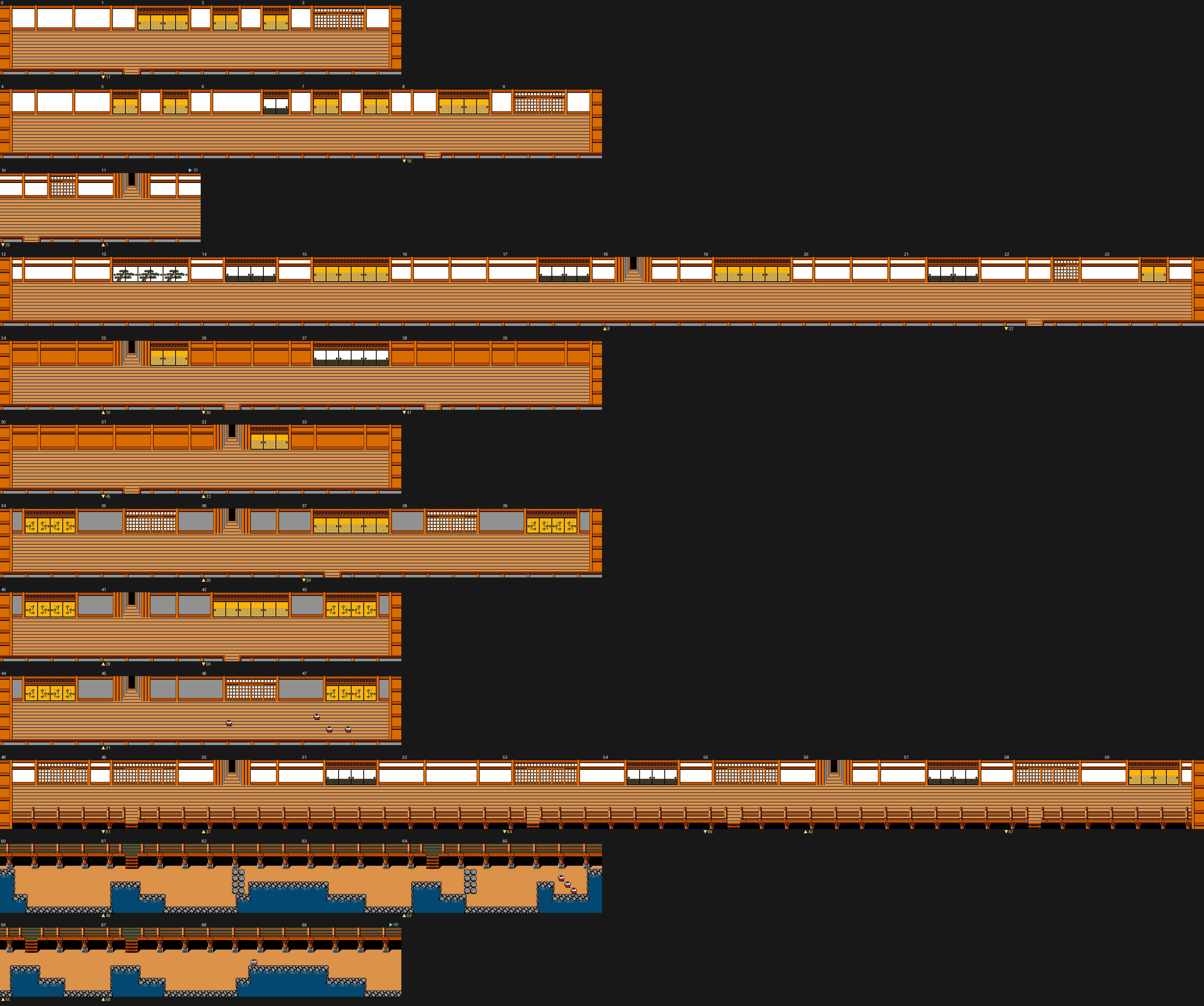
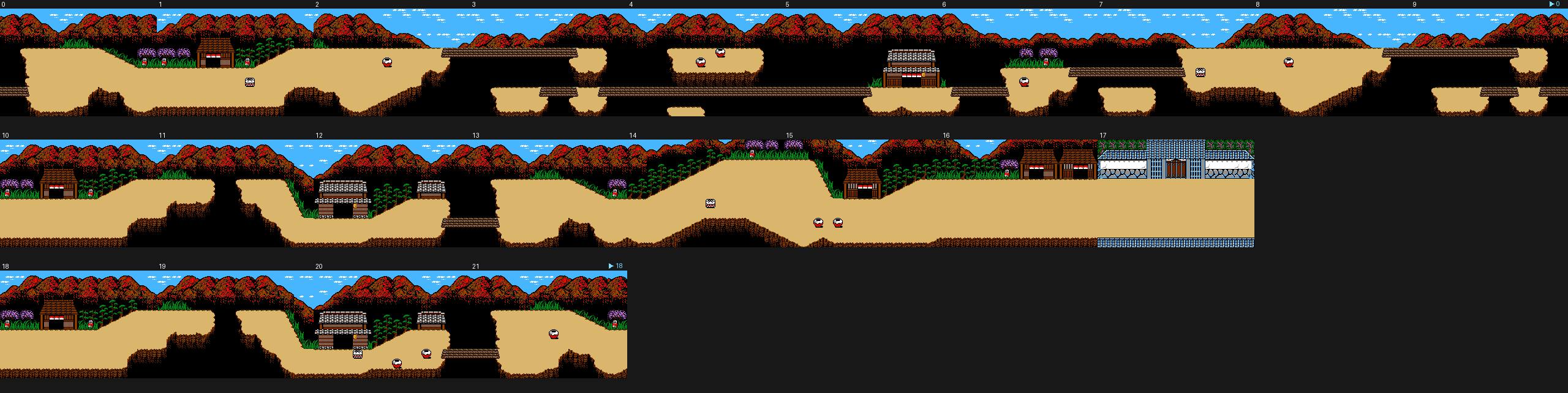
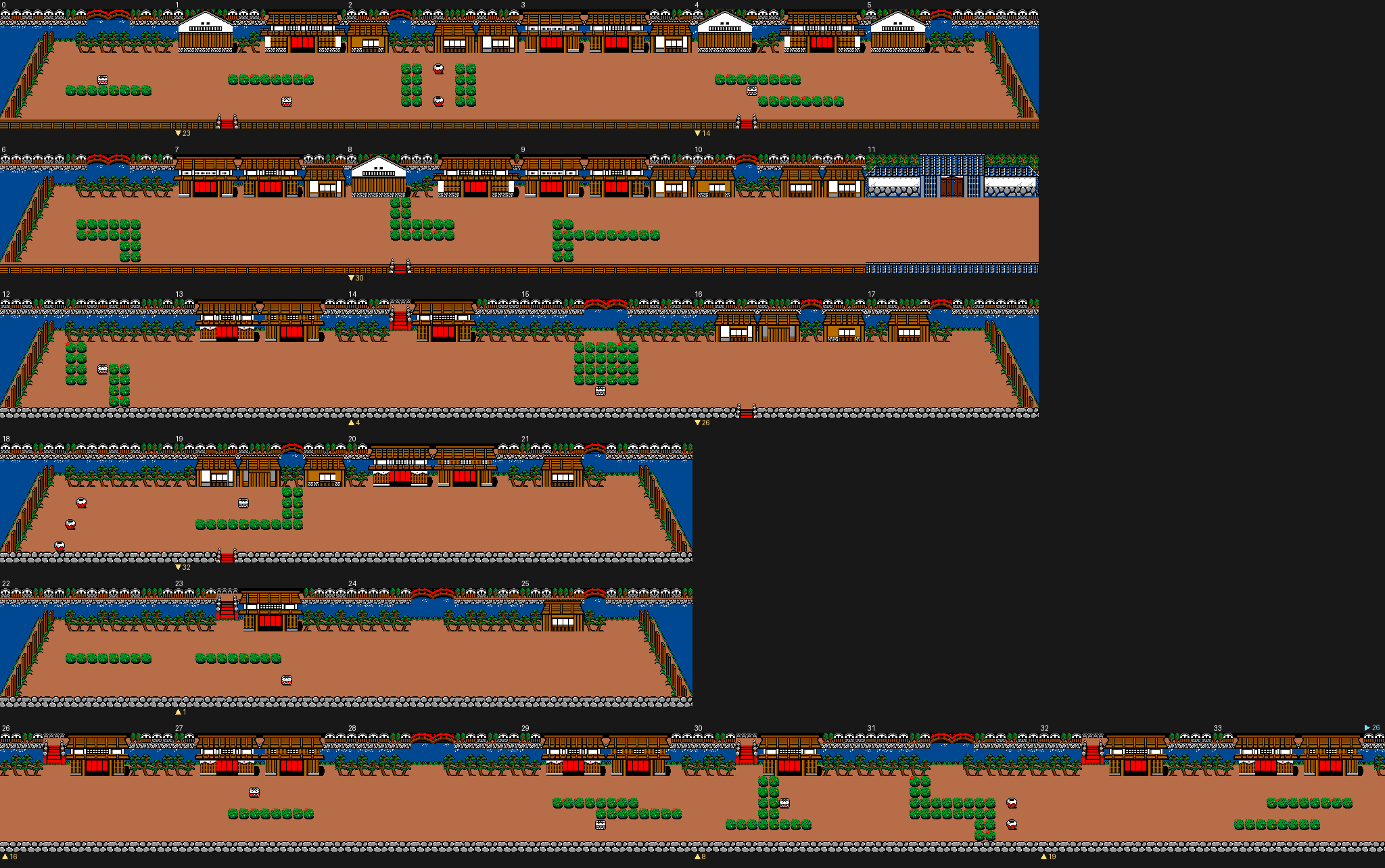
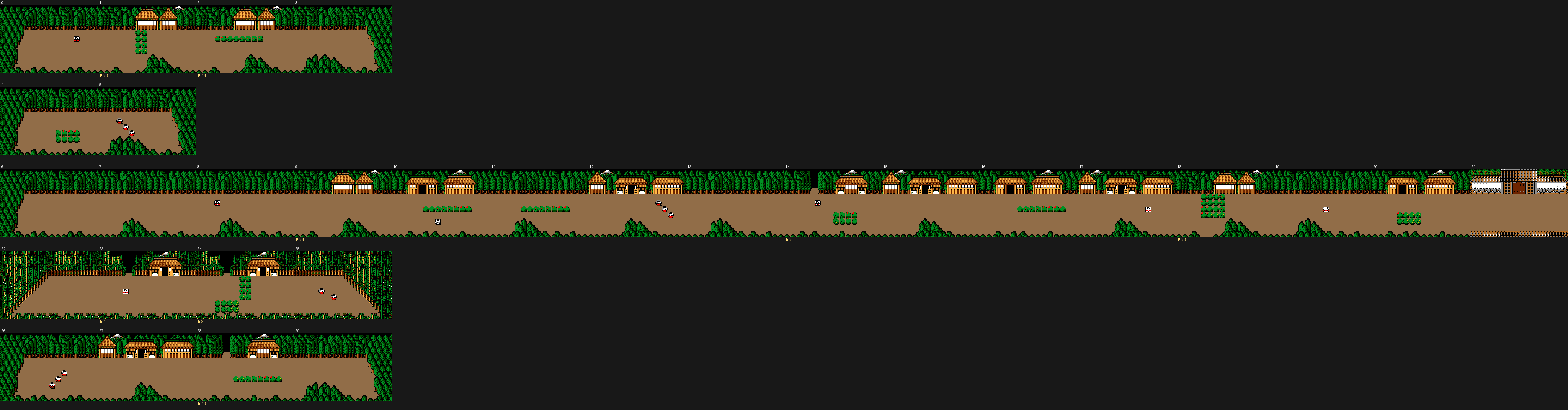
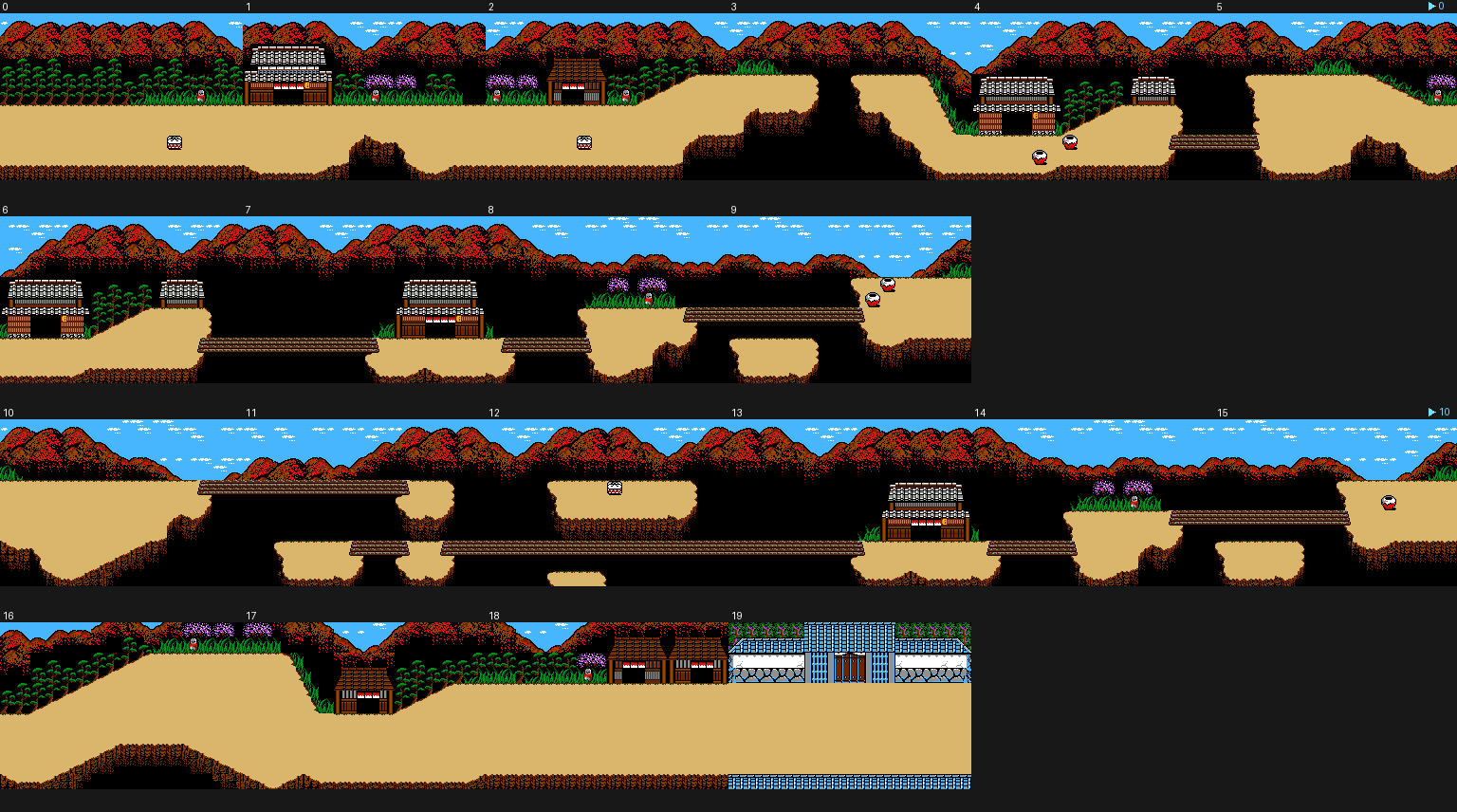
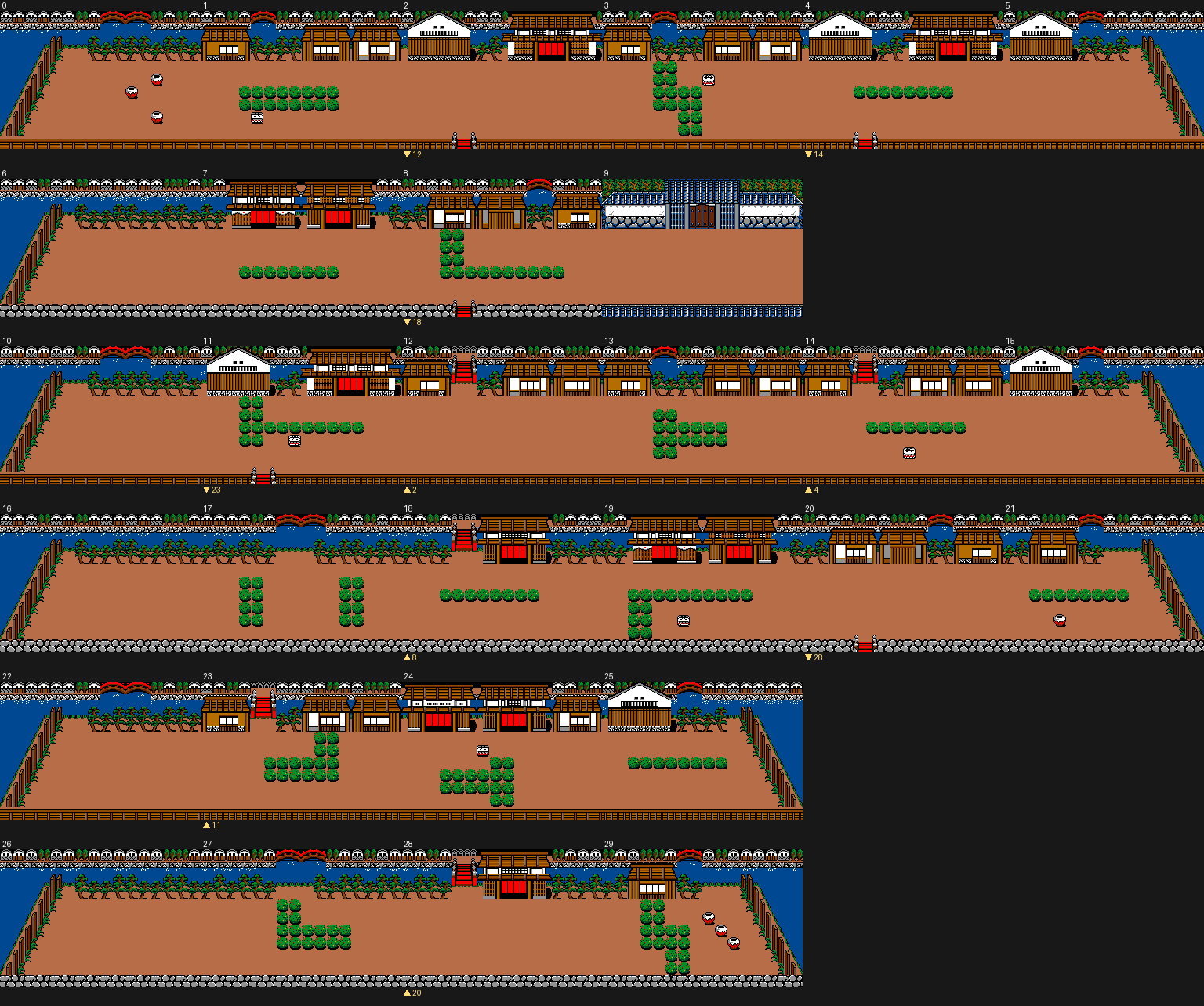
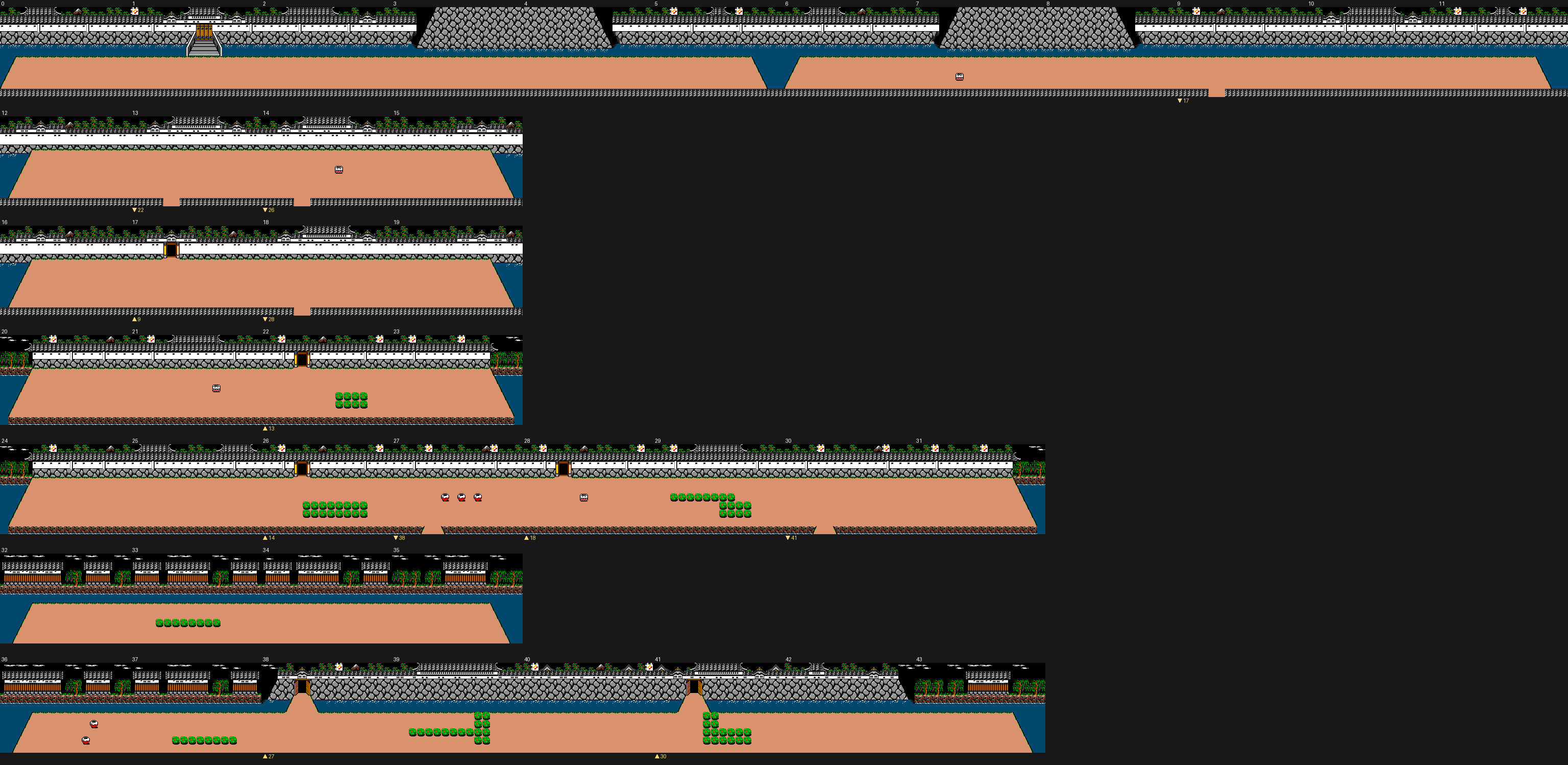
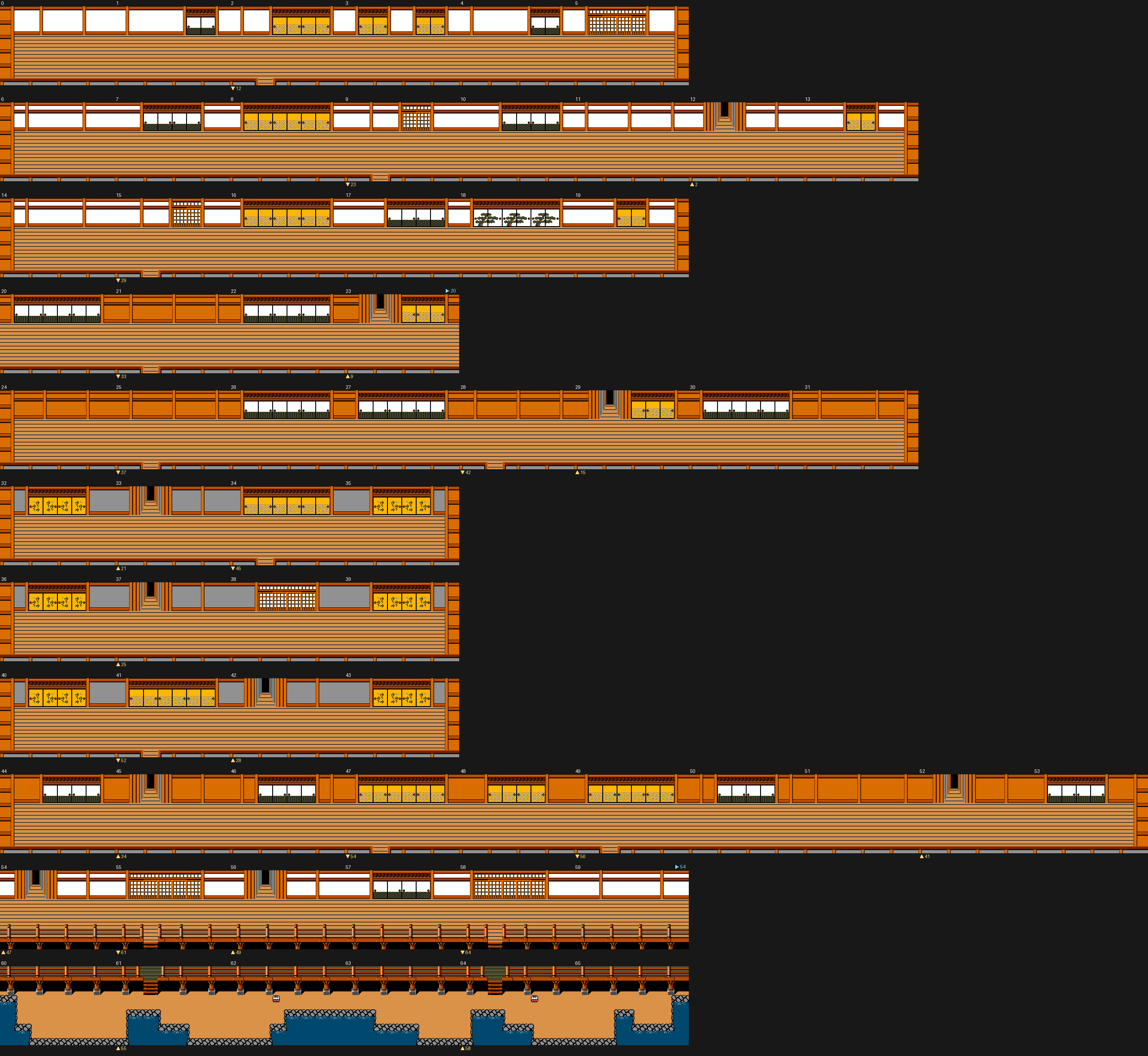
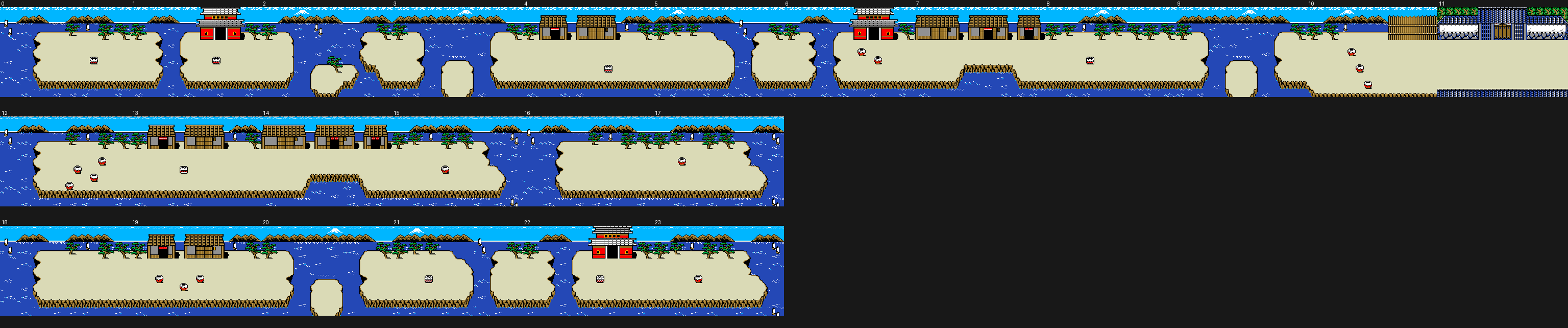
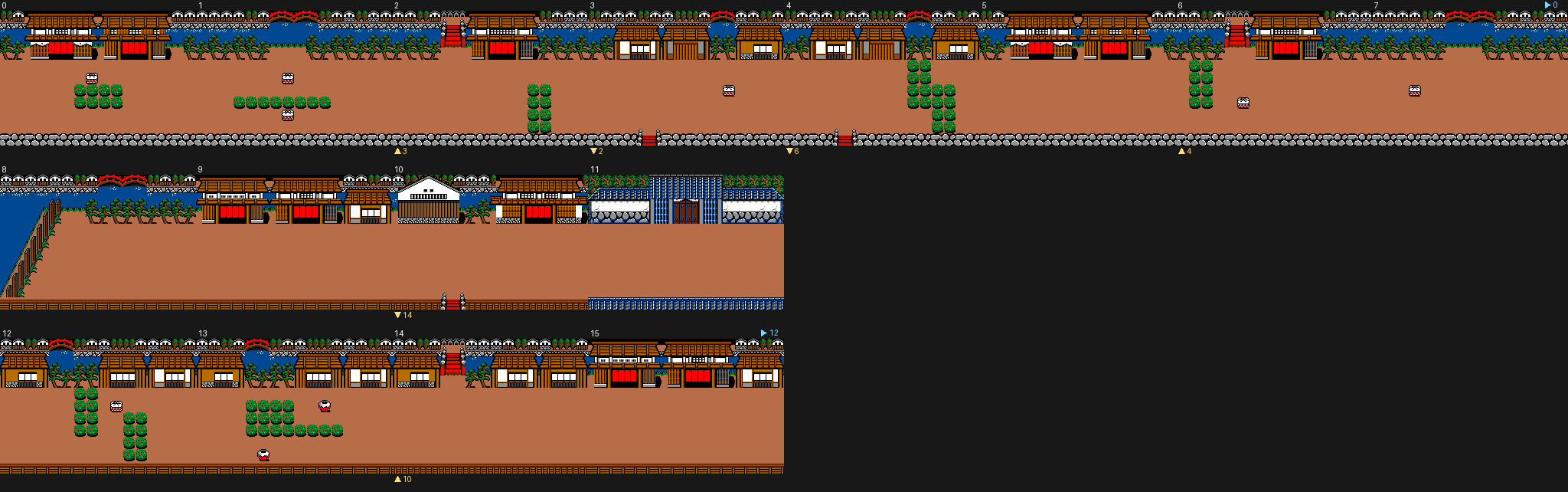
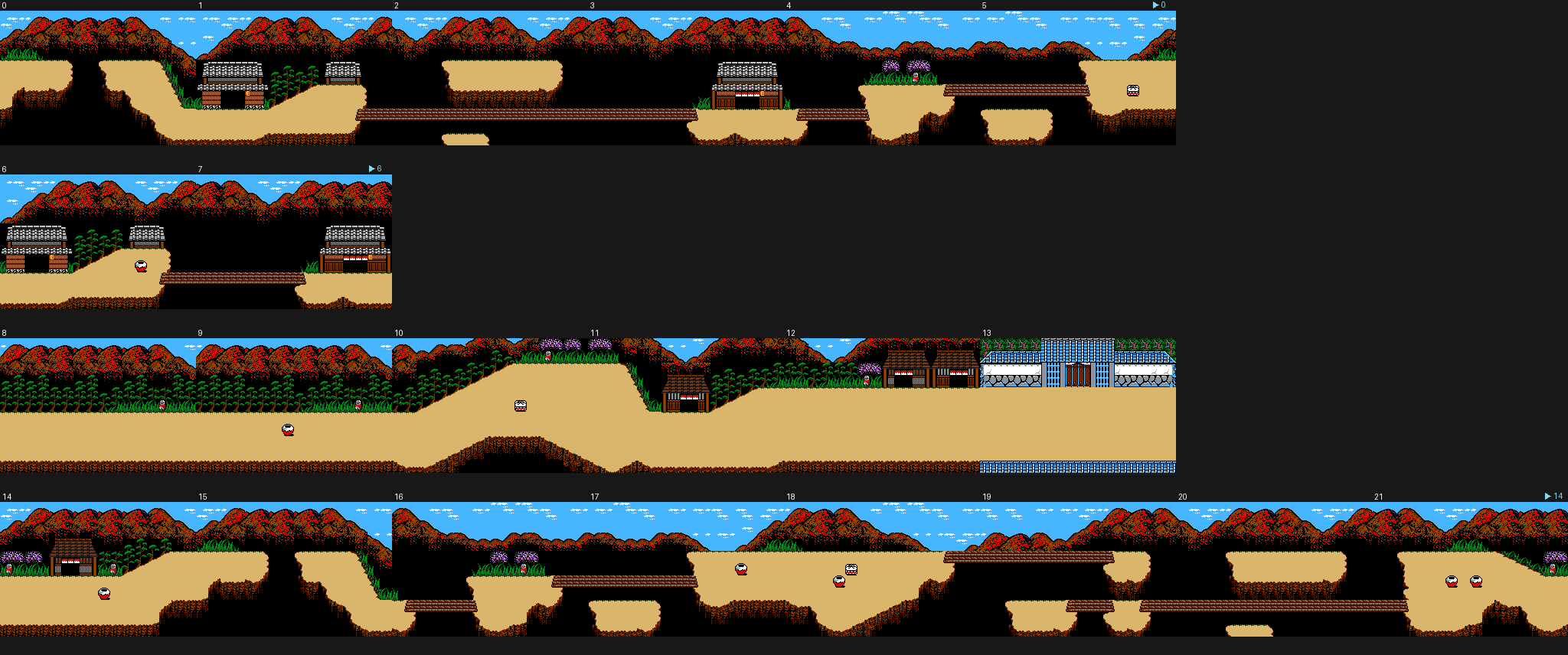
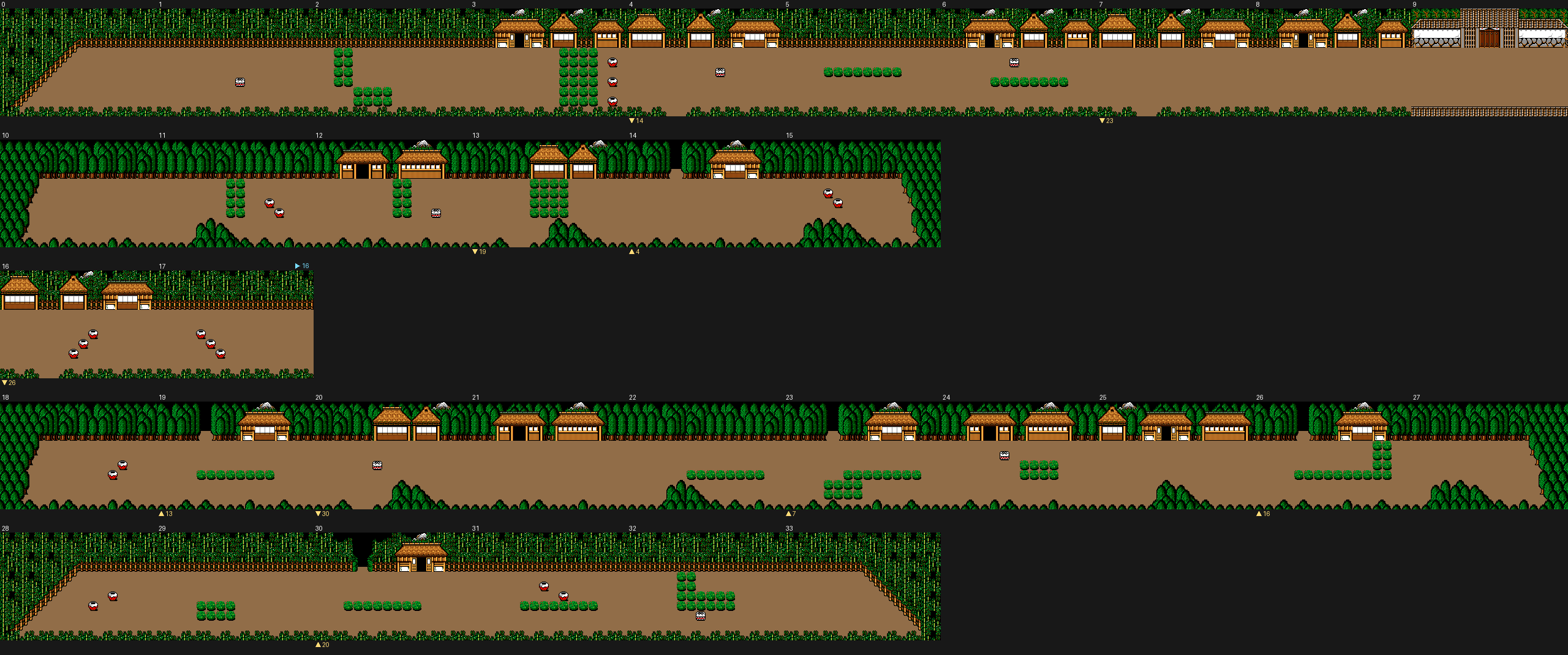
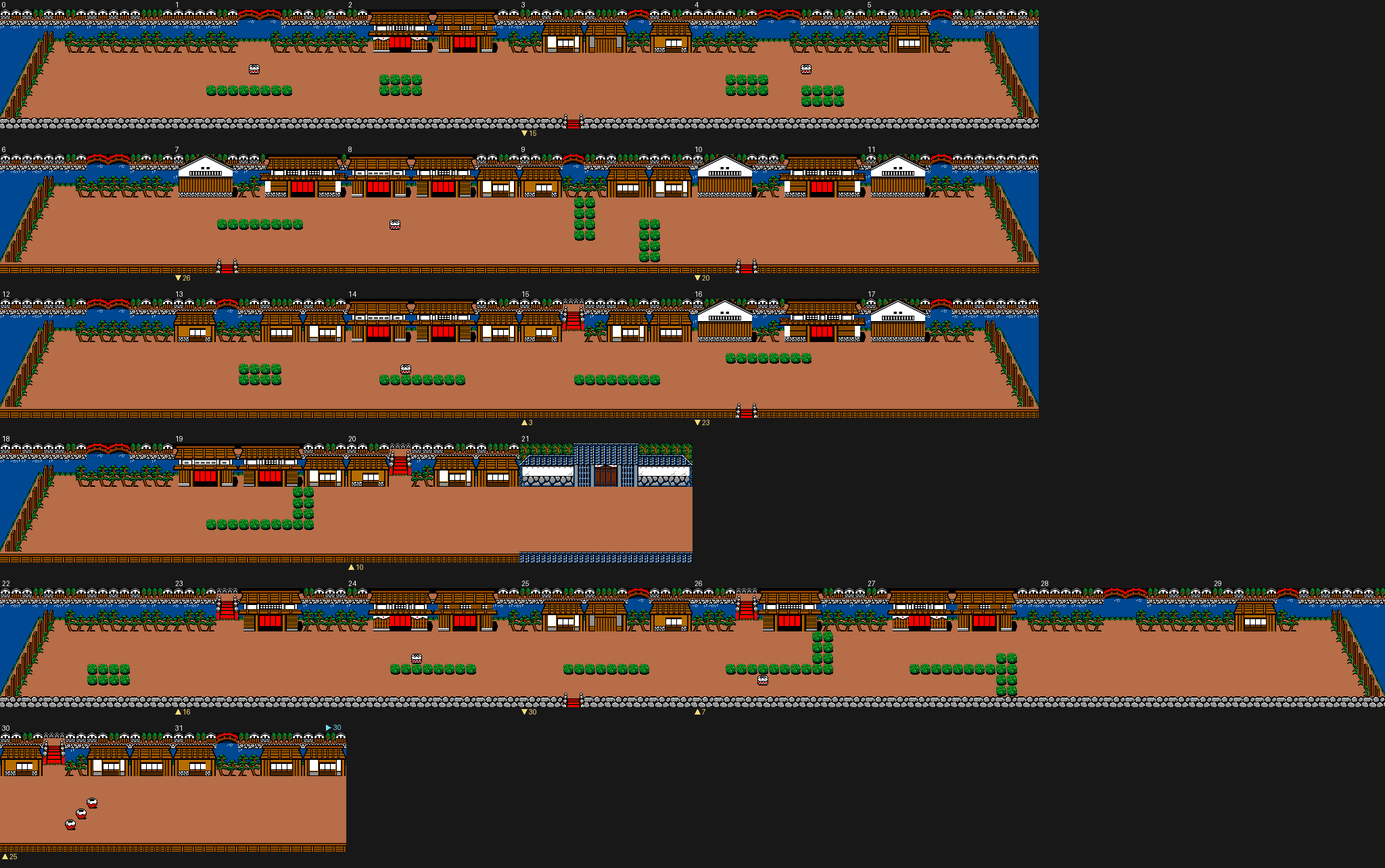
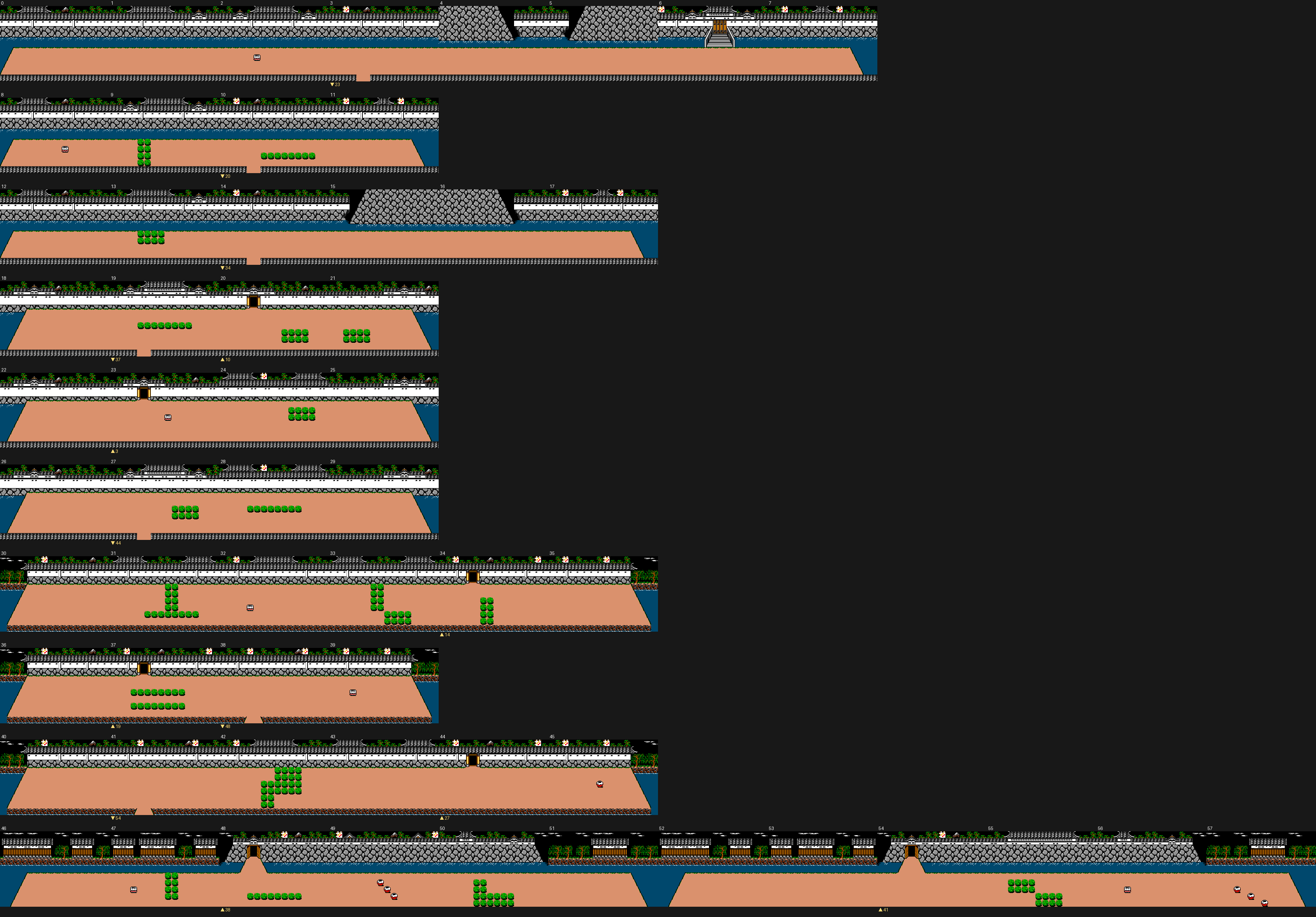
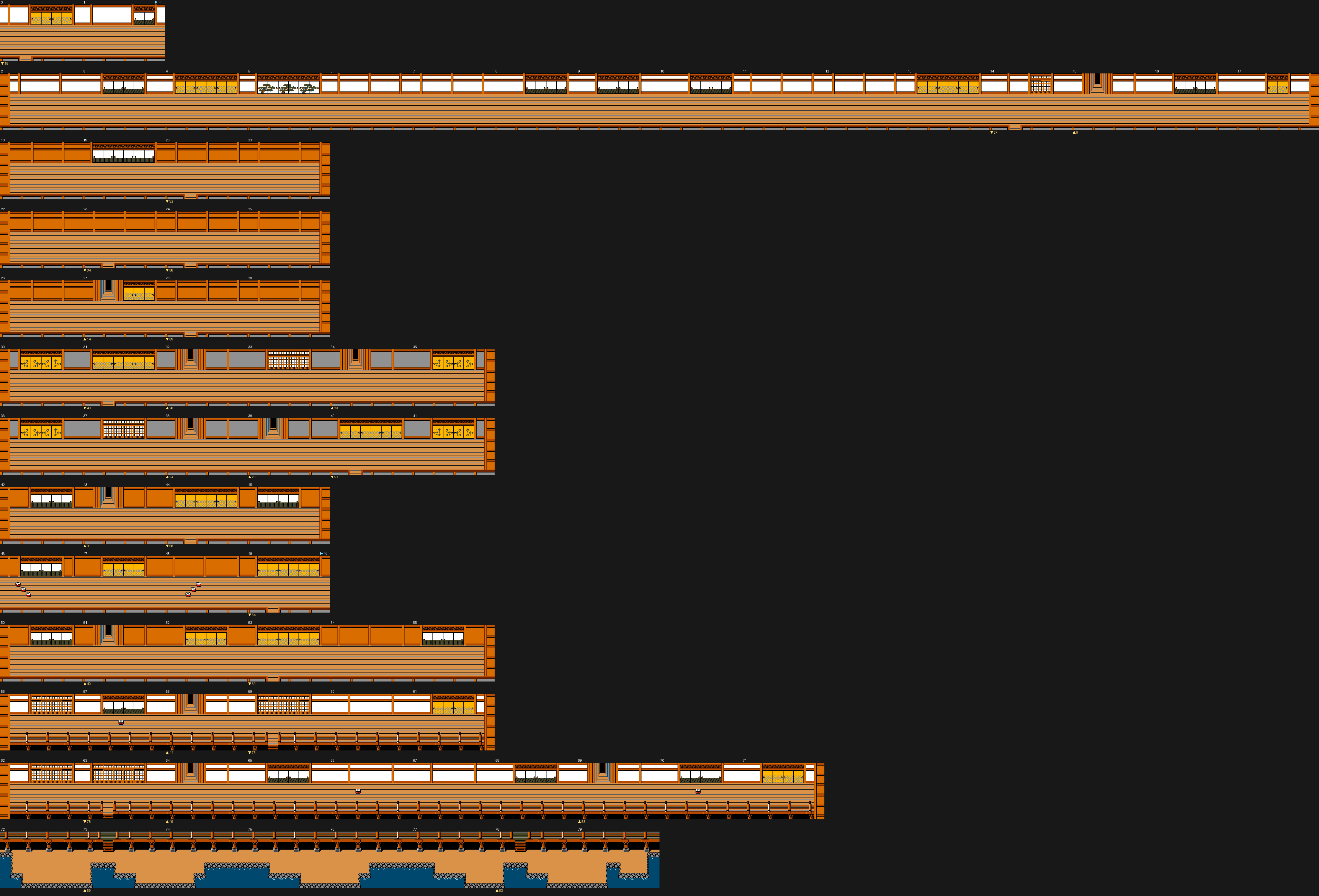
Cells in each area (first byte of its record, 0xB7D0); each number links to its map.
One screen
A cell is 8 × 6 blocks of 4 × 4 characters (p00:5275). It is built at 0xD800 and painted character by character with HMMM, from page 1 to page 0 (p00:534E), in SCREEN 5. Each area has its graphics set (0xB8EC, six in all) with its characters and its palette: the base one (0xA3E6), the set's (0xA37A) and a few colours for the spot, which some exits change (0xA4C5).
Goemon and Ebisumaru
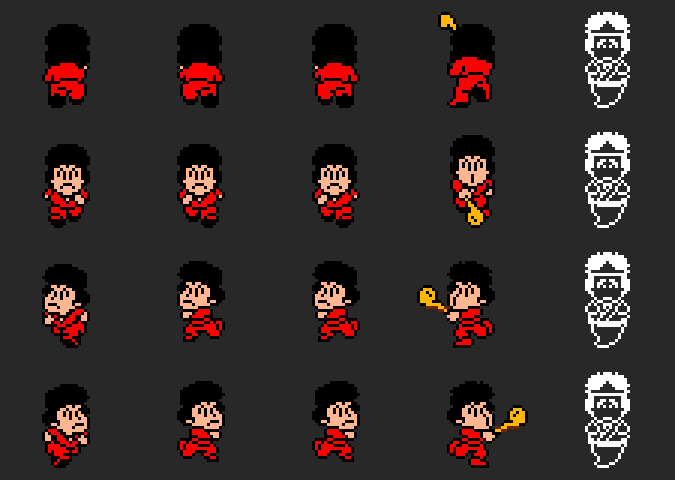
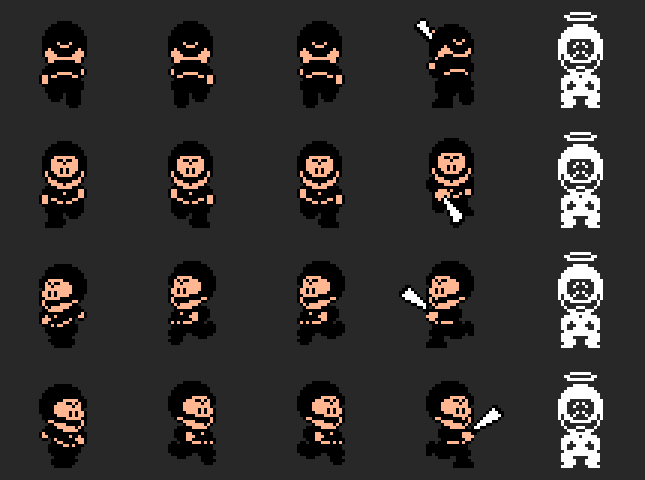
The 20 poses of each: patterns, sprites and colours checked against the pose in each dump.
Life starts at 0x10 (0x20 with one of the keywords), and the timer runs in BCD (0xC4B0). Below 50 seconds the hurry-up music plays (p01:714E).
The enemies
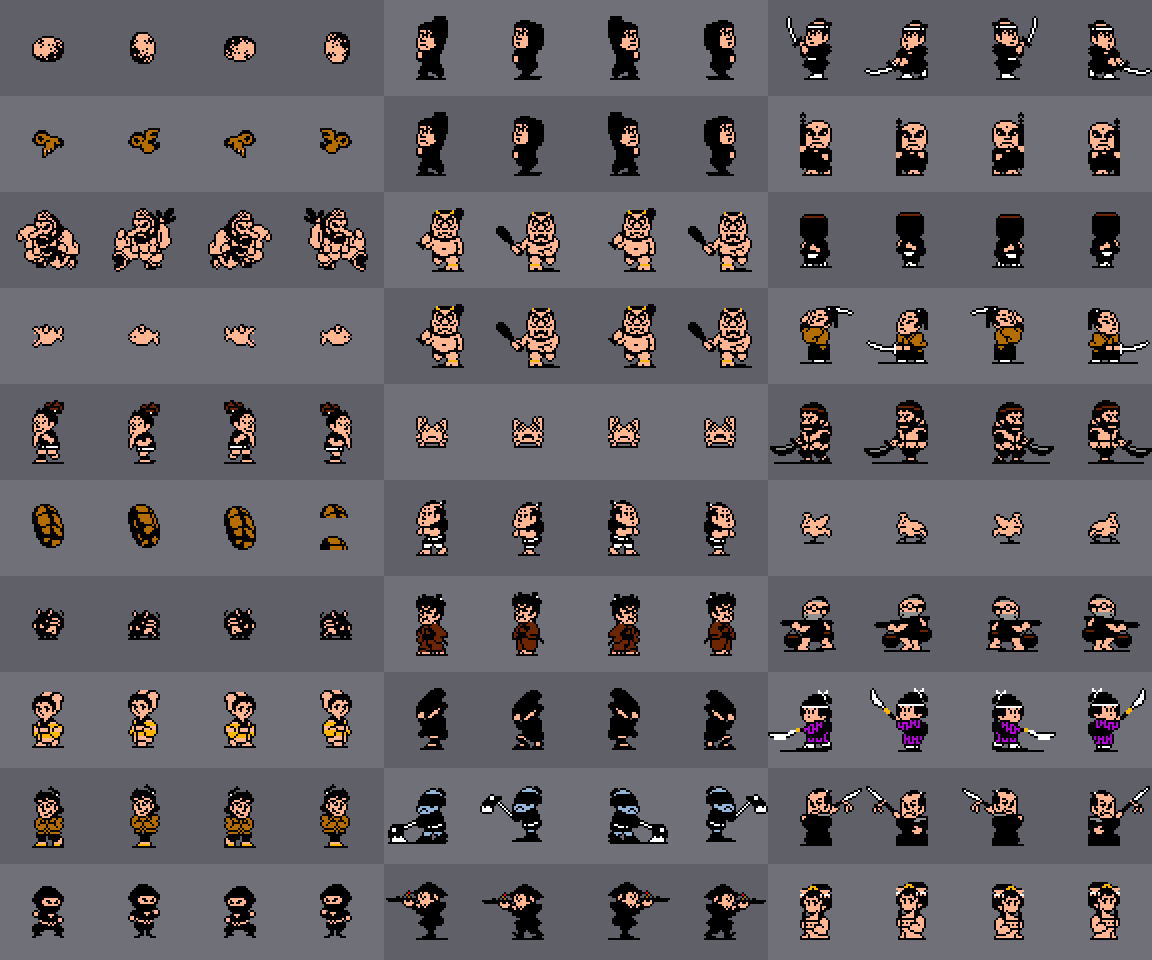
The 30 types that appear in the cells, with the base pose and the next three (0xAA51), each with the palette of the first area where it appears.
Each cell has a set of figures: a nibble in its area's table (0x9BF0) picks a list in its graphics set's table (0x5BB2). The lists match the figures in the 49 dumps. When the blow lands, each type adds the money in 0xB86D (5, 10 or 20 ryo, or nothing), except types 8 and 0x21, which cost 50 ryo; touching them, on the other hand, gives 1000 points (p01:79C8). 107 figures from the dumps are checked with zero differences.
Types 0x12 and 0x1D do not appear in the cells: they are figures from the end-of-stage scene (p02:9AA6, p02:9B6E).
The interiors
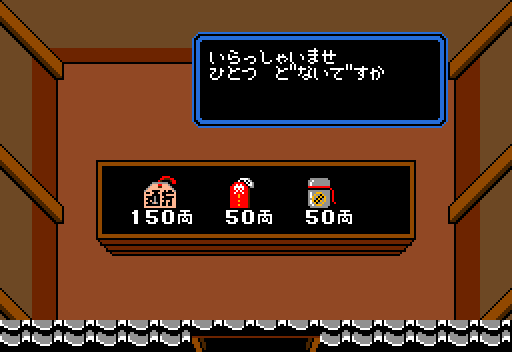
There are 21 interiors (0x9567); each has its figures and what it sells.
- 0 to 15: shops.
- 16: for 900 ryo it takes you to a secret passage.
- 17: the dice.
- 18: asks whether you will stay the night, and fills your life.
- 19: sends away anyone without the boss's letter.
- 20: gives hints.
All 21 are drawn and checked with zero differences against openMSX, and the shops open as well.
Prices (0x9371) depend on three things:
- The shop class, which comes from the area's graphics set.
- How far the game has gone, in four bands: up to area 9, 10 to 19, 20 to 39, and 40 onwards.
- How many times you have bought the item in that area: each purchase doubles the price (p02:930C).
| Item | What it does (0xADEB) | Price, class 0, band 0 |
|---|---|---|
| 1, 10 | one more, up to 3 | 30, 150 |
| 2, 8 | you have it | 20, 120 |
| 3–7 | five hits | 50 |
| 9 | 100 seconds | 40 |
| 11 / 12 | 16 / 8 life | 30 / 20 |
| 13 | 200 more seconds | 50 |
The whole table, with the three classes and the four bands (in ryo):
| Class, band | 1 | 2 | 3 | 4 | 5 | 6 | 7 | 8 | 9 | 10 | 11 | 12 | 13 | 14 | 15 | 16 |
|---|---|---|---|---|---|---|---|---|---|---|---|---|---|---|---|---|
| 0, 0 | 30 | 20 | 50 | 50 | 50 | 50 | 50 | 120 | 40 | 150 | 30 | 20 | 50 | 5 | 50 | 100 |
| 0, 1 | 60 | 40 | 100 | 100 | 100 | 100 | 100 | 250 | 180 | 300 | 60 | 40 | 100 | 0 | 150 | 240 |
| 0, 2 | 90 | 60 | 280 | 280 | 300 | 300 | 300 | 400 | 440 | 800 | 90 | 60 | 280 | 0 | 500 | 420 |
| 0, 3 | 120 | 100 | 600 | 600 | 400 | 400 | 400 | 500 | 600 | 1500 | 120 | 100 | 600 | 0 | 700 | 620 |
| 1, 0 | 30 | 20 | 40 | 40 | 50 | 50 | 50 | 150 | 50 | 150 | 30 | 20 | 40 | 0 | 50 | 100 |
| 1, 1 | 60 | 40 | 80 | 80 | 150 | 150 | 150 | 300 | 160 | 400 | 60 | 40 | 80 | 0 | 200 | 280 |
| 1, 2 | 90 | 60 | 250 | 250 | 400 | 400 | 400 | 500 | 1200 | 700 | 90 | 60 | 250 | 0 | 500 | 400 |
| 1, 3 | 150 | 120 | 420 | 420 | 600 | 600 | 600 | 800 | 1200 | 1200 | 150 | 120 | 420 | 0 | 700 | 520 |
| 2, 0 | 50 | 30 | 80 | 80 | 50 | 50 | 50 | 400 | 100 | 2000 | 50 | 30 | 80 | 0 | 50 | 100 |
| 2, 1 | 100 | 60 | 150 | 150 | 100 | 100 | 100 | 500 | 250 | 2000 | 100 | 60 | 150 | 0 | 200 | 380 |
| 2, 2 | 150 | 100 | 300 | 300 | 250 | 250 | 250 | 600 | 600 | 2000 | 150 | 100 | 300 | 0 | 600 | 580 |
| 2, 3 | 250 | 200 | 700 | 700 | 500 | 500 | 500 | 1000 | 1500 | 2000 | 250 | 200 | 700 | 0 | 800 | 780 |
The secret passages

The map of the passage in area 1-0, as the game shows it (p03:BB1B): each cell is an 8 × 8 piece, and Goemon, top left, is where you start.
In every area except area 5 of each stage, interior 16 offers to take you "to the secret passage at the back". There are 42 passages, made from 16 drawings (0xA86D) that repeat with what is inside in other places (0xA575). They are walked in first person: up moves forward, left and right turn, and down turns around (p03:B8C3).
- Entry costs 900 ryo, or the price of item 15 if you carry item 0x0A (p02:92E3). Each time you enter in the same area, it costs double. Once paid, you go in by pressing up at the back of the interior (p01:7D0D).
- Inside there are 200 ryo, one more item 9, the map, a life and the exit (p03:BC5C). Each thing is picked up once, and they come back when you return to the area.
- The map, if you have picked it up, is shown by the button. It draws neither the map nor the life, and the exit only with the menu secret (see Findings).
- The exit gives 10000 points the first time in the area and leaves you in the street, in front of the door.
All 42 are checked against openMSX: the grid at 0xD800, the map pixel by pixel and the palette.
| Stage | Area 0 | 1 | 2 | 3 | 4 | 6 |
|---|---|---|---|---|---|---|
| 1 | 2 | 4 | 11 | 18 | 19 | 26 |
| 2 | 6 | 13 | 22 | 16 | 8 | 51 |
| 3 | 13 | 15 | 7 | 8 | 16 | 3 |
| 4 | 19 | 9 | 6 | 24 | 28 | 44 |
| 5 | 10 | 20 | 12 | 4 | 15 | 54 |
| 6 | 20 | 27 | 20 | 7 | 24 | 22 |
| 7 | 13 | 10 | 14 | 21 | 24 | 0 |
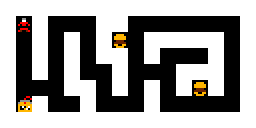
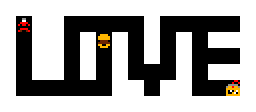
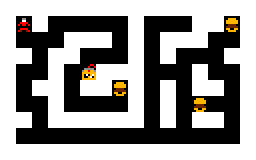
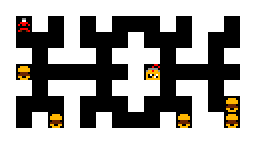
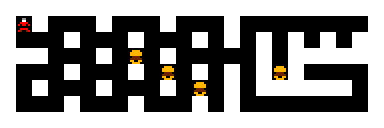

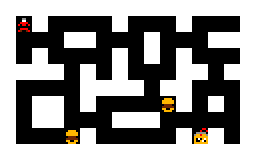
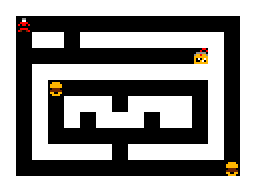
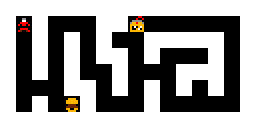

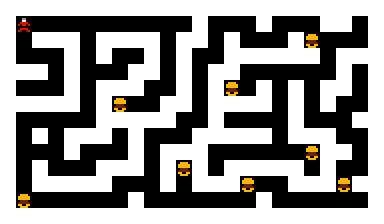
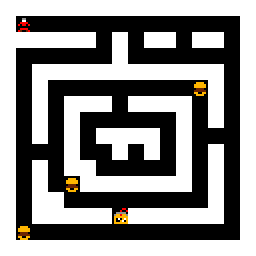
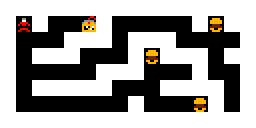
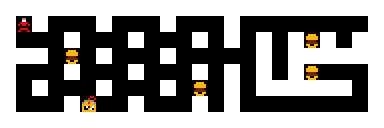
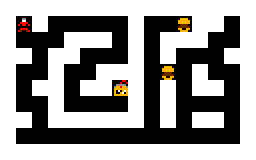
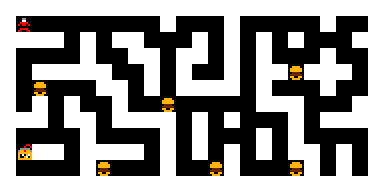
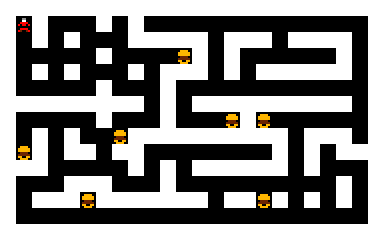
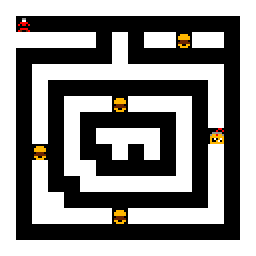
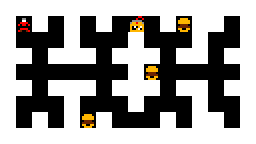
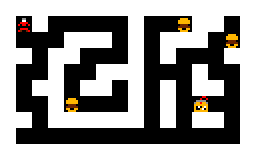
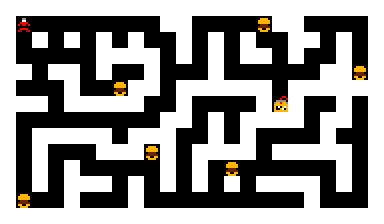
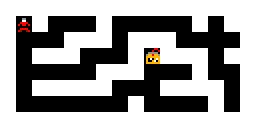
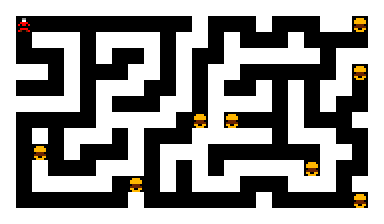

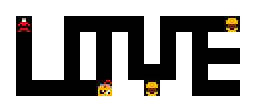
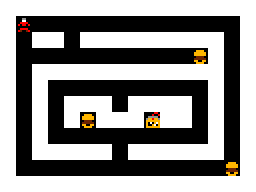
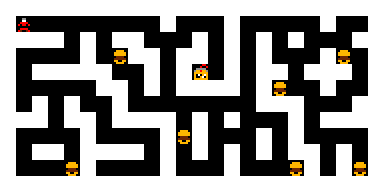
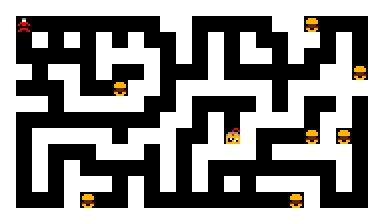
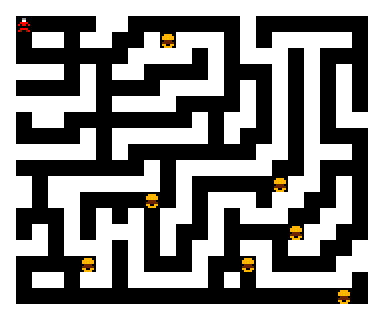
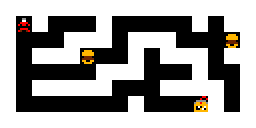
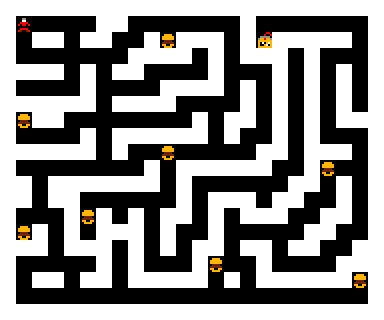
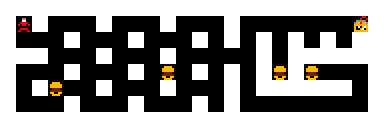
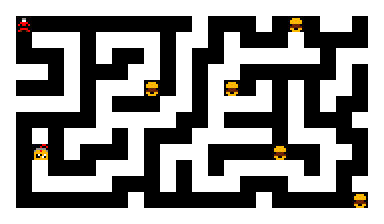
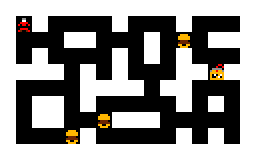
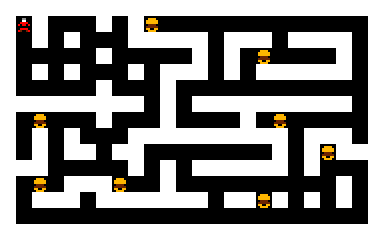
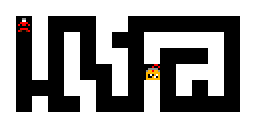
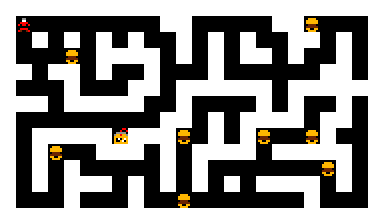
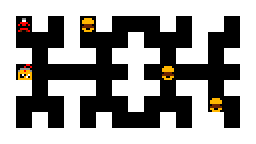
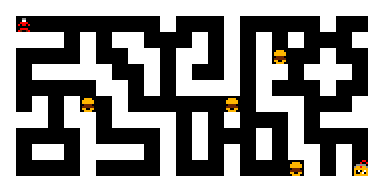
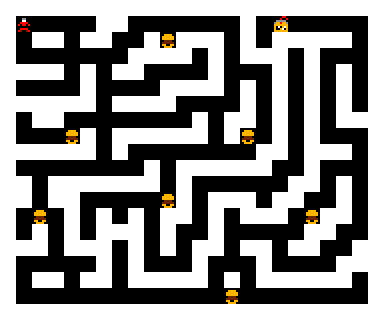
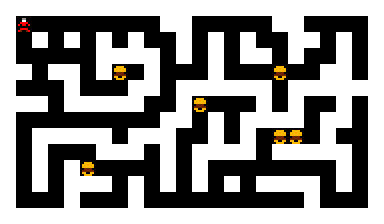
The cell of interior 16 in each area; each number links to the map of its passage.
The password
It is 9 characters. 0x30 is subtracted from each, they are shuffled with the key at 0xEBC6 and carry a checksum (p01:6C7A). They store the stage, the player, the area, the cell and the colours. F2 in the pause shows it, and the same screen accepts four keywords (see Findings).
The end of each stage
The stage's lord says his text (0x9E0B, one per stage) and promises to rule better. The game has four different endings: they are in Findings.